From Apartments To Active Streets: A New Vision For Housing In Honolulu
By adding shops, cafes and community spaces to affordable housing projects, Honolulu can not only tackle its housing crisis but also bring life back to our sidewalks.
August 17, 2025 · 4 min read


About the Author

Honolulu’s housing crisis is among the most pressing challenges facing our city. We aren’t making any more land, yet the cost of living — and the cost of building — continue to climb. Bill 7, enacted in 2019, was an important step, making it easier for property owners to redevelop underutilized lots into affordable rental housing. But if we want transformative change, we must be bolder and more creative.

One practical yet powerful improvement would be to expand Bill 7’s scope beyond just Apartment Mixed-Use and Business Mixed-Use zones. All Bill 7 projects — even those in Apartment (A) zones — should be allowed to include a ground-floor retail or community space. This modest shift could redefine how our neighborhoods look, feel, and function.
A Walkable City Is A Livable City
In Japan and across Europe, it’s common for residential buildings to host bakeries, cafes, clinics, or small shops at street level. These aren’t just conveniences — they create charm, foster safety, and bring vitality to neighborhoods. Streets with active, inviting ground floors encourage interaction and community.
Honolulu, by contrast, is still shaped by a car-centric mindset. Parking stalls have often been prioritized over public spaces, diminishing both walkability and neighborhood vibrancy. Expanding Bill 7 to include retail or community spaces in more zones would help reverse that trend, making our streets safer, livelier, and more engaging for pedestrians.
Beyond Cars: Smarter Transportation
Housing policy and transportation policy are inseparable. If we want to reduce congestion and parking demand, Honolulu should embrace forward-thinking mobility options such as Tesla’s ride-hailing services or Waymo’s commercial robo-taxis. With artificial intelligence and autonomous vehicles advancing rapidly, this future is already on the horizon.

Imagine stepping out of your apartment, grabbing a coffee downstairs, and getting across town without owning a car — or paying for a costly parking stall. Over time, shared autonomous vehicles will be cheaper and more efficient than maintaining a personal vehicle.
The benefits are compelling:
- Less pollution and fewer greenhouse gas emissions.
- Lower transportation costs for residents.
- Safer streets with fewer private vehicles.
- More land available for housing and public space instead of asphalt.
Incentives For Landowners
Design innovation alone won’t solve the housing shortage. Redevelopment must be financially appealing to landowners, which means expanding city and state incentives — tax abatements, expedited permitting, infrastructure cost-sharing, and pre-construction grants available not only for fully permitted projects but also for projects ready to break ground under the Special Assignment Inspections process.
Bill 7 was a good start, but its narrow eligibility and high construction costs have limited its impact. To truly unleash a wave of affordable rentals, we must broaden the program, allow higher densities, revisit height restrictions, and make participation more rewarding for those who hold the land.
An Architectural Renaissance For Honolulu
Honolulu has a once-in-a-generation opportunity to reshape its urban landscape. I call this an architectural renaissance — a chance to create housing that is not only affordable but also attractive, practical, and safe. With 95% of our multi-family housing stock now more than 40 years old, many buildings are outdated and some no longer meet current safety codes. Modern, well-designed buildings are a matter of public safety as well as aesthetics.
Ground-floor retail and active streetscapes are essential to this vision. They bring light, safety, and vibrancy to neighborhoods, encouraging residents to walk, interact, and engage with one another. Stronger communities start at the street level.
A Conversation Already Underway
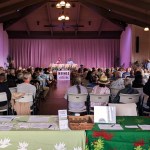
I recently presented this idea at an Urban Land Institute Young Leaders luncheon, and the response was remarkable — especially from younger attendees. They envision neighborhoods where life happens on the sidewalks, not just behind closed doors or behind the wheel.
Young professionals know the appeal of cities less dependent on cars, more connected through shared transportation, and alive with street-level activity. They’ve seen it in Tokyo, Copenhagen, and Barcelona — and they know Honolulu can achieve it, too.
The Path Forward
These proposals aren’t radical. They don’t require new technology or massive public funding — only a shift in how we think about and use our existing land.
By expanding Bill 7 to cover all apartment zones, encouraging ground-floor activation, welcoming next-generation mobility providers, and enhancing redevelopment incentives, Honolulu can move toward a city that is not only affordable but truly livable and vibrant.
This isn’t just about adding housing units — it’s about building a city where people genuinely want to live, work, and connect.
Honolulu is ready for this conversation. Let’s move it forward.
 Sign up for our FREE morning newsletter and face each day more informed.
Community Voices aims to encourage broad discussion on many topics of community interest. It’s kind of a cross between Letters to the Editor and op-eds. This is your space to talk about important issues or interesting people who are making a difference in our world. Column lengths should be no more than 800 words and we need a photo of the author and a bio. We welcome video commentary and other multimedia formats. Send to news@civilbeat.org. The opinions and information expressed in Community Voices are solely those of the authors and not Civil Beat.
Local reporting when you need it most
Support timely, accurate, independent journalism.
Honolulu Civil Beat is a nonprofit organization, and your donation helps us produce local reporting that serves all of Hawaii.
ContributeAbout the Author