Hawaiʻi’s Leaders Should Declare An Energy Emergency
Hawaiʻi can’t let federal policy retreat undermine our commitment to a sustainable, resilient and localized future.
August 5, 2025 · 7 min read

About the Authors




Hawaiʻi stands at a critical crossroads. The recently enacted Trump reconciliation bill has effectively gutted the federal tax incentives that were essential to our state’s ambitious clean energy and food security transition.

As advocates who have worked extensively on renewable and food security advocacy here in Hawaiʻi, we urge Gov. Josh Green and our county mayors to immediately declare energy emergencies to mobilize our communities and chart a path forward to mitigate the catastrophic impacts of the bill on our energy independence, local food production and resilience.
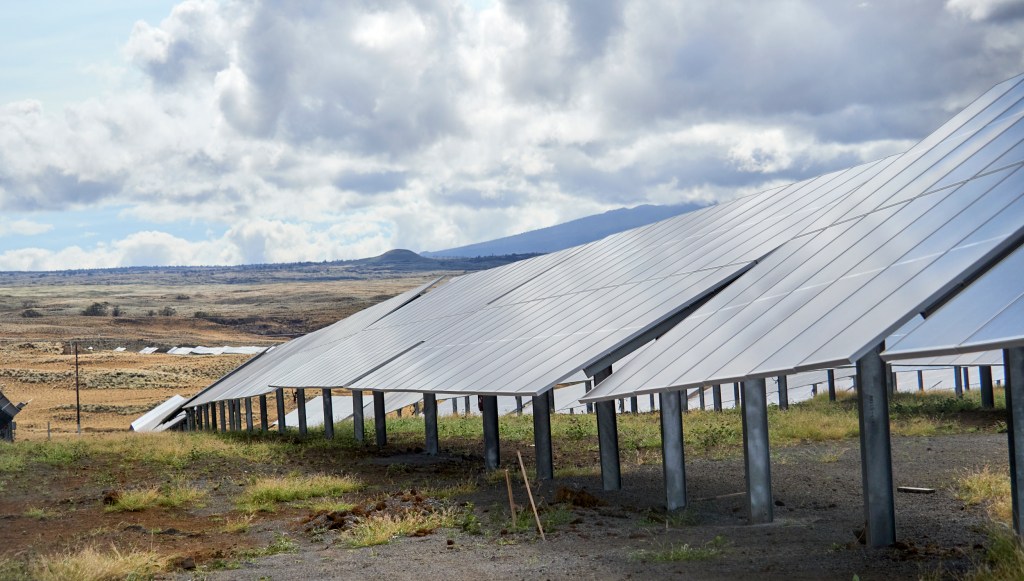
The bill doesn’t just trim around the edges of federal energy policy — it devastates the economic foundation that made Hawaiʻi’s renewable energy goals achievable. The 30% federal tax credit for residential solar disappears at the end of this year. Commercial solar and wind projects face a brutal timeline that may eliminate most future projects, and the jobs they entail. Electric vehicle tax credits vanish by the end of September this year, and EV charging infrastructure incentives disappear by mid-2026.
For an island state that still imports about 90% of its energy — including almost all transportation fuel — and pays some of the nation’s highest electricity and gasoline prices, this isn’t just a policy setback. It’s an emergency that threatens our economic and environmental future.
Our state has committed to 100% renewable electricity by 2045, carbon neutrality by 2045, and aggressive transportation electrification goals. These aren’t aspirational targets — they’re legal mandates embedded in our statutes. The bill has just pulled the rug out from under the primary financial mechanisms that made these goals realistic.
Hawaiʻi faces an energy emergency and our state and county leaders should say that loudly and clearly.
Transportation: Our Biggest Vulnerability
While electricity generation gets most of the attention, transportation represents Hawaiʻi’s largest fossil fuel dependency. We import every gallon of gasoline and diesel fuel, making us uniquely vulnerable to global oil price shocks and supply disruptions. The path to energy independence runs through transportation electrification — EVs, electric buses, electric delivery vehicles and the charging infrastructure to support them.
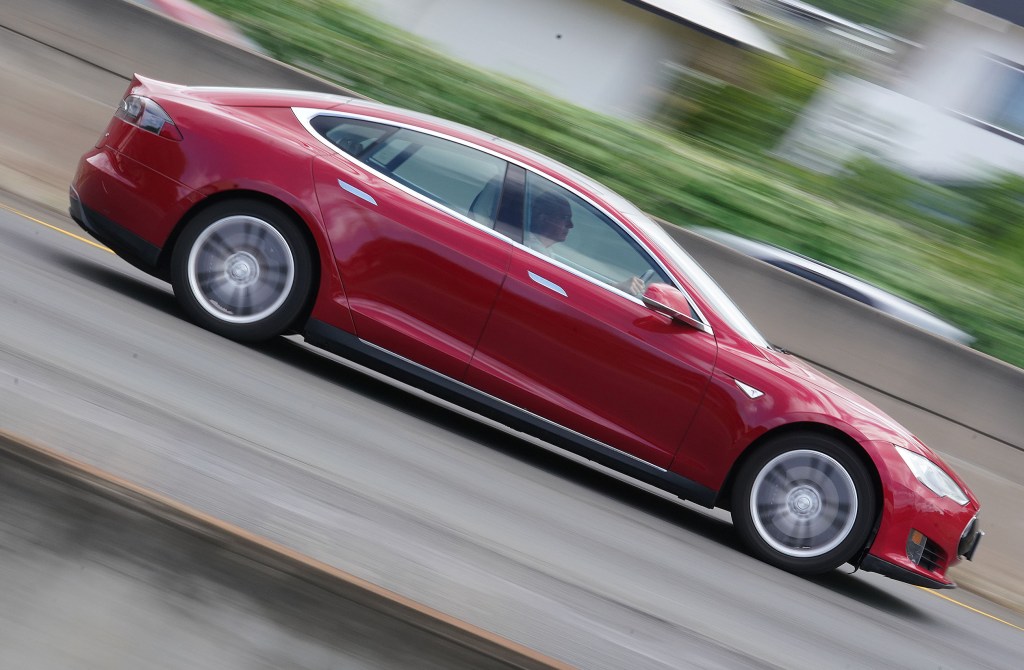
The bill eliminated three critical federal EV incentives that were driving electrification in Hawaiʻi:
- New EV Tax Credit (Section 30D): Up to $7,500 per vehicle — terminated for vehicles purchased after Sept. 30, 2025
- Used EV Tax Credit (Section 25E): Up to $4,000 per vehicle — terminated for vehicles purchased after Sept. 30, 2025
- Commercial EV Credit (Section 45W): Up to $7,500 for light commercial vehicles and up to $40,000 for heavy-duty trucks and buses — terminated for vehicles purchased after Sept. 30, 2025
These credits were particularly valuable in Hawaiʻi, where high vehicle costs and expensive electricity made federal support essential for EV adoption.
Just as concerning, the bill terminates federal support for EV charging infrastructure by mid-2026. Hawaiʻi’s charging network is still in its infancy, and federal incentives were crucial for making charging stations economically viable in our dispersed island communities.

The Food Security Connection
Hawaiʻi’s vulnerability extends beyond energy. We import roughly 90% of our food, and that food security depends entirely on reliable, affordable transportation fuels and electricity for cold storage and processing. Our food distribution system — from harbor trucks to delivery vehicles — runs almost entirely on imported diesel and gasoline.
The bill’s elimination of agricultural energy programs particularly threatens Hawaiʻi’s already-struggling local food production. The Rural Energy for America Program and agricultural efficiency credits were helping Hawaiʻi farmers reduce their energy costs through renewable energy and efficiency upgrades.
Without these federal supports, the high cost of energy makes local food production even less competitive with imported alternatives.
The energy-food nexus is especially critical in Hawaiʻi. Our farmers face some of the nation’s highest electricity and fuel costs, making energy-efficient operations and renewable energy crucial for viable local agriculture. Every farm solar system we can’t afford, every efficient irrigation system that becomes too expensive, every agricultural processing facility that can’t access clean energy support pushes us toward greater food import dependence.
The bill’s assault on both renewable energy and transportation electrification isn’t just about reducing emissions — it’s about our fundamental resilience as a community. Every solar panel we don’t install, every EV we can’t afford, every charging station we can’t build, every farm renewable energy project we can’t finance makes us more dependent on imported fossil fuels and less resilient in the face of global disruptions.
The recent global supply chain disruptions showed how quickly fuel shortages can threaten island communities. Transportation electrification powered by local renewable energy is our path to genuine energy security. Similarly, supporting local food production with clean energy infrastructure is essential for food security.
Emergency declarations would also strengthen our congressional delegation’s arguments for Hawaiʻi-specific relief. Our congressional representatives need to know that their home state considers this a genuine emergency requiring immediate federal attention. They should be pushing for Hawaiʻi-specific extensions of EV incentives and renewable energy credits that recognize our unique geography and energy vulnerability.
Emergency declarations create political leverage that typical policy advocacy cannot.
Why Emergency Declarations Matter
Emergency declarations would provide our leaders with expanded authority to take swift action, convene stakeholders, and deploy resources in ways that normal bureaucratic processes simply can’t match.
More importantly, they would signal to our communities, our business sector, and our congressional delegation that Hawaiʻi recognizes the magnitude of this threat and is prepared to respond with appropriate urgency.
We propose that these declarations include directions for convening intensive three-month community engagement processes in each jurisdiction. These shouldn’t be typical public meetings with predetermined outcomes, but genuine community conversations about how we can best preserve our clean energy, transportation and local food production future without federal support.
Each jurisdiction should produce reports outlining emergency measures they could implement to make up for the bill’s destruction, such as recommended below.
State-Level Actions
- Emergency expansion of existing state tax credits to partially offset federal losses for both renewable energy and EVs
- Fast-track permitting for renewable projects racing against the new bill’s deadlines
- Renewed focus and support on local food production and planning
- Public financing mechanisms for community-scale renewable projects and EV charging networks
- Emergency procurement of battery storage systems and EV charging equipment before supply chains tighten
- State incentives for electric school buses and government fleet electrification
County-Level Actions
- Expedited zoning and building permits for solar installations and EV charging stations
- Property tax incentives for renewable energy systems and home EV charging
- Community solar programs coupled with EV charging hubs
- Tax incentives for improved local food production
- Zoning changes to make it easier to grow and sell commercial food crops
- Job training programs for green energy and farming
- Emergency resilience hubs powered by renewable energy with EV charging capability
- Streamlined permitting for workplace and multi-family housing charging infrastructure
The Clock Is Ticking
The residential solar tax credit disappears in five months. EV credits vanish in just two months, requiring that any EV that would qualify be bought immediately because it must be delivered to be eligible for the tax credit, and shipping takes some time to get to Hawaiʻi.
Commercial project deadlines loom in 2026 and 2027. Energy developers and EV charging companies are already canceling Hawaiʻi projects because the economics no longer work. Every month we delay emergency action is another month of lost opportunities and deepening dependence on imported fossil fuels for both electricity and transportation.
Our islands have faced major threats before — from Pearl Harbor to tsunami warnings to pandemic lockdowns. We know how to mobilize when survival is at stake. The new bill’s attack on our clean energy and transportation future demands that same level of urgent, community-wide response.
Gov. Green and our mayors: Please declare an energy emergency now.
Convene our communities. Develop emergency action plans that address our electricity, food and transportation vulnerabilities. Show the White House and the world that Hawaiʻi won’t let federal policy retreat undermine our commitment to a sustainable, resilient and localized future.
The alternative — continuing business as usual while our clean energy transition, local food production, and transportation electrification collapse — is simply unacceptable for a state surrounded by rising seas and dependent on the outside world for our basic energy and food survival.
 Sign up for our FREE morning newsletter and face each day more informed.
Community Voices aims to encourage broad discussion on many topics of community interest. It’s kind of a cross between Letters to the Editor and op-eds. This is your space to talk about important issues or interesting people who are making a difference in our world. Column lengths should be no more than 800 words and we need a photo of the author and a bio. We welcome video commentary and other multimedia formats. Send to news@civilbeat.org. The opinions and information expressed in Community Voices are solely those of the authors and not Civil Beat.

Local reporting when you need it most
Support timely, accurate, independent journalism.
Honolulu Civil Beat is a nonprofit organization, and your donation helps us produce local reporting that serves all of Hawaii.
ContributeAbout the Authors