

Newly Signed Bill Imperils Historic Places and Burial Sites, Critics Say
Preservationists decry Gov. Josh Green’s late decision to approve a measure to remove an obstacle to development.
Native Hawaiians, archaeologists and the Oʻahu Historic Preservation Commission say that a bill unexpectedly signed by Gov. Josh Green reverses decades of efforts to protect Hawai’i’s cultural and historical heritage by significantly reducing the number of properties subject to a multi-stage review process.
State Historic Preservation Division reviews are intended to mitigate the impact of development. They can take up to a half-year and are a major obstacle in addressing Hawaiʻi’s acute housing needs, supporters of the bill say.
The problem was that the previous definition of “historic” was overly broad and referred to anything more than 50 years old.
Senate Bill 15 – now Act 293 – narrowed the definition of historic properties in Hawaiʻi statute to refer only to structures or places that are more than 50 years old that meet the criteria for being entered into the Hawaiʻi Register of Historic Places. Those include being associated with historic events, people of historic note or noteworthy architecture.
But it does more.
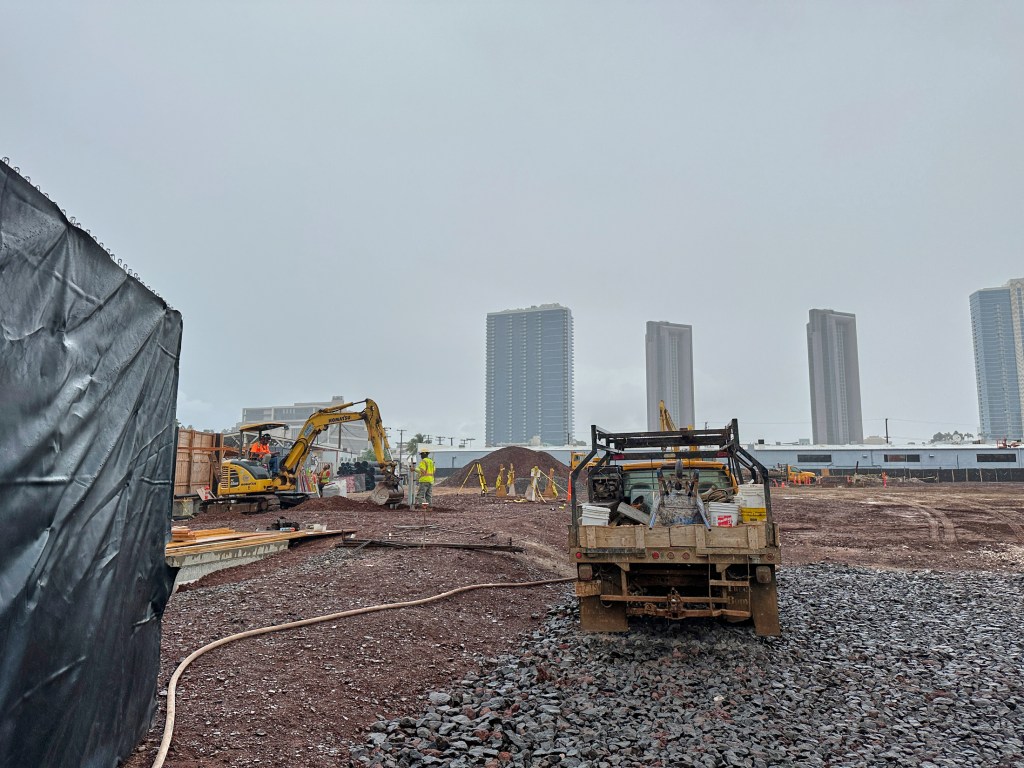
The bill provides an exemption to the review process for “nominally sensitive” areas that have already been “substantially disturbed by previous excavation or other ground-disturbing work and no significant historic properties have been previously identified.”
In addition, applications for renovation and extension projects on existing private single-family dwellings or town houses will now be able to bypass the historic review process unless the structures are at least 50 years old and in an historic district or are nominated for or included on a state or national register.
These exemptions effectively allow developers to treat most properties “as if nothing historically or culturally important exists,” said Meahalani Cypher, a member of the Oʻahu Historic Preservation Commission, in an interview Thursday.
Cypher said the bill “opens the door for virtually unchecked destruction of Hawaiian historic and cultural sites,” including areas where iwi kūpuna – ancestral remains – are likely to be found.
The Governor’s About-Face
The preservation commission supported the original version of SB 15 that narrowed the definition of historic property but included sites that were linked to cultural practices, traditional beliefs or oral traditions of Native Hawaiians and other ethnic groups.
But the final version of the bill stripped out that language and the preservation commission, the Historic Hawai’i Foundation and, at the last minute, the Department of Land and Natural Resources opposed it.
SB 15 was actually one of two measures related to historic preservation that were on Green’s intent-to-veto list published June 6. Senate Bill 66 is the other one. It enables builders and developers of single- or multi-family homes to request an expedited permit if they haven’t received one within 60 days.
Green’s rationale for initially putting SB 15 on his intent-to-veto list focused on the historic review exemptions for existing private structures, which the governor said “fails to consider properties that have never undergone such a review and may contain historically significant artifacts or iwi kūpuna.”
But he ended up signing both bills July 3.
“We are deeply concerned that he has made it possible for important cultural and historic treasures to be lost to the bulldozers,” Cypher said. “All the historic preservation laws are weakened severely and I honestly don’t think the governor understood or appreciated how serious this signing of this bill was.”
“This new definition is really like focusing on properties that actually have historic or cultural significance rather than just being an old building.”
Ted Kefalas, Grassroot Institute of Hawaiʻi
When Civil Beat asked for an explanation from Green regarding why he signed SB 15, it received an emailed response from Makana McClellan, his communications director.
The inclusion of the bill on the intent-to-veto list allowed for more research on the impacts, McClellan said.
McClellan said SB 15 is intended to provide “a quicker pathway to facilitate construction of proposed projects on existing residential properties and other ‘nominally sensitive’ areas, while maintaining the integrity of the state’s historic preservation program review.”
“All existing statutes and laws regarding the preservation of historic places and culturally sensitive handling of iwi kūpuna are in full force,” she said. “As our communities age, we must come up with different ways to move forward on building new housing where housing has already existed for over 50 years.”
The DLNR did not respond to a request for comment on its opposition to the final versions of SB 15.

Historic Preservation Division Swamped
Supporters of the bill say that the concerns raised by the commission and others are overblown, and that SB 15 strikes the right balance for safeguarding genuine heritage sites.
“Not everything that is more than 50 years old has historic value,” said Ted Kefalas of the Grassroot Institute of Hawaiʻi.
The institute strongly supported the bill, along with the Hawaiʻi chapter of the Commercial Real Estate Development Association and the Maui Chamber of Commerce.
“This new definition is really like focusing on properties that actually have historic or cultural significance rather than just being an old building,” Kefalas said.
“In my experience it costs more money, more time, and causes more pain to deal with burial site desecrations after the fact as opposed to in advance.”
Archaeologist Nick Belluzzo
One thing both sides agree on is that the reviews performed by the State Historic Preservation Division have been taking too long.
Kefalas said in written testimony on SB 15 that the institute analyzed the division’s data from 2021 to 2024 and that the average review time was 94 days. In one case it took 171 days.
And the agency was only able to review half the applications it received in that period. Kefalas said that’s because all the counties have been sending the preservation division any project involving a building or site that is at least 50 years old.
“If we don’t have the information right now that it’s historic or culturally significant, I don’t think that a SHPD review is going to necessarily find that out,” Kefalas said. “I think you really are going to have to put a shovel into the dirt before you actually know for sure.”

Humans Above Ground, And Below
Busy development zones like Kakaʻako and Waikīkī that have had considerable ground disturbance over the last 100 years would be considered “nominally sensitive” under the new bill, and therefore exempt from historic review, according to Oʻahu-based archaeologist Nick Belluzzo.
“That doesn’t mean that the soil and the iwi kūpuna component in the soil have been entirely removed,” Belluzzo said. “It just means the burial sites are not intact and harder to identify. It doesn’t mean that they are any less sensitive or any less worthy of protection.”
There are also financial risks for developers who bypass the process of historic review, he said, because if they encounter remains, they would still be required to report that and stop work.
“In my experience it costs more money, more time, and causes more pain to deal with burial site desecrations after the fact as opposed to in advance,” Belluzzo said. “When you’re having to screen 100% of the back dirt and work needs to halt until you’re done, I think most project proponents who have been in that situation would tell you they wish they hadn’t been in that situation.”
Belluzzo said historic preservation supporters realize the desperate need for housing in Hawaiʻi, but a better solution to the permit delays is to provide the preservation division with better resources and more staff.
“I don’t think fundamentally there’s anything wrong with the processes or the procedures of historic preservation,” he said. “It’s with the implementation and the ability to keep up with the pace.”
Another potential solution might be emerging during the rebuilding of Lahaina, where Belluzzo said there is discussion about developing monitoring plans that cover larger areas. That means that each homeowner wouldn’t have to develop an individual plan and have the preservation division review it.

Belluzzo said that approach might also be a good solution for places like Kailua, where there are 3,000 to 5,000 iwi kūpuna in a known sacred burial site.
Mana Caceres’ ʻohana are recognized as lineal and cultural descendants to iwi kūpuna in Kakaʻako and Waikīkī. In an interview Thursday, he said the bill circumvents all the processes that have been put in place to afford his family the opportunity to better care for their iwi kūpuna.
“For us it’s kind of frustrating because that bill, and a few others, make it blatantly clear that the state doesn’t see our iwi and ancestors as actual people,” he said. “I think that’s the biggest disconnect with people nowadays, who would rather speed through the process for whatever reasons.”
Caceres said a recent case where iwi kūpuna were desecrated during excavation at a residential building site on Ke Iki Road on Oʻahu’s North Shore highlights what happens when the process isn’t followed, “and thanks to SB 15 that’s going to be the new normal.”
As a Native Hawaiian, Caceres said he understands the pressing need to expedite new housing.
“But it doesn’t have to be one or the other. If we’re all human beings whether we’re in the ground or above the ground, let’s try and find a way forward to where we respect all human beings.”

