Lee Cataluna: The Media Doesn't Need Police Scanners To Cover The Cops
Local journalists are crusading for a cause that may no longer be necessary in today’s social media and internet world.
August 3, 2025 · 6 min read


About the Author

Here’s an unpopular opinion, at least among my colleagues in the serious, glamorous, sometimes breathless but mostly earnest world of local journalism:
News organizations don’t need to listen in to police scanners.
Whether they have the right to basically eavesdrop on unfiltered, live, hot-mic calls between cops on the scene and dispatch is a different matter.
What I’m saying is that in 2025, the idea of a newsroom full of reporters busy working on stories with one ear tuned in to the squawk of police radio messages is quaint. That is more like a scene from 1997 — hear something on the scanner, jump in a news car and race to get video.

Ideas showcases stories, opinion and analysis about Hawaiʻi, from the state’s sharpest thinkers, to stretch our collective thinking about a problem or an issue. Email news@civilbeat.org to submit an idea or an essay.
Now, breaking news is something journalists find out about on their phones when regular citizens post video on a site like 808viral, Stolen Stuff Hawaii, Big Island Thieves, Hungry Hungry Hawaiian or Maui 24/7.
That’s how everybody gets their breaking news these days, and the professional for-profit newsrooms are having a hard time keeping up. That’s one reason local newsrooms are going hard after the police to get access to the scanners. They’re competing against pretty much everybody with a cell phone.
Another reason is wanting to be of service to the community. I don’t doubt that. But being of service and staying relevant is hard when viewers and readers are turning to social media, where folks post video of traffic accidents, crime scenes, and sometimes the crime itself, often in real time.
A Full-On Media Campaign
And as we saw this week, the state and counties issue effective emergency alerts on phones, not police scanners. We don’t need to tune in to reporters telling us what’s going on. We can get the info straight from the source. Technology has cut out the middleman.
Somewhere along the line, Honolulu City Council Chair Tommy Waters took up local media’s fight for access to police radio communications. It used to be that the media didn’t ask for favors from politicians and stayed away from anything that seemed like an elected official was doing them a solid.
That used to seem icky and unethical.
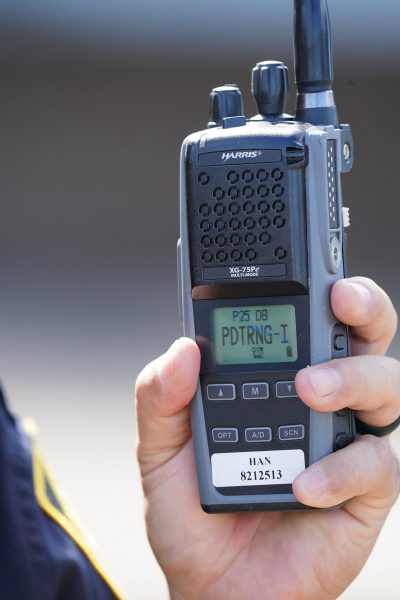
But we are living in strange days, and this has turned into a full-on campaign for the three TV news stations, local radio stations and the local newspaper, with ads running urging people to contact their City Council representative to tell them to make the police acquiesce to the demand for scanner access.
This fight is so overheated that Honolulu-based journalists are arguing to the Honolulu City Council that being able to listen in to the police scanners on Maui could have saved lives during the Lahaina fire. What we know of the Lahaina fires was that it was chaotic. It’s hard to imagine that listening to chaotic radio chatter would have made the chaotic situation any better. It’s easier to imagine how it might have made things worse. And by the way, the Honolulu City Council has no jurisdiction over Maui County, so yeah.
Acting Honolulu Police Chief Rade Vanic told council members that one of the big concerns is for people’s privacy. There are myriad reasons police might be called to someone’s house that have nothing to do with public safety and could be personally devastating if it got to the ears of the media.
“That’s the stuff, if we were going to your house, you wouldn’t want people to know,” Vanic said.
“We wonʻt report anything that isn’t vetted and verified,” KITV’s GM Jason Hagiwara promised the City Council. “We need to get to the story, get the correct info out quickly and responsibly. With scanner access, our job in protecting the public improves tenfold.”
We Need Answers, Not Scanner Chaos
While that is definitely the ideal, on the real, sometimes things get slippy when the urgency to push out details gets in the way of accuracy or understanding the full picture. Corrections on local TV are extremely rare. Retractions never happen. That’s not because mistakes are never made.
Mostly, allowing the media to listen in on unfiltered, real-time emergency police communication takes control over a potentially dangerous situation away from the cops and gives it to reporters, who may or may not have the same motivation in the moment.
Sometimes, the media’s voracious appetite for scary stories, gory details and the constant search for who to blame can get in the way of law enforcement out on the scene just trying to clear an accident off the road, arrest a suspect or figure out what the hell is going on.

All that being said, everyone can agree that HPD needs to work on communication with the public. Even HPD agrees with that. The last four chiefs — Logan, Ballard, Kealoha and Correa — famously refused to answer questions.
It’s like HPD and the media need couple’s counseling or a weekend retreat to build new trust, not Tommy Waters poking his nose in the situation, acting like the City Council should have the power to direct the cops on operational issues. Isn’t that the Police Commission’s job? Didn’t Mayor Rick Blangiardi just take a raft of criticism for trying to overstep the commission’s authority?
Giving access to the scanners doesn’t fix HPD’s infamously bad public communications. In fact, it may make them worse by enabling the cops to take credit for improvement of an outdated system that plays a miniscule role in helping the public understand what’s really going on with the police.
 Sign up for our FREE morning newsletter and face each day more informed.
Local reporting when you need it most
Support timely, accurate, independent journalism.
Honolulu Civil Beat is a nonprofit organization, and your donation helps us produce local reporting that serves all of Hawaii.
ContributeAbout the Author