Neal Milner: More Cops Aren't Coming, And They Wouldn't Reduce Crime Anyway
Police staffing shortages are a chronic problem. We have to get more creative than calling for reinforcements.
August 4, 2025 · 7 min read

About the Author

The Honolulu City Council has set up a task force to deal with the police department’s manpower shortage.
There are two ways this task force can do its job: hard or easy. Easy is tempting, but it’s not enough.
The easy way acts all blue-ribbon committee-ish. Respectable task-forcers define the problem and lay out possible solutions in a clear straightforward way that reassures the public as well as the public officials. How to move forward. Can do!
Seldom is heard a discouraging word.

Ideas showcases stories, opinion and analysis about Hawaiʻi, from the state’s sharpest thinkers, to stretch our collective thinking about a problem or an issue. Email news@civilbeat.org to submit an idea or an essay.
Easy, but it won’t work. The manpower task force is going to have to go hard or go home because the problem isn’t what meets the eye, there is no easy solution and the difficult but necessary approach is likely to ruffle a lot of feathers and scare many people.
Specifically, the correct, difficult approach needs to build a report based on six facts.
I’ll list them, then elaborate.
Accept These Truths
First, the manpower shortage is not going to go away. Hard experience shows that it may not even be possible to make a dent.
Second, the realistic question is not, “how do we get bigger?” It’s, “how do we do a better job with what we have?”
Third, adding more police does not reduce the crime rate.
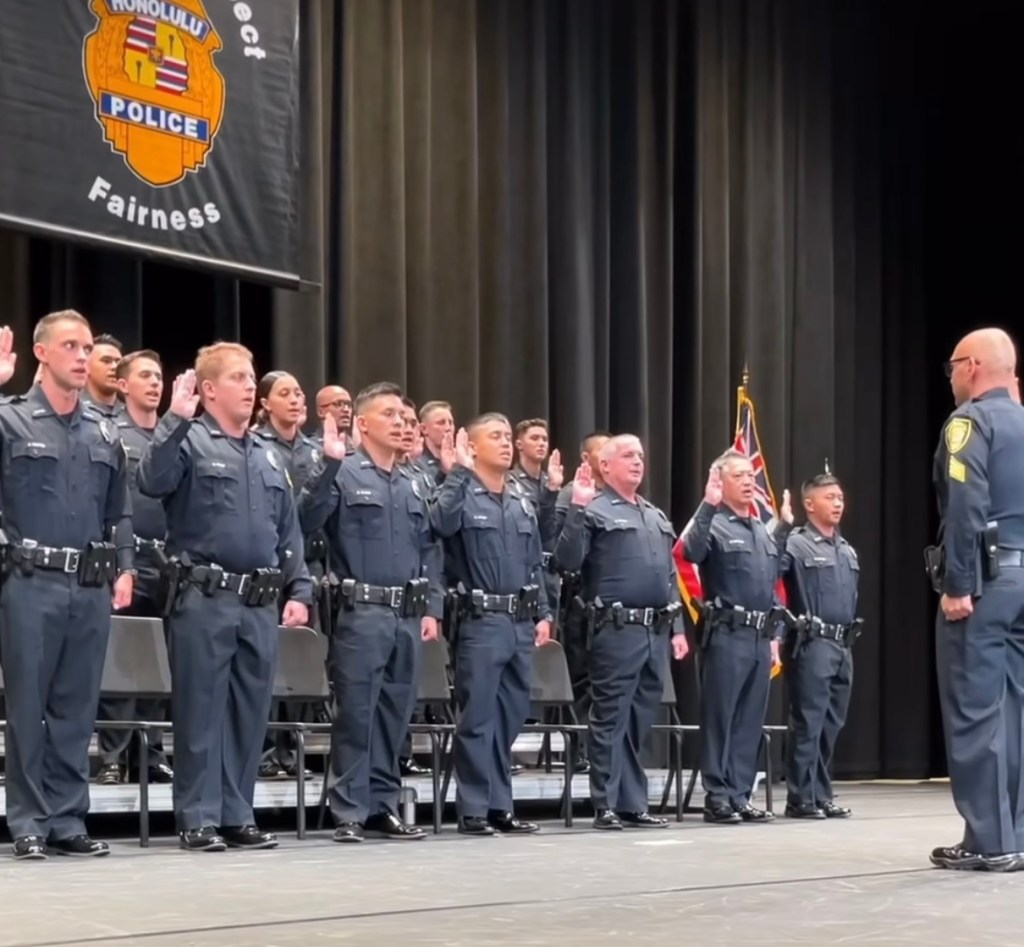
Fourth, over the past few years, as the number of police vacancies have gone up, crime rates have gone significantly down, both nationally and in Hawaiʻi.
Fifth, most people don’t believe the fourth, that the crime rate has gone down.
Sixth, this means we need a fuller, more realistic understanding of what police do. And can’t do.
The staffing problem can’t be solved because it’s national, everyone has tried to address it in a huge number of ways, and they’ve failed. Big cities for sure, but also smaller places.
As the journal American Police Beat puts it, “the dramatic plunge in hiring continues to affect agencies both large and small.”
Fewer people want to become cops, turnover is high and the incentives to bring police officers in and hold them have not stemmed the tide. The job has become not just harder but less appreciated.
This is not simple. Dealing with a chronic policing problem is like dealing with a chronic disease. It has to be controlled and managed, because it won’t go away.
“We need more cops!” Good luck with that.
“We need to learn how to work better with what we have.” That’s a sad statement, but a realistic one.
At the same time police shortages have gone up, serious crime rates have gone down.
Violent crime is down nationally, especially the murder rate in big cities.
Same for Honolulu, with the exception of recent murder rate increases for Waikīkī and the Leeward Coast.
That’s not what most people believe, though. According to a recent survey, 71% of people in Hawaiʻi think that crime is getting worse.
Why the difference between crime rates and what people believe? It’s not facts versus opinions. It’s because people respond more to compelling stories than to impersonal numbers.
Media and social media reinforce this. All you have to do is click on Nextdoor for a couple of days, look at the papers, or watch the news.
New York City has one of the lowest violent crime rates among all U.S. cities, a small fraction of the high murder rate cities like Phoenix, Baltimore and St. Louis. But that’s not the crime-in-America story you are likely to get.
Overall, does more police mean there will be less crime? “Maybe, maybe not,” seems to be the truest answer.
Even that may be too generous, according to ScienceDirect’s Journal of Criminal Justice: “While previous studies of the police-crime relationship have provided some evidence of an association between the size of the police workforce and levels of crime, findings have tended to suggest minor and inconsistent effects.”
This means blanketing an area with more officers is far from a guaranteed crimefighter
Many crimes, including the most violent like murders, can’t be prevented simply by adding more police. Most murders take place in circumstances that the police can do nothing to prevent — fights, domestic disturbances and mayhem by intimates in intimate places.
Do Something, Anything!
Neighborhoods and communities, not police, are the most important crime deterrents.
All these conflicting forces make policing even harder because officers are expected to provide the thin blue line between safety and chaos, which they are but only in limited ways
In their everyday work, the police respond to the moment, not the numbers or the evidence. After all, police departments are public agencies that deal with emergencies. A murder in Waiʻanae or in a Waikīkī condo, do something!
So, the police, after community and politician pressure, do something by swooping in — sending cops into the area to flood the zone, stop the crime wave.
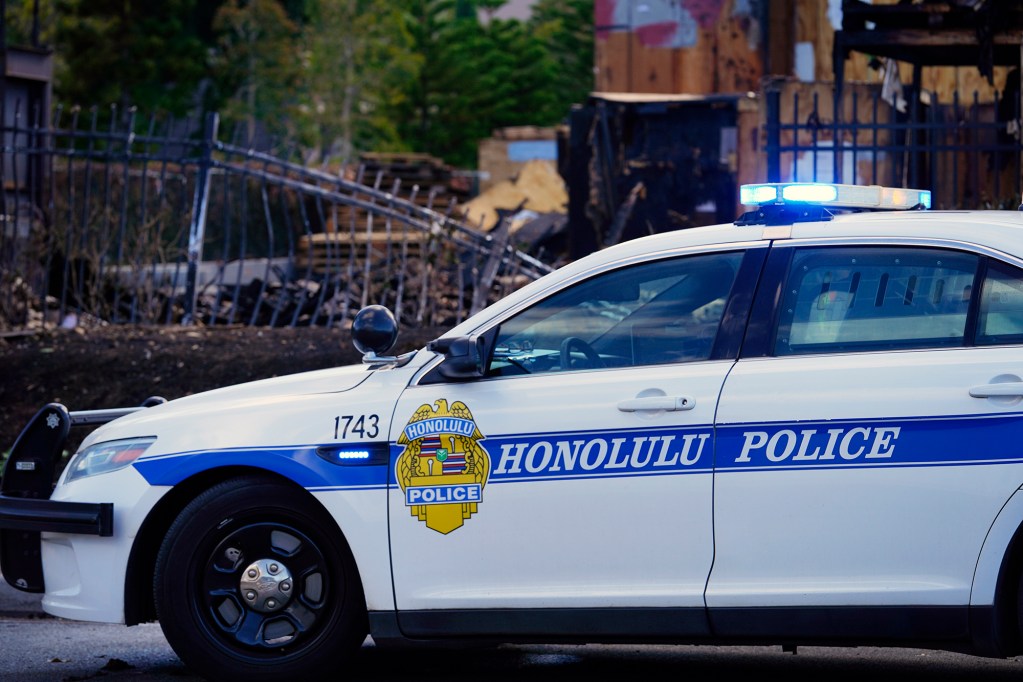
Big-time to-do by police officials and prosecutors, along with the dutiful, breathless media coverage suggesting that finally, once and for all …
That’s what HPD’s interim chief, Rade Vanic, did recently in Waiʻanae. More troops, more support on the way.
But take a step back here. More police in Waiʻanae means less somewhere else. These swoops don’t necessarily last, partly because there isn’t manpower to maintain them and, more important in the long run, there is only so much even a fully staffed police department can do to fight crime.
These so-called solutions are often only temporary. They are on-the-spot, seat-of-the-pants responses, which can come across as good policing — for the moment. But talking all these years and using so many seat-of-the-pants responses is a sign of police administration and city government failure.
HPD staffing in Waiʻanae has been a big issue for a long time. For nine years, the city has been building and developing a large police substation there that has never been fully opened because it can’t be staffed.
For the people in Waiʻanae, those delays and promises become a symbol of not caring and lack of good faith. Waiʻanae gets promises, then gets screwed again.
Recognize The Limits
What should the manpower task force do?
First, explain the six facts and show how they change the picture of the simplistic relationship between cops and crime.
Since staffing numbers won’t get much better, the police need to look at more efficient ways to use their resources.
We need to realize the limits of focusing on staff size because overall police have a limited effect on reducing crime. That’s not something we want to hear because safety and security are such an important part of our concerns.
There are other ways, however, to reduce violence and make us feel safer, as Jens Ludwig wrote in “Unforgiving Places: The Unexpected Origins of American Gun Violence.”
Start the rethinking this way: When it interviews the candidates for the next HPD chief, the Honolulu Police Commission should ask each one how they would deal with the manpower shortage.
If any of them confidently answer, “I have a plan that works,” tell the hopeful to save that act for a comedy club in Waikīkī.
 Sign up for our FREE morning newsletter and face each day more informed.
Read this next:

Local reporting when you need it most
Support timely, accurate, independent journalism.
Honolulu Civil Beat is a nonprofit organization, and your donation helps us produce local reporting that serves all of Hawaii.
ContributeAbout the Author