Will Bailey: Why East Hawai‘i's Fishery Has Fallen On Hard Times
From the boats to the markets, Hilo Bay used to be a thriving industrial area.
August 5, 2025 · 7 min read

About the Author

My dad still talks about it.
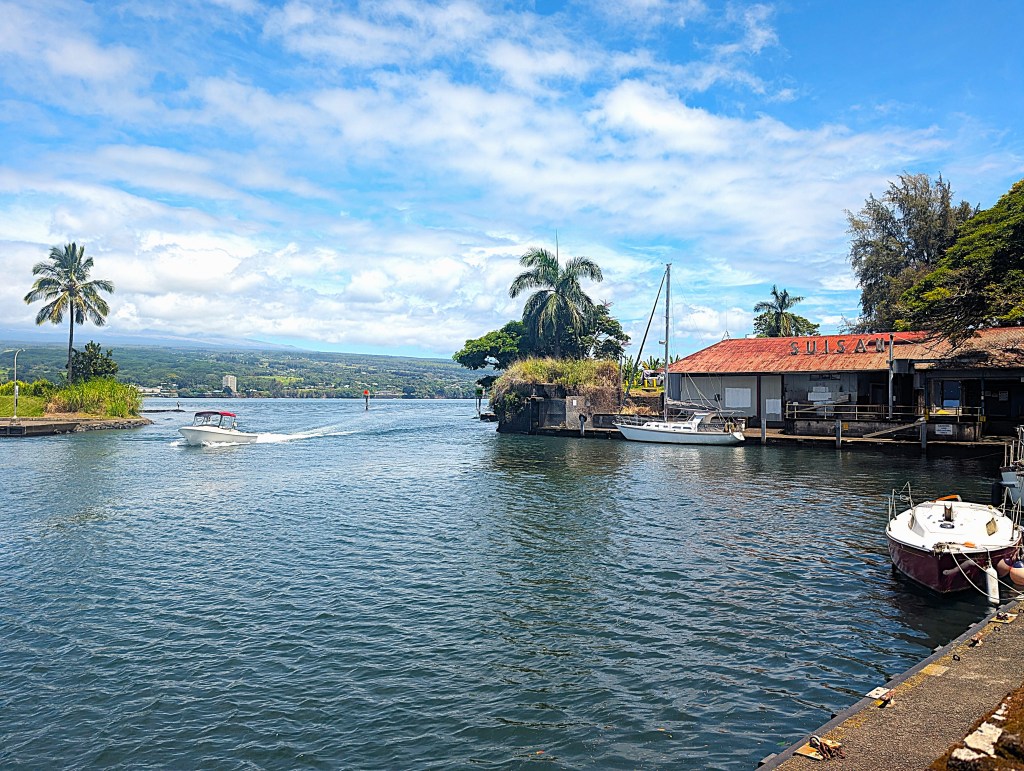
How in the 1980s he flew over from Kaua‘i just to see it — the bustle, the action, the life that radiated from Suisan Fish Market.
Back then, it wasn’t just a place to buy fish. It was the beating heart of Hilo’s working shoreline. Boats would come in loaded, men yelling, forklifts moving, kids running underfoot, aunties eyeing the fresh ‘ahi. You didn’t just witness it, you felt it. Like the tide itself.
Today, Suisan is still open. Still trying. But the energy is different. Much of the fish comes from the mainland now. The poke runs out early. And the boats that once fed it are fewer and older.

Ideas showcases stories, opinion and analysis about Hawaiʻi, from the state’s sharpest thinkers, to stretch our collective thinking about a problem or an issue. Email news@civilbeat.org to submit an idea or an essay.
The market didn’t change because people stopped fishing. It changed because the systems around it stopped working.
Boat ramps closed. Fuel costs spiked. Regulations mounted. The bay grew dirtier. And slowly, one by one, the fishers who made Suisan what it was retired, quit or lost access.
The Pulse In Puna
But the story isn’t just in town.
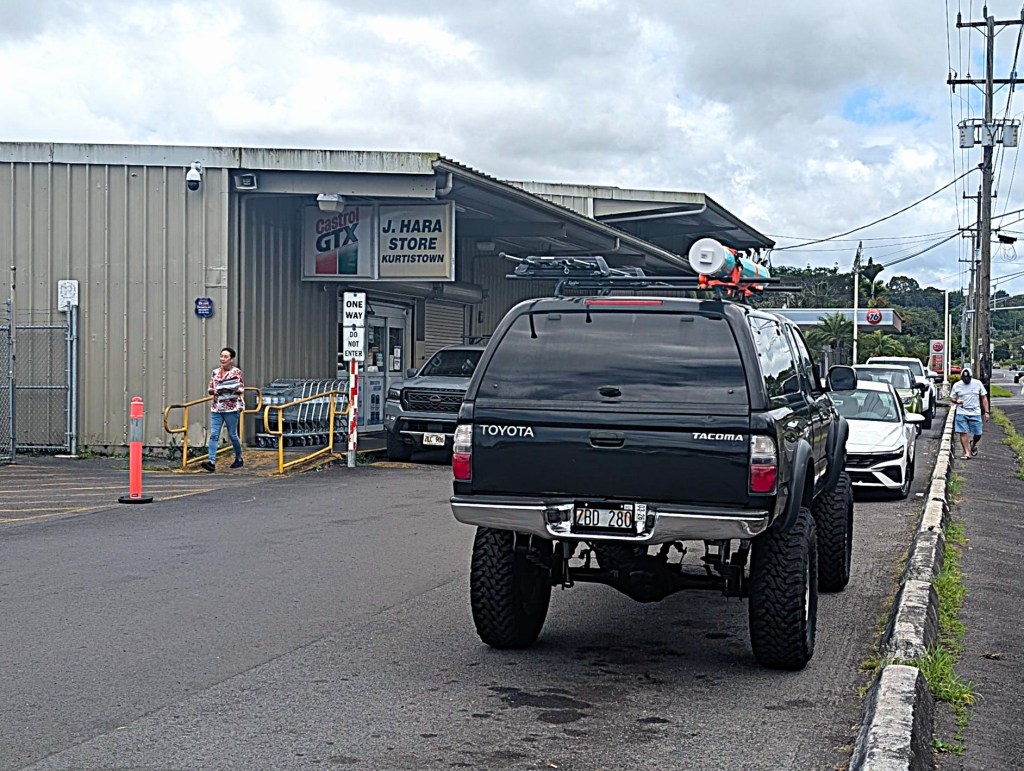
If Suisan was the heart of Hilo’s fishery, then J Hara Store has been its pulse in upper Puna.
Since 1993, it’s been more than a shop. Back when the subdivisions were still raw and the roads were pitted dirt, you could see neighbors coming in from miles away by the dust cloud trailing behind their truck. And when they came out, they came here.
J Hara’s sold gear, bait, essentials — but more than that, it sold possibility. The racks of rods and tackle didn’t just promise fish. They offered a way to provide, to connect, to carry forward what you knew. Even now, decades later, the store holds that weight. Generations have passed through, buying their first reel, talking story about the tide, or sharing quiet disappointment after another ramp closed.
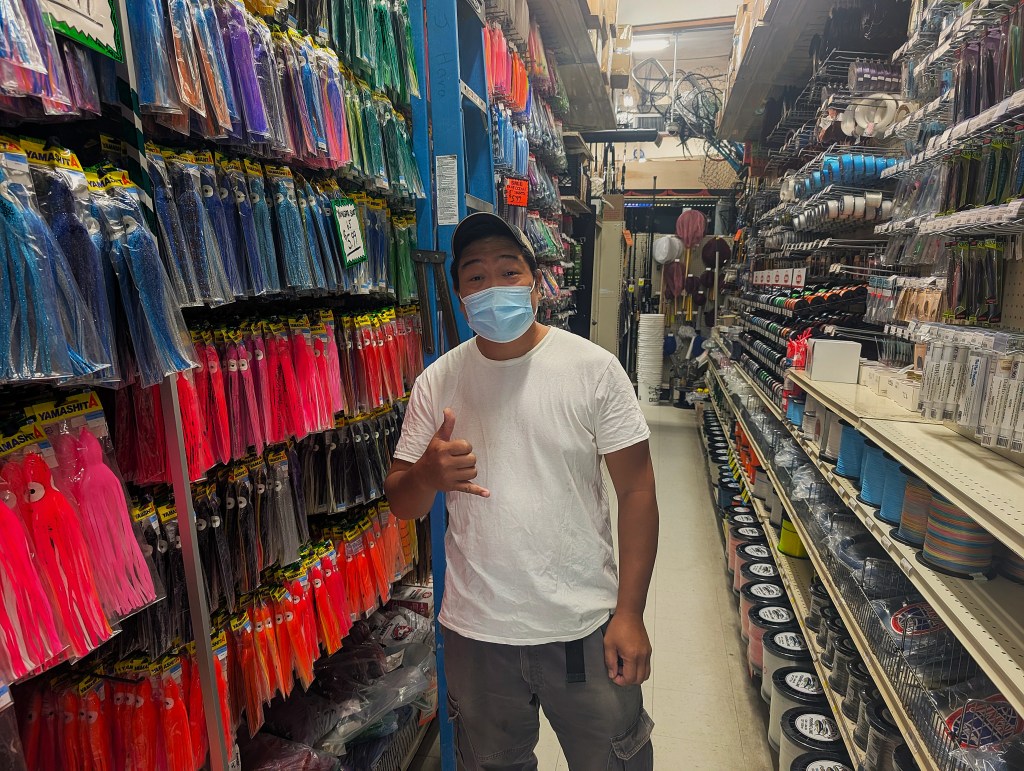
I spoke with Avery Berido, who’s been working there since the beginning. He remembers when fishing spots weren’t crowded, when respect ruled the shoreline.
“Back in the ’90s … when you found a spot, you’d be the only person there, unless someone else knew it,” Berido said.
But since the late 2000s, he’s seen more people, less patience, and fewer fish. The store’s still open, still steady, but the shoreline it once served is changing. And that change is felt behind the counter.
Ramps Closed, Boats Stopped
You can’t talk about that change without talking about the ramps.
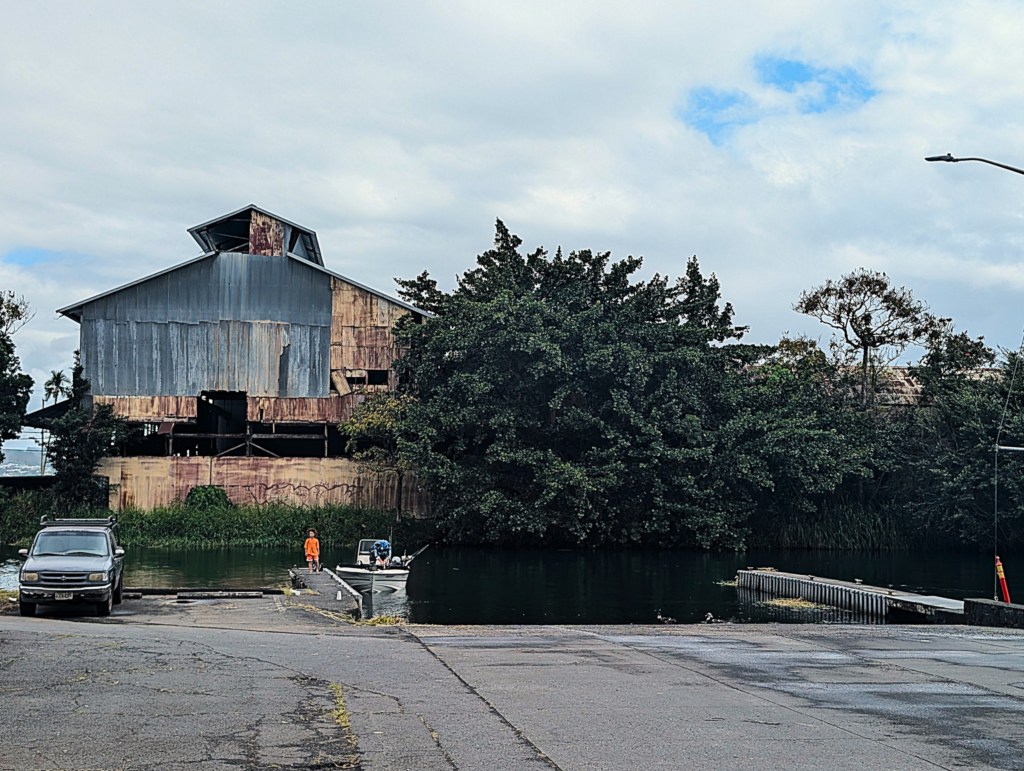
Wailoa is the only viable boat launch from Hāmākua to Kaʻū. That’s over 100 miles of coast — longer than the entire island of Oʻahu — and only one ramp. For years, it went without dredging, building up so much silt that launches became hazardous. Boats got damaged. Fishers got fined by the Coast Guard. Some gave up entirely. Even now, Wailoa is far from reliable.
Pohoiki, once the primary ramp for the east side, was buried in the 2018 eruption. Seven years later, dredging only began this past June. It’s scheduled to finish in 2026. But there’s no plan for upkeep. No maintenance budget. Just another promise, kicked down the road.
With Pohoiki closed and Wailoa broken, some fishers drove 40, 60, even 80 miles to launch from Honokōhau — spending hundreds more on fuel and losing full days just to do what used to take hours. Many simply quit.
And it shows.
Suisan’s supply chain has thinned. Local poke disappears before noon. And families who once relied on their uncle or cousin for fresh fish are now left with mainland fillets on Styrofoam trays.
Investment vs. Neglect
Kona tells a different story.
At Honokōhau Harbor, the ramps are wide, the dredging is regular, and the slips are full. The charter fleet there supports nearly 400 jobs and brings in over $17 million annually. Tourists come for the thrill — trophy marlin, deep-sea days, sunset sails — and they leave happy. It’s curated. Funded. Working as intended.
But it’s not just the infrastructure.
Kona’s waters are protected, studied, and stewarded. Since 1998, the West Hawai‘i Regional Fishery Management Area has monitored 35% of the coastline, creating replenishment zones where yellow tang populations have bounced back 14%. At Ka‘ūpūlehu, a community-led reserve boosted fish biomass by over 600% since 2016 — not through bans, but kuleana. Local rules, local care.
That’s the difference.
West Hawai‘i treats its fishery like a resource worth managing. East Hawai‘i? We’re still waiting for one marine reserve. Still fighting for one functioning ramp. Still watching the fish disappear without so much as a baseline count.
It’s not just frustrating — it’s telling.
Telling us who gets listened to. Who gets funded. And who gets left out, time and again.
Sewage, Storms And A Failing System
Meanwhile, our waters grow more polluted.
Hilo’s wastewater plant is crumbling, with raw sewage regularly spilling into Wailoa Harbor and the bay. Thousands of cesspools leak pathogens into the groundwater. Heavy rains overwhelm the system. Fishermen know to stay out of the water after storms. Surfers roll the dice. But kids still play where the runoff settles.
Then there’s Parker Ranch — one of the nation’s biggest. It boasts 130,000 acres upslope, with runoff that flows into the Wailoa River and beyond. And yet, we’re still paying $10 to $15 a pound for ground beef. $30 for steak. Why? Because most of it is shipped away. Only 7% of Hawai‘i’s beef stays here.
And Suisan fades. And J Hara hears it. And the families who used to fish, stop.
This isn’t the cost of nature. It’s the cost of neglect.
A fishery doesn’t collapse overnight. It dies slowly — boat by boat, ramp by ramp, runoff by runoff — until only the memories remain.
But we still have choices.
We can fund dredging, not just once, but regularly. We can build maintenance into the budget. We can invest in small-scale fishers the way we do in Kona’s charters. We can establish marine reserves — with community input, not imposition. We can regulate the polluters, not just fine the fishermen. We can choose food security over export profits.
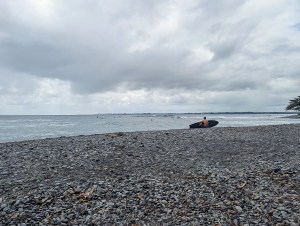
The east side still feeds people. But it’s being starved of investment. And that’s not just bad policy. It’s wrong.
Because a true fishery isn’t just economics. It’s culture. Resilience. Generations of knowledge passed through rod and line, tide and time.
It’s a father teaching his son where the fish run. A grandmother frying up the day’s catch. A neighbor walking into J Hara with just enough for a spool of line — and a quiet kind of hope.
Let’s not let that disappear.
Civil Beat’s coverage of environmental issues on Hawaiʻi island is supported in part by a grant from the Dorrance Family Foundation.
 Sign up for our FREE morning newsletter and face each day more informed.
Read this next:
Local reporting when you need it most
Support timely, accurate, independent journalism.
Honolulu Civil Beat is a nonprofit organization, and your donation helps us produce local reporting that serves all of Hawaii.
ContributeAbout the Author