Will Bailey: Schatz's Waimea Audience Could Have Raised More Local Issues
The well-heeled West Hawaiʻi crowd didn’t really address issues that trouble the rest of the Big Island.
August 17, 2025 · 5 min read

About the Author

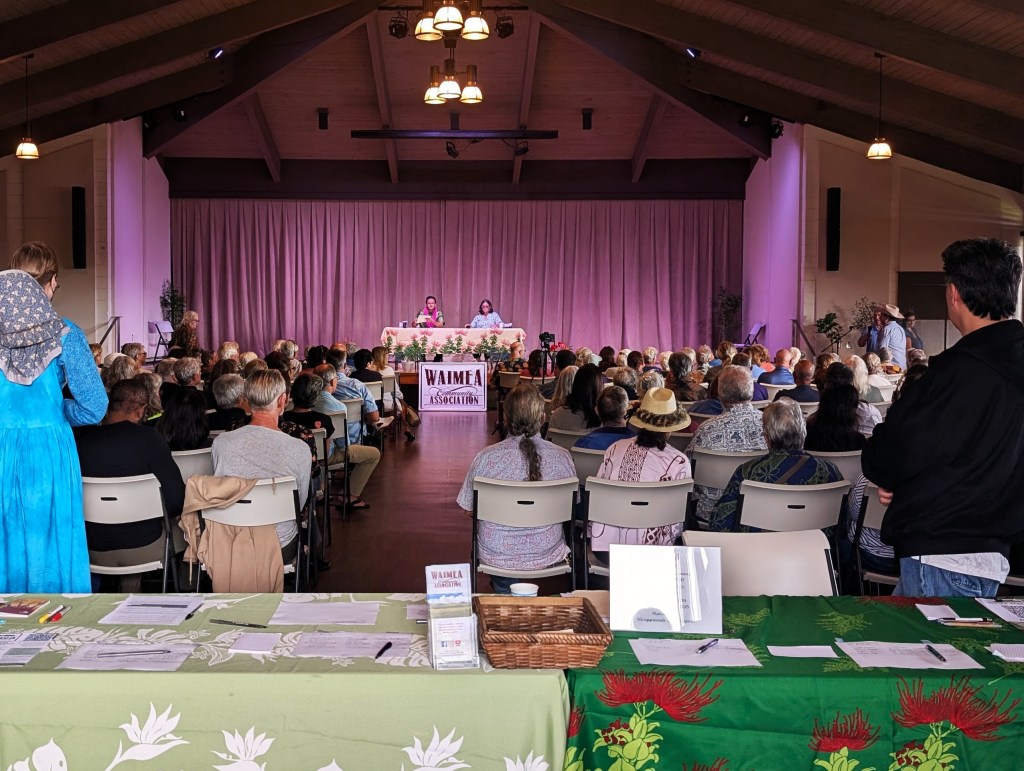
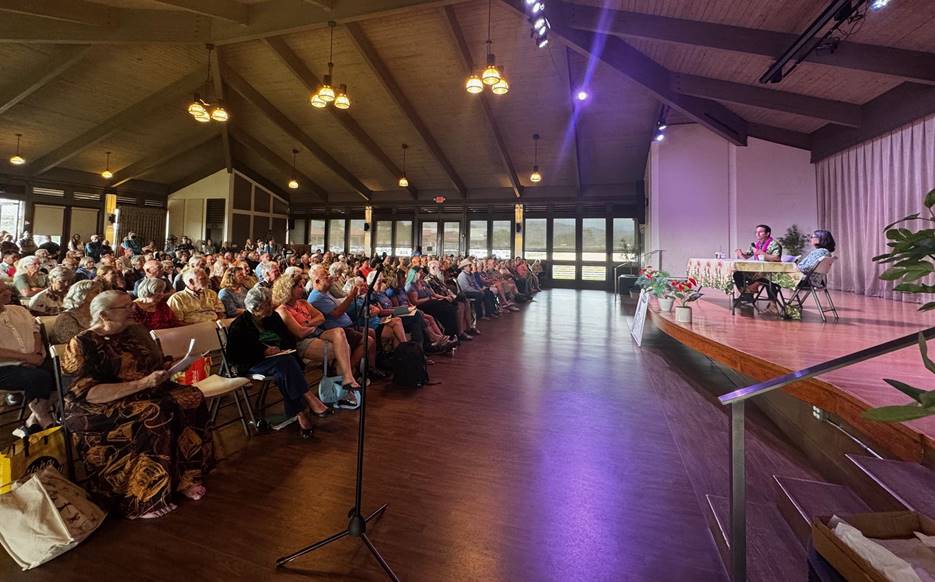
In the front row, a man wore a polished belt buckle, the leather stamped with his cattle brand. Two seats over sat the head of a Latino farmworkers’ group. Around the room were ranch owners, union leaders, nonprofit directors and chamber reps — the kind of people who can open a checkbook, sway a vote, or pull 50 neighbors into a meeting with one phone call.
The Waimea Community Association and Chambers of Commerce billed it as a town hall. For U.S. Sen. Brian Schatz, it was also a roomful of connectors, the Big Island’s human power grid.
A few regular residents had made the trip, too. They asked about national policy and local programs, ICE raids and climate change, U.S. support for Israel. The discussion skimmed big themes. East Side priorities — Pohoiki, Wailoa, the fishery — never came up.
We’d driven up from Puna on Tuesday, my wife still in scrubs after a full shift at the elder care facility. She’s been a nurse for 30 years — traveler contracts on the mainland, Covid wards, the long grind of short-staffed floors. We’ve seen the shortage from every angle. During the pandemic, the pay was high but the conditions were brutal. In Kentucky, I even took a job in a tobacco factory for a while, following her from contract to contract.
In Waimea, a question about nurse staffing finally came. She sat forward, listening. Schatz thanked the nurse, agreed in principle, and passed the issue to the Legislature. On the drive home my wife was blunt: He’d kicked the can down the road. It was over in less than a minute.
Hospitals, care facilities and clinics remain dangerously understaffed. During Covid, many nurses took contracts across the country — paid better than ever but worked to exhaustion. Now the traveler contracts continue, the doubles and overtime never stop, and facilities pay more to temporary hires than to the staff they already have.
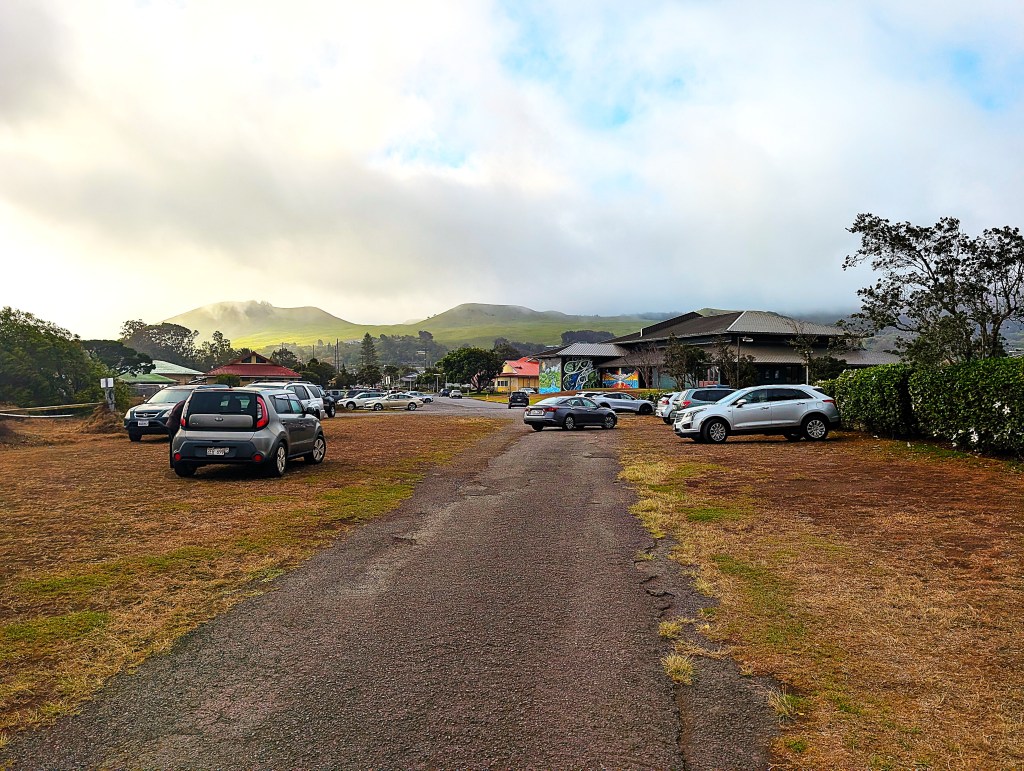
My dad used to tell me about hunting wild turkeys in the hills above Waimea with the old man who built our cabin. From the highway, those hills look smooth and green. Up close, they’re ankle-twisting country — rough going if you want to get anywhere.
The nursing crisis is like that. So is the East Side fishery. From far away, maybe the problems look manageable. Up close, you either deal with the ground under your feet or you don’t get where you’re going.
That night in Waimea, Schatz moved easily between topics. On climate change, he called it a generational fight — some years forward, some back, but trending the right way. On housing, he spoke of stopping “inappropriate” development while building homes working families can live in. On immigration enforcement, he talked about making Hawaiʻi an unattractive target for raids.
The Israel questions came from regular residents, not the power-grid crowd. Schatz didn’t hedge — he criticized the Netanyahu government’s conduct in Gaza while affirming Israel’s right to exist, and pointed to his votes against certain arms transfers. In a room that could have hosted a donor luncheon, the moment landed without rancor, a reminder that Waimea’s audiences are comfortable wading into the world’s most combustible debates.
On other issues, Schatz stressed pragmatism. He described Medicaid and SNAP work as “hand-to-hand combat” — finding eligible people, helping them with paperwork, keeping them enrolled before deadlines kick them off. He praised bipartisan work on telehealth and housing. He spoke about federal funding fights over the National Oceanic and Atmospheric Administration, NASA and the Mauna Loa Observatory, saying he will try to protect science budgets from presidential cuts as a member of the Senate Appropriations Committee.
But for my wife, and for anyone hoping for a sign that Hawaiʻi’s nurses might get relief from chronic understaffing, the answer was as rough as those Waimea hills. You deal with it, or you don’t. And when someone with the power to change the terrain shrugs it off, the ground just gets rougher.
The absence of East Side issues was its own kind of answer. Waimea is more than two hours from Puna, depending on the weather and roadwork. Few from the east made the trip. Without those voices in the room, there was no mention of Wailoa Harbor, Pohoiki, the fishery decline — no discussion of the gap between Kona’s marine infrastructure and Hilo’s. If politics is about who shows up, that night showed how easy it is for certain problems to stay off the radar.
It’s not that Schatz ignored local concerns — housing, climate and health care all have local angles. But the night belonged to the people in the room, and they were asking about national politics, immigration enforcement, Israel and global climate policy.
I don’t doubt Schatz heard what was said. I also don’t doubt that what wasn’t said matters just as much.
From far away, the hills above Waimea look smooth and green. Up close, the footing is tricky, and the way forward takes work. Whether it’s safe nurse staffing, a working fishery, or basic infrastructure on the east side, you can only see the ground for what it is if you’re willing to walk it.
 Sign up for our FREE morning newsletter and face each day more informed.

Local reporting when you need it most
Support timely, accurate, independent journalism.
Honolulu Civil Beat is a nonprofit organization, and your donation helps us produce local reporting that serves all of Hawaii.
ContributeAbout the Author