Kirstin Downey: After 150 Years, Family Discovers Ancestor's Hawaiʻi Ties
Edward Gravierʻs descendants never knew he sailed to Hawaiʻi in the late-1870s. Then his great-great-grandson found him on the Civil Beat website.
September 1, 2025 · 7 min read


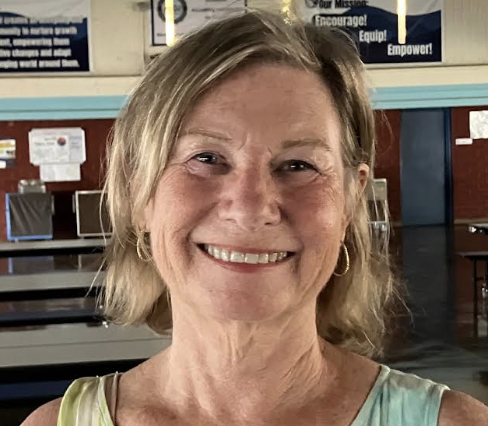
About the Author
Sitting on his couch in Laytonville, California, browsing the internet, Phil Gravier stumbled upon information that his family had been trying to find for 150 years.
Five generations ago, his great-great-grandfather disappeared, and nobody knew what had become of him.
Phil Gravier finally found what they were looking for — on the Honolulu Civil Beat website.
“I saw it and I got goosebumps,” he said.
Last year, Civil Beat published a six-part series on a long-forgotten hoard of documents I had discovered at the National Archives in College Park, Maryland, while doing research for a book on Hawaiian history. The records, shipped to the East Coast from Hawaiʻi, were labeled “Estates of Deceased Americans.” Tightly stuffed into manila packets, the materials represented the last possessions of about 160 people from the United States, mostly men, who died in the Hawaiian Islands from 1830 to 1900.
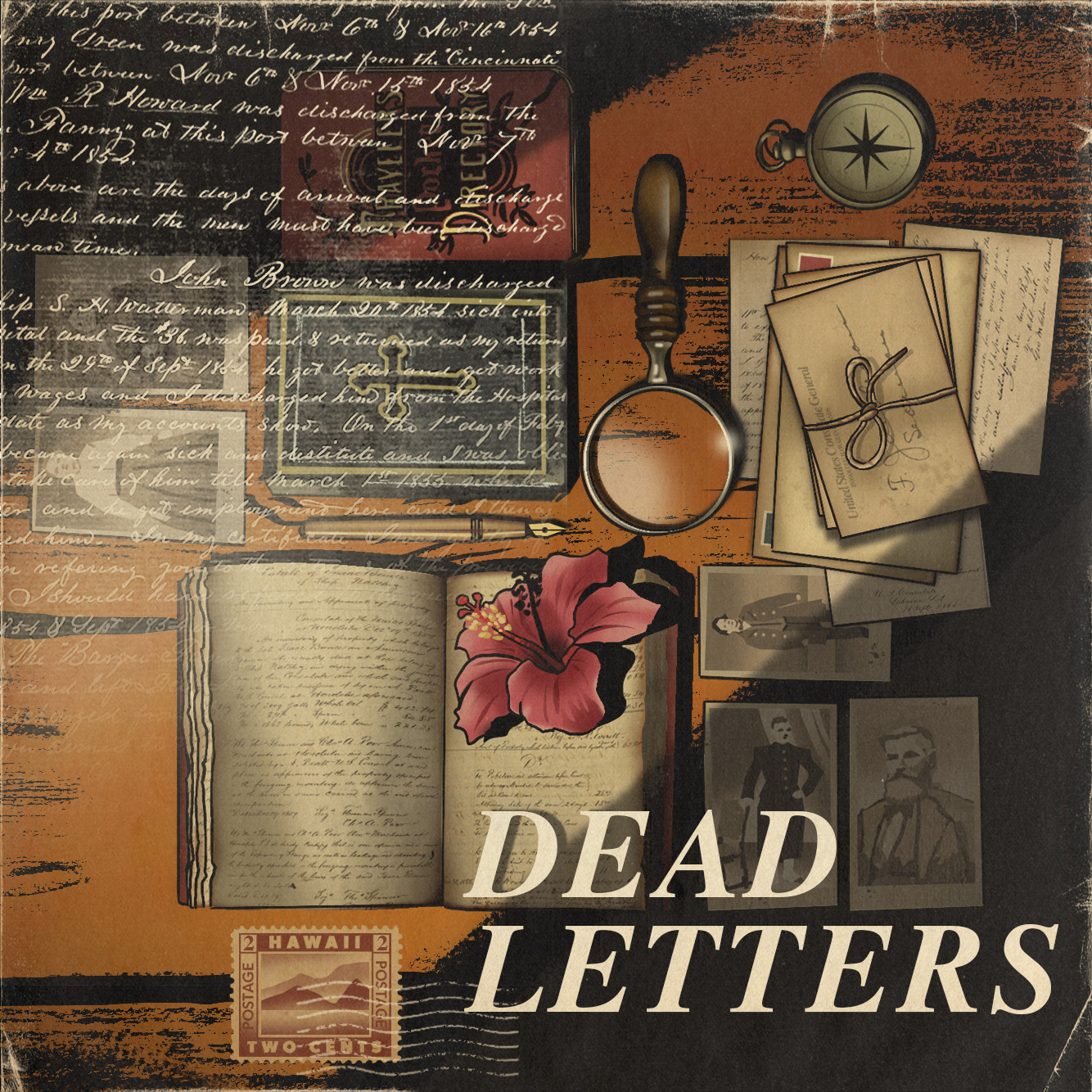
In the 1800s, Americans who died in the kingdom of Hawaiʻi were considered foreigners and the few items they possessed were sent by the local American consul to the U.S. State Department in Washington, D.C., to be delivered to their next of kin. In these cases, the letters, documents and memorabilia, including family correspondence, photographs, lockets and locks of hair, never made it to the intended recipients and ended up stored away in the archives. I was the first person to unseal them for more than a century.
Among these forlorn packets were the last possessions of a man named Edward Gravier. He was Phil Gravier’s missing great-great-grandfather.
A Man Of ʻExcellent Characterʻ
I had found Edward Gravier’s records particularly haunting, which is why I included him in our stories. He had moved to Hawaiʻi and was living on Alakaʻi Street in Honolulu when he died at age 39, in 1881, of unknown causes. The documents showed him to be a naturalized American citizen, born in France.
In the 1860s, he had served three years in the Union Army in the American Civil War, stationed in Northern California.
It must have been difficult duty, for although the West wasn’t the charnel house of the American South, it was filled with Confederate sympathizers and torn by violence between white settlers and the Native Americans and Mexicans who had lived there for centuries. California had become a state in 1850. The American soldiers were expected to keep the peace amid chaos.
Gravier was said to be 5 feet, 3½ inches tall, with a light complexion, gray eyes and brown hair. Upon his release from the military, he was said to be a man of “excellent character.”
Inside the packet were his naturalization papers, his discharge papers, letters written in French and two deeds for land he owned in Mendocino County, California.
Some of the other document packets I found in the archives suggested many of the men were solitary loners, footloose and only lightly tethered to their folks back home.
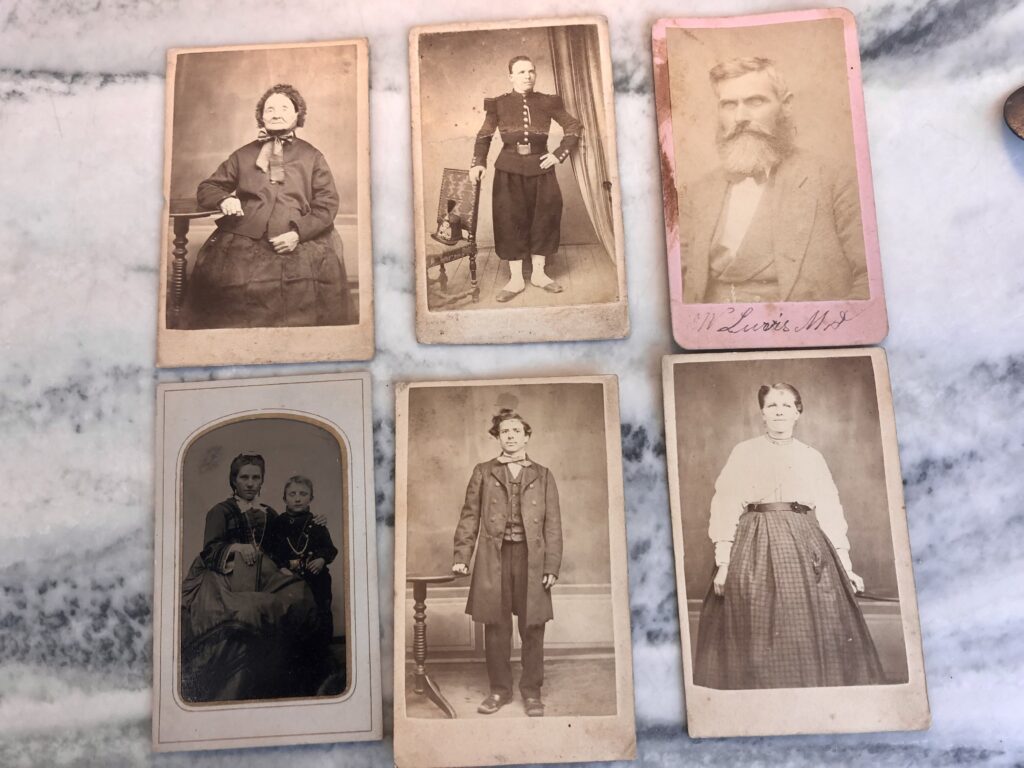
But my impression of Gravier’s belongings suggested he was a family man who had kept a set of photographs of his relatives and a handwritten note that listed his three children: Edward, born October 2, 1871, and a set of twins, Annie Louisa and Walter Lewis, born March 28, 1874. They were all born at Camp Wright Round Valley in California.
A note indicated his wife and children were living in Mendocino.
He owned a metal tag that indicated he had a license to drive a commercial conveyance, probably a horse-drawn delivery cart of some kind.
Gravier’s wife, Annie, told everyone that he had abandoned them and taken off. This belief was a source of sadness and disappointment to his descendants.
Annie told them a vague story about how he had “left with the army.”
Getting this new information about Gravier, and his interest in his family, was healing, Phil Gravier said.
“At least we know he wasn’t a scoundrel,” he said.
There’s at least a chance that, in fact, Annie may have been the first to stray, as she married a man named Moses Joseph Lee in September 1877, when Gravier was alive and had not yet moved to Hawaiʻi. She later married again. She died a wealthy woman, a landowner, surrounded by a large brood of children.
Gravier’s possessions, on the other hand, were auctioned off on Oct. 10, 1881, for $8.27.
In our series, we mentioned Gravier twice. He owned a metal tag that indicated he had a license to drive a commercial conveyance, probably a horse-drawn delivery cart of some kind, and we published a photograph of it. And we included him in a story about the surprisingly large number of Civil War veterans who had come to Hawaiʻi following the war to recover from trauma.
It’s not unusual that Gravier came to the islands. Economic ties between California and Hawaiʻi were already tight. California was still so lightly populated that Honolulu was the biggest city in the region and it was the best place to buy goods and services unavailable in California. Sailing ships crossed the ocean on a regular schedule, making it an easy trip. Many people from Hawaiʻi had joined the stampede to California during the Gold Rush, and they moved back and forth.
When I first came home to Hawaiʻi after seeing the archival documents for the first time, I casually told my editor, Patti Epler, about the unusual find. She found it as fascinating as I did and she proposed that we turn it into a series of articles for Civil Beat. Over dinner, we wondered if we could find any heirs of the people whose lives had been discarded so cavalierly by the State Department.
I returned to the archives and began studying the documents more carefully, looking for patterns among these scattered fragments of lives. There were so many.
ʻI Bumped Into It Accidentallyʻ
I had tried to find Gravier’s family at the time but hit a wall.
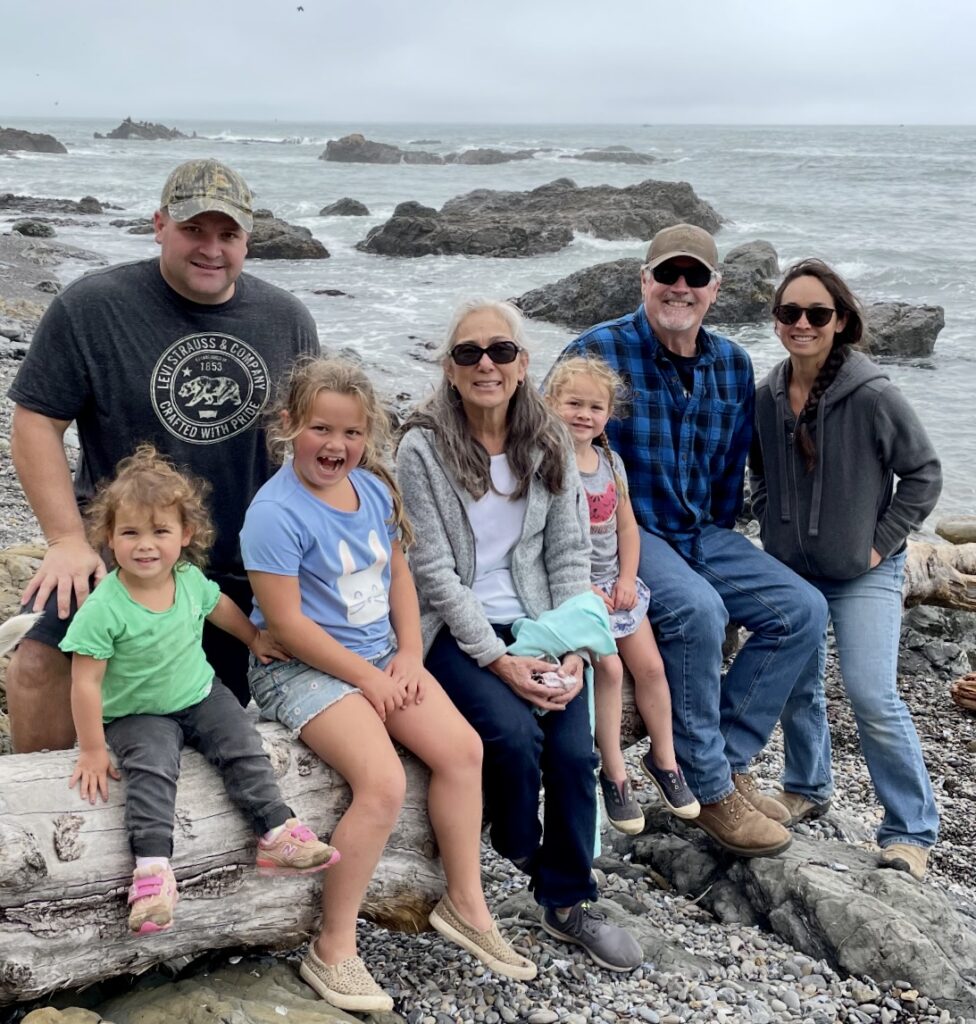
But after the series ran, they found us. Phil Gravier, 68, had been working on the family genealogy and told his kids that that the long-missing Edward had been a Civil War veteran. Then his granddaughter, Poppy, went on a school field trip to San Francisco’s Angel Island, formerly a Civil War artillery garrison, and came back asking what else he knew about their ancestor. Phil Gravier, a rancher who owns a gas station in Laytonville, began scrolling the internet.
That’s where he found the stories about Edward Gravier. He had never heard of Honolulu Civil Beat, and it came as a surprise.
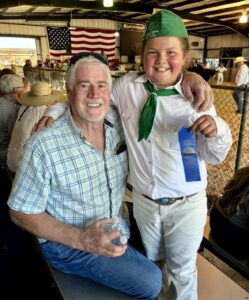
“It was just by chance, I bumped into it accidently,” he said. “I’m forever grateful.”
He said he wishes the State Department had tried harder to deliver the package to them.
Edward Gravier wasn’t entirely forgotten in the meantime. Twenty-four years after his death, on Feb. 21, 1905, the French Consulate in Hawaiʻi put out a request for information about his whereabouts, according to a short notice in the Honolulu Advertiser, suggesting that his relatives in France still hoped he would return.
But the family in Mendocino never heard anything more. Records on ancestry.com described his death as “unknown.”
The Civil Beat stories allowed them to fill in that missing gap.
Phil Gravier hopes to travel to the National Archives to see Edward’s last items for himself. Perhaps he will travel there with a family entourage.
As it turns out, Edward Gravier’s life had real impact. He has some 50 descendants now.
 Sign up for our FREE morning newsletter and face each day more informed.
Read this next:
Local reporting when you need it most
Support timely, accurate, independent journalism.
Honolulu Civil Beat is a nonprofit organization, and your donation helps us produce local reporting that serves all of Hawaii.
ContributeAbout the Author