

From Katrina To Lahaina To Kamchatka, Learning From Disaster
We need a stronger FEMA with robust emergency management, preparedness, response and recovery programs.
The 20-year anniversary of the deadliest disaster in modern U.S. history along with other recent hazard events are a powerful reminder of how much more work is needed to build safe, resilient communities.

Hurricane Katrina killed over 1,800 people and resulted in billions of dollars in economic losses, displacement of families and businesses and persistent recovery challenges. Katrina demonstrated the need for more investment in disaster management and humanitarian assistance. It followed the Indian Ocean Tsunami in December 2004 killed more than 275,000 people across 11 different countries.
We keep getting harsh, loud reminders to do more. The Japan earthquake, tsunami and nuclear disaster in 2011 and countless other hurricanes, wildfires, floods, tornadoes, volcanic eruptions and other big disasters led to continued carnage, suffering and ever mounting economic loses.
We need more than ever, a stronger FEMA (Federal Emergency Management Agency) with robust and effective state, local, tribal and territorial emergency management, preparedness, response and recovery programs. Community-based emergency management programs prevent hazard events from spinning out of control, reducing harm to people, property, livelihoods and our quality of life.

The very definition of a disaster is that it overwhelms local capacity, requiring outside assistance. A catastrophe, like Katrina or 9/11 meant that local responders and emergency personnel need help from the military and outside agencies under “mutual aid” agreements with police, fire, emergency medical services, utilities and transportation agencies. Outside assistance includes mass care, damage assessment, debris management and support of recovery efforts.
Especially in Hawaiʻi, the most remote place on the planet, we need to invest in community-based programs with strong partnerships and networks joining hazard scientists, emergency managers and those working to save lives, reduce injuries, and build stronger, safer homes, businesses and communities.
Share Information, Build Trust
We need “whole community” systems which are interdisciplinary, multi-cultural and able to organize, communicate, and collaborate before, during and after hazard events. We need to share information, build trust and develop plans and exercises so that we all know what to do, where and when to go and how we can help others when disaster strikes.
There are not enough police, fire, emergency services personnel and equipment when disaster strikes. We saw that during the pandemic, when because of limited supply chains and on-island production, there were shortages of ventilators and medical equipment and also imported goods and services. Have we not learned from other disruptions, labor unrest, and economic shocks just how vulnerable and isolated we are in Hawaiʻi?
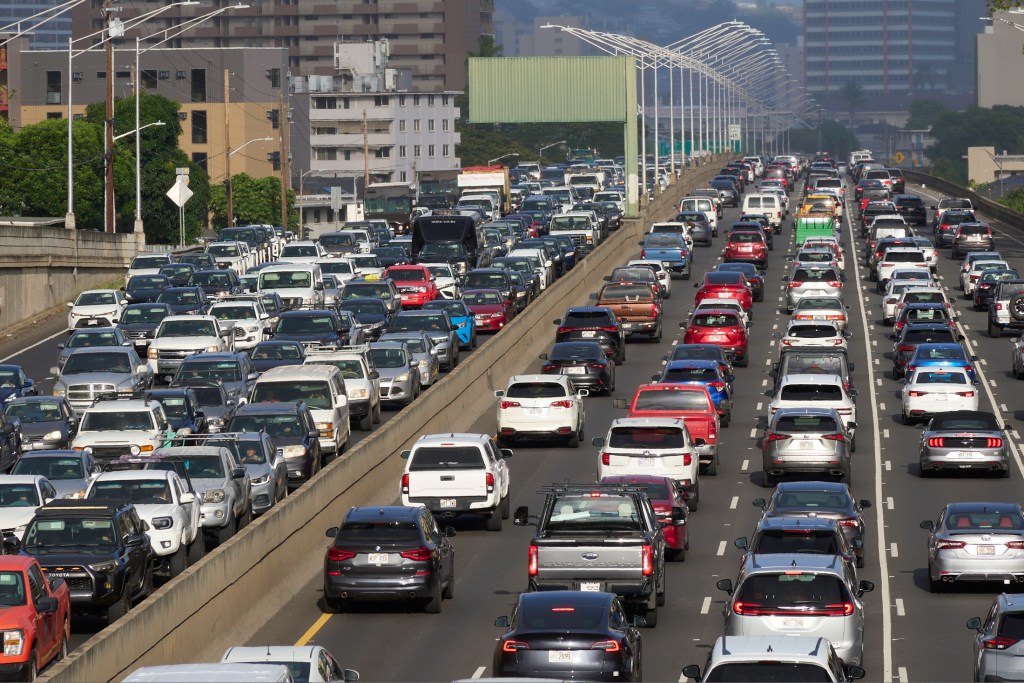
If on a normal day, we have bad traffic congestion, what happens when there is an evacuation order and thousands of people are sent home or encouraged to close their businesses? The streets will be flooded. Gridlock will occur. People will be stuck in traffic. Frustration, anger, and calls for better management, planning and operations will mount.
When evacuation is ordered when it is not needed, the “cry wolf” syndrome arises. People may hesitate even more when evacuation is ordered. They won’t believe or trust the authorities. The “blame game” will arise. While it is easy to point to feckless leaders and lazy bureaucrats, the reality is far more complicated. We all share responsibility for the mess we’ve created.
We need further investment in science and technology, including more and better sensors, models and tools for forecasting tsunamis and wave heights and inundation. It is striking how little attention was paid to the huge Russian nuclear submarine base damaged during the Kamchatka earthquake and tsunami.
We have to focus more on geopolitical tensions and diplomatic failures in the region. Our leadership should promote greater exchange of climate and weather data, geophysical hazards and the chemical and biological toxins and hazardous materials released into our environment when disasters strike.
We must share science-based data across the Pacific and its “ring of fire.” We need better tools for identifying and mapping the locations of vulnerable, at-risk populations and our exposure to natural and man-made hazards and threats.
How To Evacuate
It’s all about where we live and work and our exposure to harm. So much of our development has occurred in hazard-prone, coastal flatlands with high risk of flooding. We are dependent on automobiles. When we evacuate, most of us travel by car, which means dealing with fueling, parking and all the other hassles of motorized mobility.
There are two types of evacuation: self-evacuation and assisted evacuation. With self-evacuation, the challenge is to get information to evacuees as soon as possible so that they can make the decision to leave quickly to avoid congestion and get to safety as early as possible.
With assisted evacuation, the challenges are far greater. Many are persons with disabilities or access and functional needs who need to be convinced or carried out and supported with a range of services and devices. By the time an official order is issued and uniform personnel are going door-to-door, it is often too late as we saw in the Lahaina fire disaster.
The very definition of a disaster is that it overwhelms local capacity.
We need to invest more in improving evacuation of persons with limited mobility and access and functional needs. It will require much more than government policies or programs. It involves ongoing risk assessment, dedication of assets, equipment, vehicles, and mechanisms for ensuring that vulnerable populations are assisted when disasters strike.
Every family, household needs a plan. Every business should allow workers to take care of precious family members. We need coordinated efforts between caregivers and emergency managers with designated shelters, staging areas, transport hubs and communications networks to avoid the confusion and uncertainties and disorderly movements when disasters occur.
Given all of the vulnerabilities we face, we need to incorporate risk management into planning and development. In addition to not building in hazard prone areas, constructing more sturdy structures, attention to the more practical matters of hardening, flood proofing, backup energy and water systems and sheltering need to be more widely embraced. This requires more engagement with architects, engineers and the construction industry.
It also means that everyone must become more aware of environment, topography, elevation and hazard exposure. Above all, we must do more to learn from disasters, near and far.

 Sign up for our FREE morning newsletter and face each day more informed.
Community Voices aims to encourage broad discussion on many topics of community interest. It’s kind of a cross between Letters to the Editor and op-eds. This is your space to talk about important issues or interesting people who are making a difference in our world. Column lengths should be no more than 800 words and we need a current photo of the author and a bio. We welcome video commentary and other multimedia formats. Send to news@civilbeat.org. The opinions and information expressed in Community Voices are solely those of the authors and not Civil Beat.
