Lee Cataluna: When Hate Speech Is Too Much. Even For The Aloha Spirit
The University of Hawaiʻi once hosted a political provocateur under the banner of diversity. Here’s what happened.
September 28, 2025 · 5 min read

About the Author

In October 1964, George Lincoln Rockwell, founder of the group called American Nazi Party, came to speak to the University of Hawaiʻi Mānoa. Rockwell was invited by the Associated Students of the University of Hawaiʻi as part of a program to hear from political leaders representing diverse perspectives.
This is what Rockwell did. He went to college campuses, spouted off about his political views, and got a lot of attention for being provocative. He also liked media stunts, as when he tried to organize a “white power” march to counter Dr. Martin Luther King Jr.’s march on Washington, but that didn’t amount to much. He told the UH crowd that no one paid any attention to him until he started wearing a swastika.
“Now, people turn out because they want to see that Nazi. When I was a nice guy, that didn’t happen,” he said.
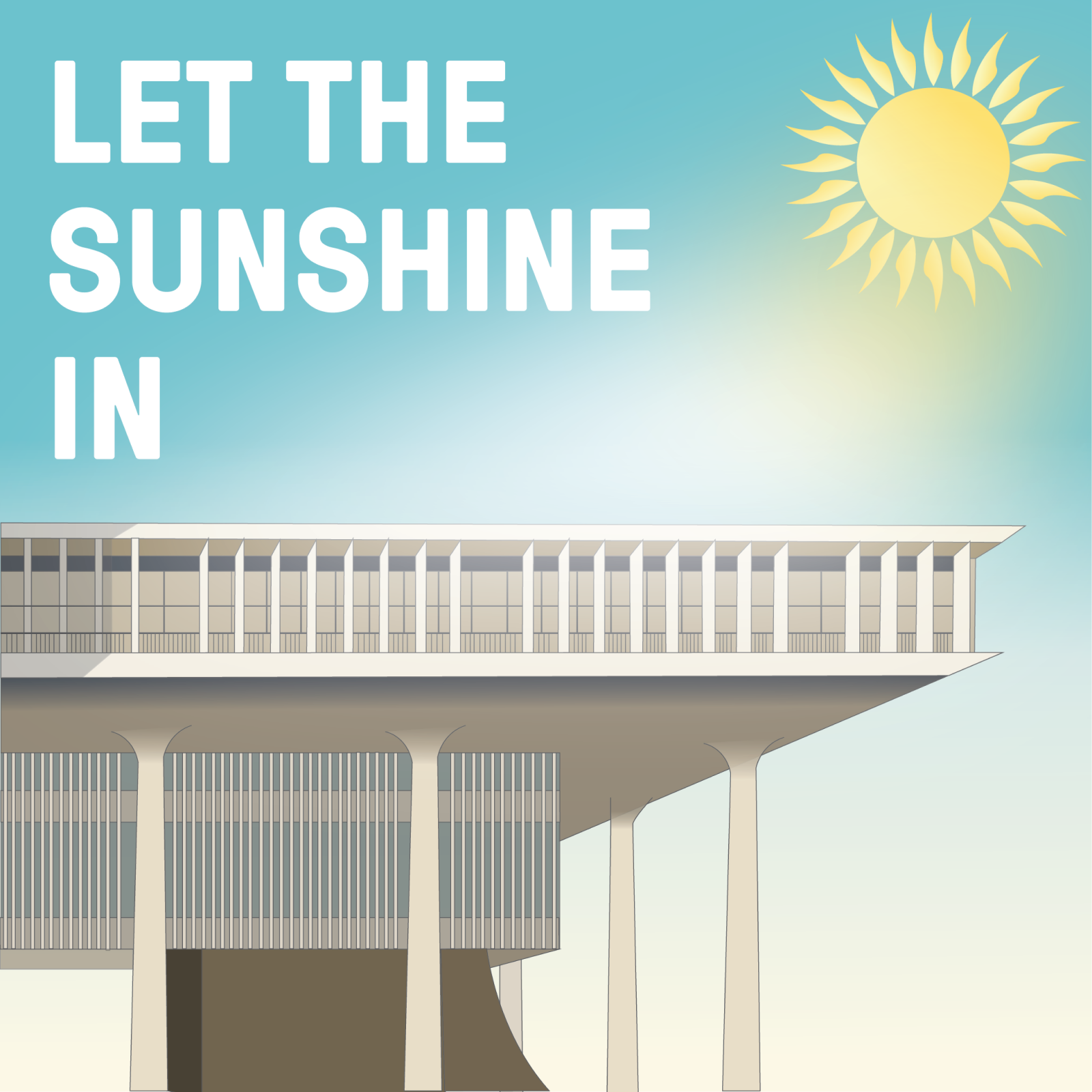
At the Mānoa campus, he spoke at Kennedy Theatre in the morning, Andrews Amphitheatre at noon, and took questions later in the day at Hemenway Hall. He visited the University of Hawaiʻi Hilo later that week, where he was met by large crowds and protest signs that read, “No Room For Fascism in America.” A grainy old newspaper picture shows him wearing lei he received and his signature corncob pipe jutting from his teeth.
The Honolulu Star-Bulletin sounded smirky in its coverage of Rockwell’s Mānoa visit:
“George Lincoln Rockwell, American Nazi leader, found it difficult to sell his political ideology yesterday to some 5,000 University students who heard his three talks …The students listened attentively, enjoying Rockwell’s flamboyant and outspoken remarks. But it was clear from their frequent laughter that they didn’t take the Nazi commander seriously.
“The cordial reception and natives in the crowd also seemed to fluster the 47-year-old leader of 700 American Nazis. It was obviously disconcerting to insist before an audience representing Hawaii’s diverse racial community, that ‘racial mixing is a sin against nature.’”
 20 Oct 1964, Tue Honolulu Star-Advertiser (Honolulu, Hawaii) Newspapers.com
One student asked Rockwell how he can justify his racial bigotry.
“A bigot,” Rockwell replied, “is a vile person. The only thing I’m against is someone who is against me… the Jews who seize communications and suppress information, and the Negroes who are trying to push me out of American civilization … Bigotry is stupid, and I am not stupid.”
Rockwell’s speech apparently hopped from one thought to another “like a flea on a hot griddle,” as one person described it. He yelled about the ills of American government, which he said was fast headed left toward anarchy, rioting and terrorism.
Rockwell understood, though, that he was speaking to a decidedly different audience.
“From what I’ve seen from you folks — you Japanese, Hawaiians and Chinese — you are the most courteous I’ve ever seen … I have nothing in my heart for you but love … You here in Hawaii have proved to me you fit together and live peacefully, if you go to the Mainland you see one group, the Negroes, that doesn’t fit,” Rockwell told the Mānoa audience.
The tone of the event was not one of outrage, though. Neither was it of acceptance. It was as if what he was saying was so outrageous and horrible that the students took it as theater of the absurd.
In Hilo, the Hawaii Tribune-Herald noted about 500 people filled the campus cafeteria to hear Rockwell, who, by that point in his visit, seemed quite off his game.
“It’s pretty hard to be a good hate monger in Hawaii,” Rockwell said in Hilo. “People here are so nice … the fact is, this is the nicest place I have ever been.”
 25 Aug 1967, Fri Hawaii Tribune-Herald (Hilo, Hawaii) Newspapers.com
At that moment, Rockwell reportedly went blank, as though he had become overwhelmed. He said that it was the first time in 22 lectures that he had forgotten what he was going to say.
Eventually, though, he regained control and started back on his hate speech about Jews and Blacks.
This plays into the idea we still cling to about the aloha spirit being the antidote to hate. Perhaps we still believe because it’s true. Perhaps it’s a power that we don’t always know how to summon. Perhaps it’s just wishful thinking.
The Star-Bulletin coverage of Rockwell’s Mānoa speeches said that the loudest reaction from the audience came when Rockwell said, “This is the nicest place I’ve ever been. I think I’ll move here.”
The crowd groaned in unison. You can visit but don’t bring that stuff here to stay. The aloha spirit has its limits.
Rockwell, who had served in the Navy and had been stationed in Hawaiʻi for a short time, never did move to Hawaiʻi. Three years after his visit, Rockwell was shot and killed by John Patler, a former member of his American Nazi Party, which he had renamed the National Socialist White People’s Party. Patler had been a devotee of Rockwell, but the relationship had unraveled in the year prior to the shooting.
 Sign up for our FREE morning newsletter and face each day more informed.
Local reporting when you need it most
Support timely, accurate, independent journalism.
Honolulu Civil Beat is a nonprofit organization, and your donation helps us produce local reporting that serves all of Hawaii.
ContributeAbout the Author