The Sunshine Interview: Maui Mayor Richard Bissen And Recovery Chief John Smith
The county’s chief executive and head of the Maui Office of Recovery discuss federal funding for the rebuilding of Lahaina and Upcountry.
September 29, 2025 · 26 min read


About the Author

Richard Bissen, the mayor of Maui County, and John Smith, administrator for the Maui Office of Recovery, met with Civil Beat reporters and editors via Zoom on Sept. 22 to discuss their current priorities. The focus was primarily on federal support for rebuilding communities damaged or destroyed but the August 2023 wildfires, but questions on water issues and housing also surfaced. This interview has been edited for length and clarity and with an eye toward breakout news stories.
Richard Bissen: I think what’s top of mind for us is our community-led, government-supported attitude about our recovery here on Maui. Our goal is pretty simple: to get all of our folks home, all of the folks from Lahaina back to Lahaina, all those in Kula back to Kula. If all we do is build new structures and buildings and say, “Well, we rebuilt Lahaina,” then I think we’ve missed the mark. Our goal is to get the same people back. As we said often, if we don’t recognize the faces of our neighbors, then we really haven’t done a good job.
And so that’s our focus. That’s sort of what’s gone out as the mantra for all of the different departments and divisions that work for the county. We want to make sure people have safe, secure, stable housing, and that it’s back on their homelands. And that’s the direction we’re moving in.
We’ve had the help of the state and the federal government in the temporary housing and in the temporary or emergency response, and now that we have HUD funding — that’s for a permanent build, and that’s what I’ll turn over to John about. John is the administrator of our Office of Recovery, which we have stood up, obviously, since this happened, and it is being funded by a $1.6 billion grant which we received sometime in July of this year. We had applied for it about 20 months earlier, and in most places, those grants are received within six to 12 months of the disaster, and unfortunately, ours took much longer than that.

Ideas showcases stories, opinion and analysis about Hawaiʻi, from the state’s sharpest thinkers, to stretch our collective thinking about a problem or an issue. Email news@civilbeat.org to submit an idea or an essay.
But we’re very grateful that we have these funds to help rebuild our town. And of course, like any grant, we’ve had to spell out the different areas that we intend to use those funds for, and we’re being monitored very closely and scrutinized by HUD to make sure that that’s happening. So we’ve had to stand up Community Development Block Grant Disaster Recovery staff, and then an Office of Recovery staff — so two basically new offices for the county. And I think I’ll toss it over to John to further explain the Office of Recovery portion.
John Smith: It is a new office that we stood up and we are handling the CDBG-DR program funds, in addition to a number of other recovery related efforts. You asked the question about what’s top of mind and for us it is and will continue to be housing. We lost an entire town, as everyone knows, and that displacement has caused all sorts of technical issues that we’re overcoming with the help of the federal government, with the state and now with CDBG.
So our focus is how we best use that fund to bring everyone back. We want every single person that was displaced, all the homeowners, and in some cases what we’re really looking to do is make new homeowners. We’ve developed some programs for that. Some of those renters help them to become owners for the first time. So we’re working really hard to make that happen right now.

I want to start with the HUD funds. We’ve had Sen. Brian Schatz, Rep. Ed Case and Rep. Jill Tokuda here talking about those Community Development Block Grants. All three of them had mentioned that they would be watching over it carefully. But I’m wondering, how much scrutiny do you get from HUD? How often are they checking in to make sure that you’re using that money the way you’re supposed to?
Bissen: We developed a relationship with HUD since the beginning of my administration, pre-fire, having met with different federal agencies. And of course, after the fires, they were very, very helpful with us. The deputy administrator from HUD established relationships and, of course, after the fire, so they were very helpful to get us training and to get us pointed in the right direction, a lot of technical assistance.
Smith: I would say they’re very involved in the process. The money that was received by the county was part of a package that went to a number of disaster areas across the entire country. Ours was the largest single amount that went to a county entity — the $1.6 billion. But because we’re in that larger category, there’s additional scrutiny. So we work directly with HUD’s Region IX. In fact, I have four or five staff in California with Region IX today, so we are very closely in tune with HUD, with the way they manage the disaster recovery funds, and because we’re a first time grantee, they’re paying particular attention to how we do the work. I’m happy to say that we are moving as quickly, or more quickly than all of the rest of the grantees from that package, according to HUD, so we’re really happy to say that.
Bissen: I believe it was $12 billion that was allocated by Congress, and I believe it went out to about 42 or 43 communities. And so we were one of those. We had submitted our application. We had thought we were going to get it much sooner. So we had been waiting, really, since the eight-month mark when we thought it was going to come in. And then, of course, the one year went by and then more time went by. But I just want to stress that we had been in communication with them that entire time. It was beyond their control. It was in Congress’s control, and of course, they voted on it in December of 2024, and the allocations were made and then actually received, like I said, in about July for us.
We’re days away from a possible federal government shutdown. Congress and the president are at odds. How worried are you, particularly in terms of this money, not only the HUD money, but I’m sure you’ve also heard some of the national conversation — that the states need to pick up the FEMA money more. How much would the potential shutdown affect this recovery effort?
Smith: We’re not worried about whatever is going to happen with continuing resolutions now. This money’s set, it’s been set aside for us, and actually we’re already drawing from the fund. So that block grant fund is set aside. We’re working with it right now. So we don’t have concerns about Congress pulling back this particular fund.

Bissen: Of course we’re concerned about any impacts from the federal government that it might have on our other programs and other funds that we rely on, or other funds that other groups rely on, like say, if we were still getting reimbursements from FEMA. We’d be concerned if they were being cut and different other programs that tangentially impact our programs here on Maui.
Back to that question about what the president has said — he essentially said the states need to pick up more of the financial burden up regarding FEMA in particular. He’s even made it political and pointed to wanting to help red states versus blue states. Do you have a response to that?
Bissen: FEMA has mostly helped us already in the emergency phase. So the biggest difference I’ll describe between FEMA and HUD is that FEMA is an emergency response agency, and what they do is temporary. What they’re here to do is to temporarily get you into housing and to help you stand up. HUD is permanent and HUD is long-term. FEMA will put up a temporary home or put you in a hotel temporarily. HUD will help you rebuild your home. So that’s the biggest difference between the two.
We still have a relationship with FEMA, and we still will have some reimbursement issues, but I think they’re talking about going forward. Should our next disaster occur, perhaps there would be less financial assistance from FEMA for those communities — God forbid, if it’s us or anywhere in the state of Hawaiʻi. But I think that’s what we’re talking about — a new system of perhaps the states having to rely on themselves to respond.

I think what federal government has been pointing to is whether there’s any waste or fraud or inefficiencies that people point to. But again, I’ll leave it to the right places and the right bodies to decide where money should be spent in the federal government.
Mr. Mayor, you actually teed up my question quite well at FEMA and its temporariness. I’m interested lately in the temporary nature of the FEMA built housing mauka of Lahaina that is to be removed early next year. Is that something the county can ask for an extension on, or have? That housing is in a place that desperately needs it so much.
Bissen: You’re correct on everything you just said, however, there is an opportunity for the county to purchase or even outright receive those dwellings and housing from FEMA. We knew that from the beginning. You know, we sat together with the governor and (regional administrator) Bob Fenton and myself and other members, and other people were there talking about, “What would it look like when this is all over?” And really it depends on our needs, if we still have needs for those temporary housing and shelter.

You know, I will say FEMA went with a contractor out of Colorado, and those dwellings have about a 60-year shelf life. You can call them temporary because of the way they were maybe stood up. That’s Kilohana. Ka La‘i Ola is the program that the state runs, which is just being completed. That program is also temporary.
They were mostly shipped in as they were and just kind of stood up when they arrived here. One’s called the Nano Nest project — a little bit different but the same idea. It’s the state that purchased those and obviously they could keep them. They could leave them in the state of Hawaiʻi, store them someplace for future use. Maui could make use of them.
“We want to make sure people have safe, secure, stable housing, and that it’s back on their homelands.”
Maui Mayor Richard Bissen
But the really important part of those two sites was the infrastructure that was put in — the roads, the sidewalks, the sewer, the power and the wastewater. Those are on lands that are owned by the state. Some of them may be for the Department of Hawaiian Home Lands, if it’s approved. So those are properties that could be used in the future for housing of our people, our Maui people, so it could turn from temporary to permanent, if that’s what we were to decide on.
And again, FEMA’s charge is to remove anything that they brought in and to return the property to its condition that it was before they disturb it, unless local government or state government makes an arrangement with them to hold on to it. Now we’re still in discussions on that.
My other question also dealt with housing: What are your thoughts on the latest amended version of the Minatoya List bill? Are you comfortable with its current shape? The other part is thoughts on the pace of the council’s work on that bill. It seems that it’s kind of taken forever.
Bissen: Well, this is a big issue for us with everything else that we’re facing. Bill 9 (to phase out short-term rentals) is huge and there’s not too many people in the middle — you’re on one side or the other. It was never put up to divide our community. In fact, the whole idea was to preserve our community and to keep our folks here. They were starting to be priced out again. (There are a) lot of valid points to be raised on either side of this argument, wherever people stand.
There’s a council (temporary investigative group) that they put together to review it, and I know they’ve been meeting regularly. I guess after the initial vote, which was in favor of passing the bill, there have been amendments that are being reviewed and that will be offered up. And you know, sometimes another word for amendments is compromise. And it’s not about winners or losers. It’s about trying to work it out. And I see value in that. I see value in the council not rushing into anything and taking a real strong look. It doesn’t change my position and my advocacy for wanting that bill to pass, for the betterment of our community. And again, there’s a way we can do it and everybody wins. That would be great. That would be great.
Can you talk about your approach to this sort of natural tension that exists between the desire to quickly rebuild Lahaina, a Lahaina that displaced residents can afford to return to, and then building back a more resilient Lahaina that is stronger in the face of any future wildfire or other disaster?
Bissen: That is an excellent question, because that’s exactly the right word — tension. You know, when I first approached our rebuild, it was really my intention to say, “Well, we’re only doing everything where we harden all of our homes and we’re going to require and demand certain kind of material,” which, by the way, we are still encouraging. But what I started to notice as the days turned into weeks and months is that we were losing people, just hemorrhaging people, actually. And then I realized that working quickly was became the more urgent position to take. People who wanted to get home so badly, people who are still paying their mortgage with no home on their lot, people who had no insurance, people who couldn’t live together as a family because they couldn’t have three or four families in one home. They were in hotels where they could fit two or three people per room, and were then separated. There were so many stories, and I know you folks have covered many of them.
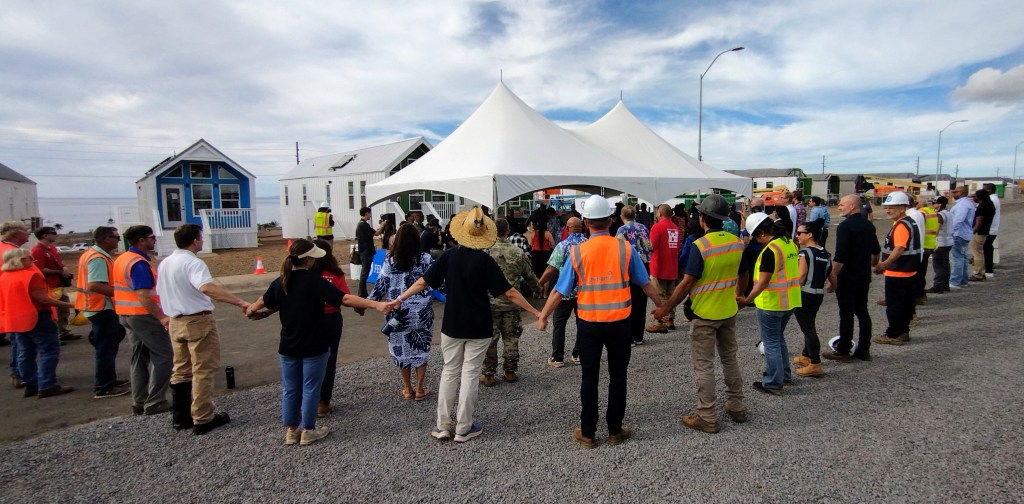
That was very real, and we heard it every week as we went out to nearly 100 community meetings that we’ve held in Lahaina and Kula, and hearing from people really changed my view that speed really was essential, or else all we would do is build really perfect homes and streets and not have one person from Lahaina living in it. That is what became the priority and the struggle, as I’ve said — the priority is to get the folks home. Now we’ve learned a lot, and we’re working in a lot of different areas about how to make our homes more fire-resistant, and ways to improve our evacuation routes, ways to improve getting people in and out of their communities.
Smith: I think the way you pose the question was great in terms of the tension that we hold across the board. When we jump into the recovery, are you talking about the single family or talking about the commercial area? Are you talking about the real complex? And you start to process those problems differently. But really, the town that we miss came from being constructed in all different eras, and the trick is how do you bring it back to meet standards that we have today when it was built under a completely, different set of rules and regulations?
So the Office of Recovery, along with the mayor and guidance from the community, are actively engaged in that tension in each one of those scenarios. That’s really the heart of our work, and where there’s a tie that needs to be broken to move things forward for this from a speed standpoint. We’ll make those calls. If it’s something that we can wait on and plan a little bit further, we’ll help with that decision too, while we’re making it fire-wise, while we’re making it, you know, fill in the blank x, y, z. So that is at the heart of the work.
Could you offer a good example of this, where this tension has existed as you guys have to make a decision and it favors one side or the other?
Smith: One of the things that we struggle with is street standards. The County of Maui has street standards. Those standards were built more for subdivisions, and the subdivisions that you would think of today that have all the right setbacks, they have the right street widths. If you apply that standard to Lahaina town, it breaks Lahaina town. So we’ve had to jump in and are jumping in on those standards and saying here’s the minimums that we need to come back from safety standpoint, from a mobility standpoint, from a culturally appropriate standpoint, from a National Historic Landmark standpoint, from a flood zone standpoint, from a sea-level rise standpoint, and it just goes on and on and on. So we’re taking those standards that apply today, and we’re helping the departments and the regulating agencies navigate it so that when the town comes back, and as it comes back, it still feels like Lahaina as much as it can, but meets a lot of these new codes.
“Hearing from people really changed my view that speed really was essential, or else all we would do is build really perfect homes and streets and not have one person from Lahaina living in it.”
Mau Mayor Richard Bissen
I wanted to loop back to the CDBG funding. So $1.6 billion, that’s a lot of money. Is there a deadline or a timeframe that you guys need to spend that by? And how hard is it going to be to spend all that money? And do you have enough folks on staff that can actually carry out the process that is necessary?
Smith: When we recognized the fund last fiscal year, we also recognized an org chart with 56 positions on it, just internal, plus an additional 12 positions just from our permanent Office of Recovery staff, plus the consulting that we need to help carry it out. So we’ve been ramping up to meet the demand since we knew we were going to get the money. So that was the mayor’s foresight that helped us get there. It started actually right after the fire, in terms of starting to ramp up, but it became official when we recognized the fund last fiscal year. So we are ramping up. We’ve hired about half of those positions already, and we’ll bring on a few more quickly. So that’s the funding question.
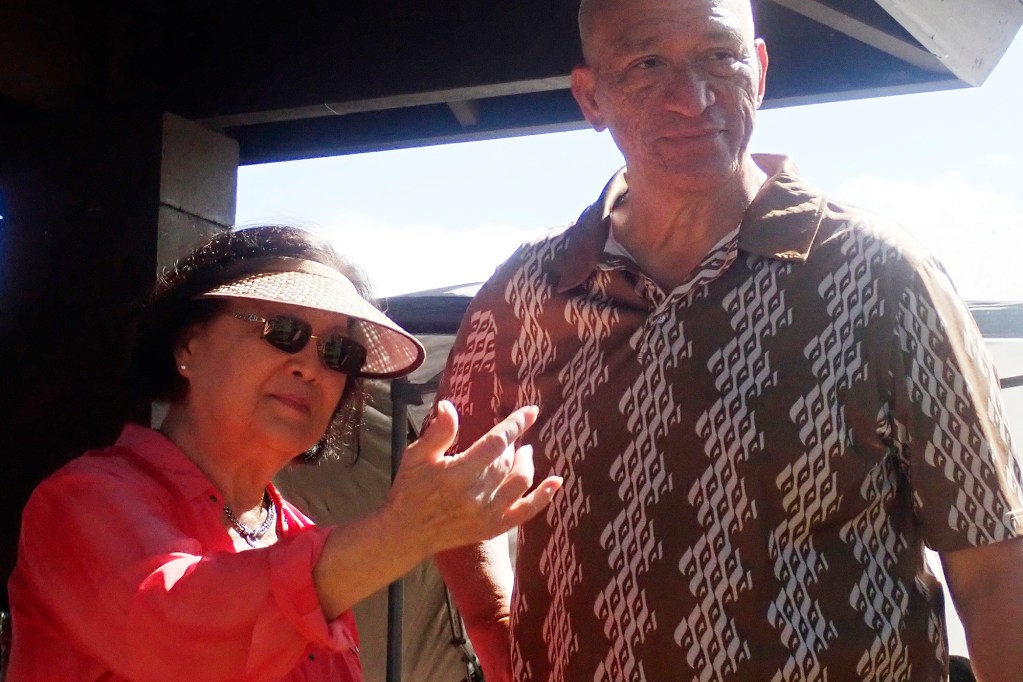
Typically, HUD gives you a six-year clock to spend the money — it just so happens to be through our six-year (capitol improvement projects) process how we can accomplish that. So we’re working directly with our budget office, with our departments, and with all of the housing projects that are already underway for a plan to spend the money within that six years.
Bissen: Our conservative estimate — and this is from other people, not the county — was we have an $8 billion rebuild and loss. So $1.6 billion obviously does not reach that. And so we are in need of more than that funding. That was just what they gave us, and we were happy to accept that, of course. But we know from HUD and other disasters that have come before us that six years is what you start with, but as long as you’re showing progress, you can continue to have that funding available.
What I want to point out, and I think this is really critical to understand about CDBG-DR funding, or disaster recovery funds, these are the only federal monies that can be used to leverage other federal dollars. In most cases, the county has to put up the match, or the state puts up a match. This is for those of you who write grants — you’ll understand this. To get a grant, another federal grant, we are able to use these funds so we can leverage these funds to get more funds. We’re hoping that we have to spend more than $1.6 billion, and I got to tell you $400 million alone is going to housing, that’s a big chunk. And of course, we have infrastructure needs and other things.
I won’t get into all the minute details, but we’re very aware of what our parameters are, what our requirements are, and on how we intend to do this. And yeah, we still have this department, brand new departments that are filling those positions. But I do want to give a shout out to the County Council, because they staffed these positions. Before we even got the federal funds, we explained to them that we were anticipating getting them. We had a number in mind that we initially thought we were going to get, but the longer it went on, the more we were able to add to our request, and the larger that amount came became.
And so the council, in good faith, gave us — I want to say $750,000 to start with — so that we could start to hire folks, which is what we did. We had not gotten anything yet from the federal government, but we were hoping, and we’re anticipating, so that was something that occurred. And then later, once the funds got here, we were able to, of course, fill those positions and pay for those positions.
“We’re helping the departments and the regulating agencies navigate it so that when the town comes back it still feels like Lahaina as much as it can, but meets a lot of these new codes.”
Maui Recovery’s John Smith
Just to shift gears, I was wondering if you guys on the county level have any insight into how the process is going for the Lahaina special management, the water management area, that had been established under the state Commission on Water Resource Management. I think it went into effect two or three days before the fire. And my understanding of that process is that everybody’s got to basically kind of reapply for what they need regardless of how far back you go. I’m wondering if you expect to really see any significant changes from that — whether that’s a reshuffling of what’s allocated to the resorts. You’re seeing what’s happening with the PGA (and Kapalua), these kind of big flare-ups.
Smith: I think I’ll point to a couple things that Maui Recovery is doing. I don’t think I’ll get into the CWRM, but we do recognize the complicated nature of water, especially on the west side. Recovery is coming out with what we’re calling One Water Lahaina for the recovery process. We’ve initiated that. We’re just kicking that process out, and it’s meant to help us engage more meaningfully in that discussion, from the county standpoint, with other stakeholders across the board. It’s specifically for Lahaina, specifically for recovery, so that we don’t hold up housing progress for sure, because, like we talked about the beginning, we’ve got to keep our eye on the ball in terms of housing.
Bissen: John, can you explain how the One Water system works, what we’re combining?
Smith: Yeah. It’s really an approach that all comes from One Water. It’s storm-water driven. The way we use it and the way it runs through our streams, the way we pump it out of the ground, the way we retain it, how the ocean influences it, and it just goes on and on. And we’re taking that more holistic approach of water, so we’re working with our Department of Environmental Management in particular, on their R-1 work. You have a lot of people talk about R-1 (recycled water) and how that’s going to work.

So we’ll be engaging in that space there in terms of expanding R-1 service. We’re working with our Department of Water Supply on how they’re drawing water out of the ground and using it, and where the next wells will be — that’ll be part of it. We’re looking at how we’re taking care of stormwater in terms of making sure that the water quality before it gets to the ocean isn’t a problem. And then how are we using it for agriculture, and balancing that need with housing and as a cultural resource. So all of that combines with all the county departments to touch on that are part of that One Water line initiative.
Bissen: To touch on that, what John’s talking about is that increases our capacity when we look at it in those terms. Because a lot of people just see, “Okay, there’s potable water, okay, there’s R-1 water.” We don’t often think about the storm water runoff and capturing that and storing that, and now we can better use that. For example, irrigation — our water is very valuable today, more than it was even five to 10 years ago. People understand the value because you can replace potable water for R-1 water, treated water, especially in terms of agriculture.
But back to your question in particular. So what many people don’t know, except Lahaina people, know this: 76% of the water line is privately owned, 24% is owned by the county or managed by the county. Now this has come to light because of what’s happened in Kapalua. And you mentioned CWRM, which is a state agency that controls water throughout the state of Hawaiʻi, not just Lahaina and not just Maui. So when you brought up the issue about filing for application for use, I guess they wanted to do an overhaul and to see well, “Is it still being used? Do you still need the same amount that you previously requested?”
What happened after the fires is that you had new applicants, and the new applicants initially, as I understood it from CWRM, were not going to be reviewed until all the previous and current applicants were reviewed first. Well, that’s a big number. And so that could potentially have slowed down the rebuild. And so we did ask CWRM to reconsider that approach. And, again, we don’t control what they do. They’re an independent water commission, not controlled by the county, and so all we can do is give our input. And everybody can see for themselves the impact that it’s having in our town.
“People say it’s a marathon, not a sprint. I will share with you, it’s just a really, really long sprint.”
Mayor Richard Bisen
But we understand that there’s a shift because of what’s happened. Perhaps there will be opportunities for the county to acquire more water systems for our county, and certainly that’s something we’re looking at as well. And we were looking at that before the fires had occurred, but the fires just brought it to the forefront. And a lot more people know about water issues today than they knew (before). A lot more people understand Lahaina’s significance. Even Lahaina people know more about the history of the of that town and it’s just awakened a lot of things. I like to tell people, as much as the fire destroyed, it also revealed many things. And people have renewed pride. They have renewed interest. And that’s good. That adds to a lot more voices in the participation of what’s happening in Lahaina.
Do you have an idea of whether CWRM is actually giving priority to those new applicants?
Smith: We’re working with CWRM, but more from the Department of Water Supply standpoint, not on those direct cases for those direct applicants. I think at the heart of the question is everybody’s tracking what’s happening with water, and what recovery is really looking to do with this. This One Water Lahaina initiative is, “How can we make this better?” So we’re going to engage. “How can government do do better?” So recovery is going to work with CWRM. We’re going to work with the rest of the partners to make this process better.
Mr. Mayor, we have to ask: It’s an election year. Your seat is up next year. Have you given any thought as to whether you will run for reelection?
Bissen: Well, I’ll put it this way — I’ve given thought to a lot more things than that, especially all the things we’ve talked about today. I mean, that’s got to be our No. 1 focus right now. But certainly the time will come that we will have that discussion as well. But our focus really is on the recovery and getting our people home. That’s the No. 1 thing, and then I think everything else will kind of take care of itself.
Civil Beat’s coverage of Maui County is supported in part by a grant from the Nuestro Futuro Foundation.
 Sign up for our FREE morning newsletter and face each day more informed.
Read this next:

Local reporting when you need it most
Support timely, accurate, independent journalism.
Honolulu Civil Beat is a nonprofit organization, and your donation helps us produce local reporting that serves all of Hawaii.
ContributeAbout the Author