Waikīkī’s Sand Is Disappearing — And With It, Our Future
When business owners start questioning their future because of beach erosion, we should all pay attention.
September 26, 2025 · 4 min read

About the Author

For the last year and a half, I have managed the Waikiki Shore Beach Condominiums, a building that has stood on the edge of Waikīkī Beach since 1959 when it was originally built as a YWCA. My professional role gives me a front-row seat to the changes on this shoreline, but my ties to Waikīkī run much deeper.
I grew up here in the late 1970s. My sister married one of the original Beach Boys, Choya Aweau, who taught her how to tandem surf. While she was out on the waves, I — along with a bunch of curious onlookers — would be on the shore learning Hawaiian net-throw fishing. I still remember the thrill of pulling in rainbow fish with lots of sharp teeth — a sight that fascinated and startled me all at once.

Ideas showcases stories, opinion and analysis about Hawaiʻi, from the state’s sharpest thinkers, to stretch our collective thinking about a problem or an issue. Email news@civilbeat.org to submit an idea or an essay.
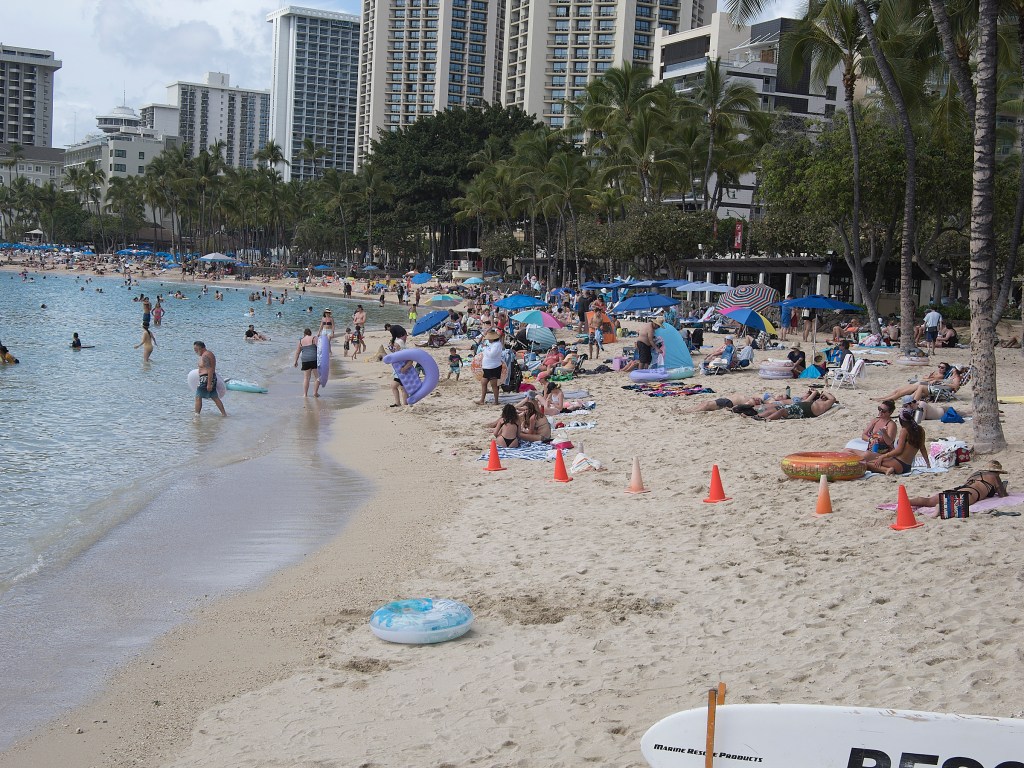
Back then, Waikīkī was a playground of sand, surf, and culture. I even entered a bikini contest at the Shorebird next door at the Outrigger Reef, where sunbathers could be chosen at random to participate in the daily shows. Those were the good old days, when Waikīkī’s beach felt endless, wide, and alive.
Today, that shoreline tells a very different story. Recently, one of our commercial tenants — who runs a beach umbrella concession and surf school — approached me with a difficult question: should they renew their lease? Their hesitation wasn’t about rent or competition. It was about sand — or rather, the alarming loss of it.
For years, this tenant has provided tourists with the quintessential Waikīkī experience: shade under an umbrella, the thrill of a first surf lesson, the memory of paradise.
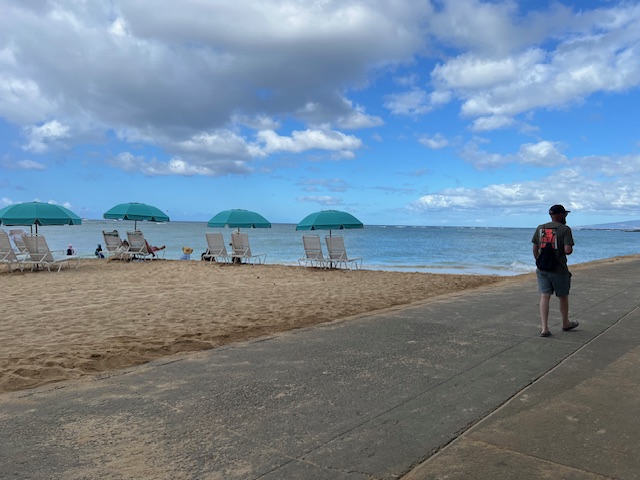
But what happens when there is no longer a beach to set up on? What happens to the businesses that rely on Waikīkī’s shoreline, to the workers they employ, and to the millions of visitors who come to Hawaiʻi for that very image?
We are running out of time to answer those questions.
A New Urgency
The erosion is not new. Scientists and community advocates have been sounding alarms for decades about sea level rise and climate change. But in recent years, the speed of sand loss has been undeniable.
Entire swaths of shoreline have narrowed dramatically. At times, high tides creep dangerously close to walkways and foundations. In front of our building, I’ve seen the beach shrink in ways I never thought possible in my lifetime.
What is new is the level of urgency felt by those who depend on this shoreline daily. When business owners start questioning their future in Waikīkī because of beach erosion, we should all pay attention.
Hawaiʻi’s economy rests heavily on tourism, and Waikīkī is its crown jewel. Yet our state’s response has been painfully slow.
Pilot projects, temporary sand replenishment, and long planning processes have not kept pace with the crisis at hand. Everyone knows the permitting is complex, the funding tight, and the solutions not simple — but delay is not a solution.
The state must act boldly and quickly.
If Waikīkī loses its beach, Hawaiʻi loses far more than sand. We lose jobs. We lose culture. We lose one of the most recognized coastlines in the world.
The state must act boldly and quickly. That means prioritizing shoreline preservation, cutting through bureaucratic red tape, and investing in both immediate and long-term strategies. It also means working with those of us on the ground — building managers, business owners, residents, cultural leaders, and scientists — to craft real solutions.
Waikiki Shore has stood strong for more than 65 years, weathering storms and hosting generations of visitors. But today, our foundation feels more vulnerable than ever, not from the building itself but from the disappearing shoreline below it.
The image of Waikīkī — the one splashed across postcards, advertisements, and the dreams of millions of travelers — depends on sand. If we allow it to wash away, we risk far more than aesthetics. We risk the future of Hawaiʻi’s most vital resource.
The time for “studying” and “planning” is over. The time for urgent, decisive action is now.
 Sign up for our FREE morning newsletter and face each day more informed.
Community Voices aims to encourage broad discussion on many topics of community interest. It’s kind of a cross between Letters to the Editor and op-eds. This is your space to talk about important issues or interesting people who are making a difference in our world. Column lengths should be no more than 800 words and we need a photo of the author and a bio. We welcome video commentary and other multimedia formats. Send to news@civilbeat.org. The opinions and information expressed in Community Voices are solely those of the authors and not Civil Beat.

Local reporting when you need it most
Support timely, accurate, independent journalism.
Honolulu Civil Beat is a nonprofit organization, and your donation helps us produce local reporting that serves all of Hawaii.
ContributeAbout the Author