

A New Plan Is Brewing In The Fight To Save O‘ahu’s North Shore Beaches
University of Hawaiʻi Sea Grant teams up with North Shore Community Land Trust to find solutions for the island’s disappearing beaches.
Along a picturesque white sand beach, punctuated by tropical palms and volcanic rock, rows of houses get a front-row seat to a world-famous surf break, Banzai Pipeline. But as the distance between their homes and the water shrinks, these property owners may get more ocean than they bargained for.
Pipeline, or ‘Ehukai, is positioned along a stretch of iconic North Shore beaches experiencing a rate of erosion that, if left unchecked, will threaten more homes and leave the shoreline unrecognizable.
University of Hawaiʻi Sea Grant and the North Shore Community Trust have started work on a plan to better manage North Shore beaches.
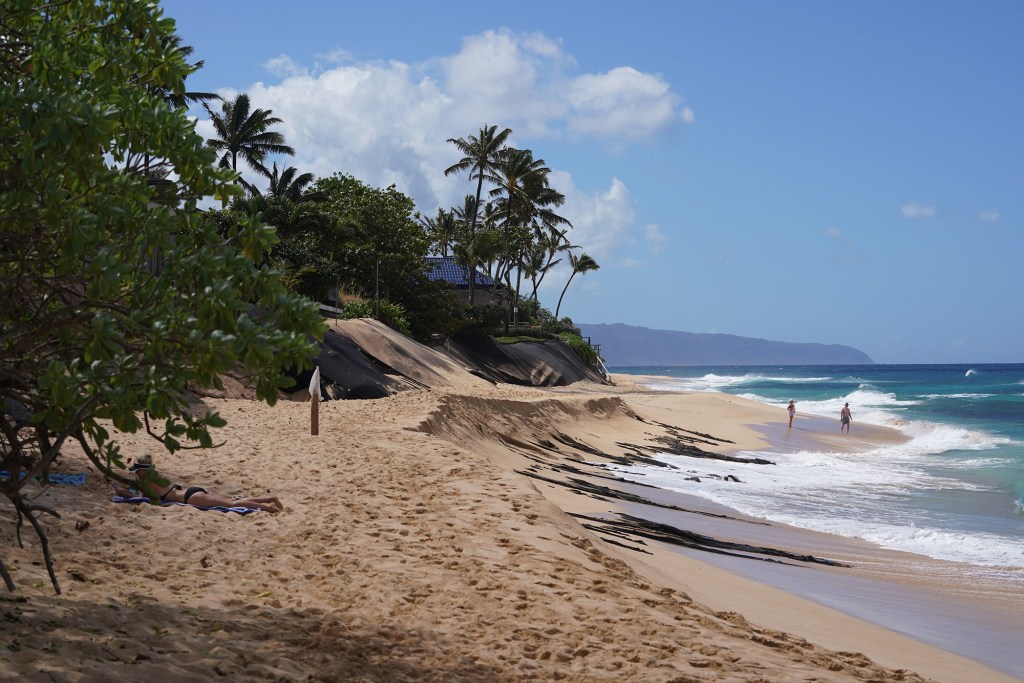
The new plan, due to the Legislature in December 2026, will aim to address beach erosion concerns through engineering solutions while centering community input. To do so, Sea Grant has resurrected a North Shore Coastal Resilience Working Group to inform solutions rooted in the desires of the North Shore community.
“Community outreach is crucial,” said Dolan Eversole, a coastal processes specialist with Hawaiʻi Sea Grant. “We could create a plan, but if the community doesn’t support it, then who cares?”
The Legislature allocated $1 million in July 2024 for a management plan for less than 3 miles of beach — from Kapo‘o, also called Shark’s Cove, to Sunset Point. This decision came after two houses collapsed on that stretch of beach in the past three years due to erosion, a phenomenon only expected to increase with sea level rise and climate change.
Rep. Sean Quinlan, who introduced the bill, said it is a matter of public safety to do what they can to protect homes against beach erosion — and not just for the homeowners.
“If those houses go, the road is next,” he said.
The plan, if successful, could create a framework for addressing erosion and other threats facing coastal communities throughout the state.

Beaches are also of great economic importance to the state. The tourism that the state’s beaches draw provide vital funding for everything from roads to firefighters and schools. In 2024, total visitor spending was $20.7 billion statewide.
“The beach, it makes us happy, maintains our well-being and is part of Hawai‘i’s identity,” Quinlan said, “But it also has a very real dollar amount attached to it.”
The grant money will allow Sea Grant to conduct research with the help of the engineering company Integral Consulting, fund community outreach by North Shore Community Land Trust and potentially fund the working group to continue on after the plan is completed.
In addition to working group meetings, four to six public hearings will be held throughout the year where Sea Grant will share its findings and receive community feedback on the plan as it is being developed.
“This has been a long time coming,” Eversole said, “In my opinion this should have been done 10 to 15 years ago.”
No Day At The Beach
The North Shore Coastal Resilience Working Group initially formed after the first collapse of a home onto a North Shore beach in 2018. The group focused on the development of a report on climate and coastal vulnerabilities that is being used to inform the work being done now.
The report, released in 2022, outlined a variety of critical concerns for managing eroding beaches, including erosion impacts on public and private infrastructure, flood risks, dangerous materials littering beaches and lack of policy framework for managed retreat.

Quinlan, who lives in Hale‘iwa about 8 miles down the road from Pipeline, expressed skepticism that much was being done to manage erosion risks for homeowners at all.
“Some people say we are doing managed retreat,” he said. “We’re not. We’re doing unmanaged retreat.”
The working group is being resurrected as a result of the collapse of a second North Shore house in 2024. Quinlan said that house created a logistical nightmare related to who was going to clean it up. It also created a serious public safety hazard, with exposed wires, building materials and chemicals just lying on the beach.
“We’re lucky that the cesspool didn’t crack,” he said.
Eversole, who is overseeing the project for Hawaiʻi Sea Grant, said the Legislature really wants to see something done about this soon, but that he and his team want to make sure that the action is founded on sound science.

Although the stretch of beach they are looking at is only about 3 miles long, there are three zones within that space with their own unique seasonal dynamics. No blanket policy will work for all three, he said.
ʻEhukai Beach is widest during the winter but the sand recedes quickly in the summer, leaving a steep, thin strip of sand. Sunset Beach is the opposite, losing its sand with Oʻahu’s big winter swells.
The Sea Grant team, with the help of Integral Consulting, will study those dynamics to create models that allow them to design engineering solutions that work with the natural coastal processes rather than against them.
“The best engineer that there is, is Mother Nature,” said Andy Wycklendt, coastal engineer with Integral Consulting.
What Lies Beneath
Under Pipeline’s legendary surf break is a shallow rock reef that shapes the power of its waves. As wind-driven energy traveling through the deeper ocean is funneled over the shallow flat rock, the force of the water is condensed, pushing it upward. Eventually the energy imbalance is too much and the wave breaks, the energy dissipates and displaced water returns to the space it left.
On this section of the North Shore, channels formed in the rock allow the water to return to where it came from, taking with it sand and rock from the beach. Over time, if that sand isn’t replaced by natural processes or human interventions, the beach could disappear entirely.
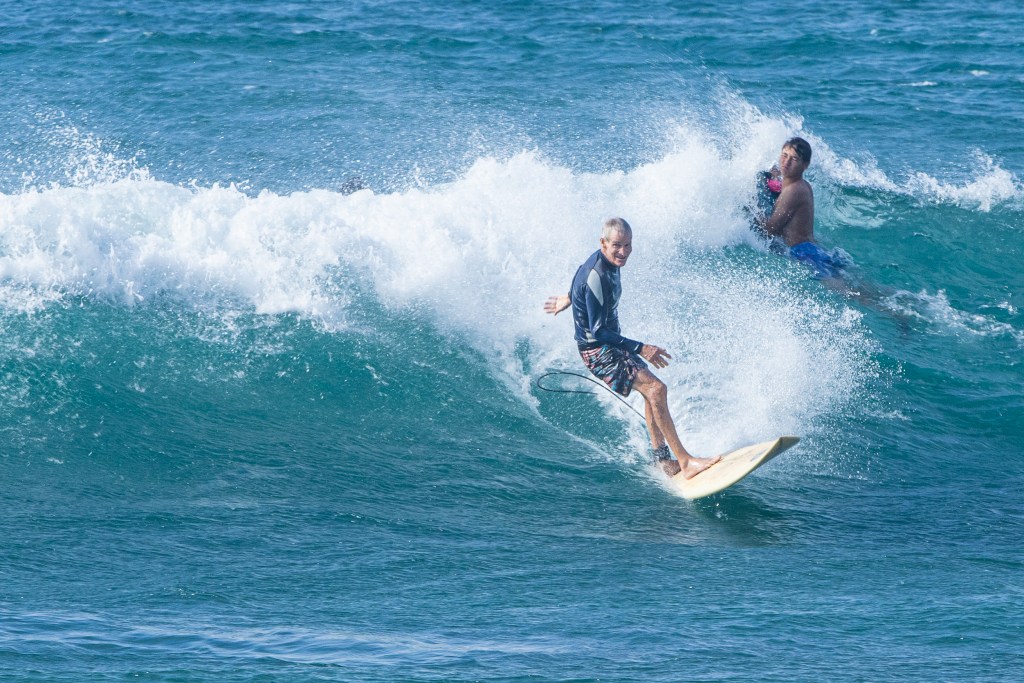
However, waves are not the only driving factor of erosion. Chronic, seasonal and episodic erosion events also all work together to impact beaches, Eversole said. Some erosion is caused by major storms, while some is driven just by people walking on the sand.
Foot traffic is a major driver of episodic erosion around the public beach parks, Eversole said. As people walk down the beach toward the water, they inadvertently push sand down with them, making it more vulnerable to being washed away.

Wycklendt, a surfer and North Shore resident himself, said that although they have theories on what’s happening to the sand, they must find out for sure to make accurate calls.
To do so, they will use satellites to collect data before and after a variety of big swell events to calibrate digital models for that section of beach. Once they are reasonably sure the models are accurate, they will use them to simulate the way the sand and sediment are moving.
Public presentations of their findings will allow residents to give input about which strategies will work best for each community. That might include planting beach grasses to better retain sediment in some places or building viewing decks and stairs to minimize foot traffic in others.
Both Eversole and Wycklendt emphasized that community cooperation and transparency are of the utmost importance for the project to succeed.
“We have to keep things as transparent as possible,” Wycklendt said, “so it can be used as an example of how to do this the right way.”
Civil Beat’s coverage of climate change and the environment is supported by The Healy Foundation, the Marisla Fund of the Hawai‘i Community Foundation and the Frost Family Foundation.

