Why We Must Preserve Customary Hawaiian Protections For Human Burials
The Oʻahu Historic Preservation Commission needs support to slow the destruction of the Kailua burial ground.
September 10, 2025 · 5 min read

About the Author
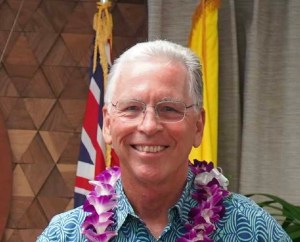
I can’t recall when I first realized I am actually living the history of Hawaiian custom that I am also researching and writing.
I first mentioned it in an email message about my history article, “Scottish Reformers and ʻIli ʻĀina Dissolution in Mid-Nineteenth Century Hawaiʻi,” which focuses on the project led by the Scottish gentleman Robert Wyllie to eradicate Hawaiian land tenure custom so the Hawaiian Kingdom could make way for commercial sugarcane cultivation.
There, I confessed to my co-authors that “I’m reliving the Māhele at the Oʻahu Historic Preservation Commission.”

Ideas showcases stories, opinion and analysis about Hawaiʻi, from the state’s sharpest thinkers, to stretch our collective thinking about a problem or an issue. Email news@civilbeat.org to submit an idea or an essay.
Two of Wyllie’s colleagues, fellow Scotsman George Robertson and Harvard-trained lawyer William L. Lee, served on the Land Commission during the Māhele, which promoted fee-simple title to ancestral Hawaiian lands. The Land Commission offered Hawaiian farmers title to kuleana too small to support a family, a tactic employed by gentry in Wyllie’s native Scotland to make way for profitable sheep pastures. Scottish farmers rioted, drove sheep from the highlands, or emigrated to America to avoid the calamity of living on a tiny croft.
Half a world away, Hawaiian farmers adopted a different tactic. More than 70% of farmers eligible for a kuleana did not apply for one and instead chose to follow the land tenure customs of their ancestors.
Wyllie’s project to eradicate Hawaiian land tenure custom stalled when Lee, who was chief justice of the Hawaiʻi Supreme Court, refused to use the courts to strip Hawaiians of their customary land tenure rights.
After Lee passed away, Robertson, who was appointed to the Supreme Court despite his lack of formal training, thundered his disdain for Hawaiian custom in Oni v Meek, opining that Oni’s assertion of customary rights is so unreasonable, so uncertain, and so repugnant to the spirit of the present laws, that it ought not to be sustained by judicial authority.
A Balancing Exercise
Robertson’s opinion wasn’t challenged until the 1980s, when the Hawaiʻi Supreme Court began to walk it back. Today, the court encourages government agencies to balance the exercise of Hawaiian custom with the “harm” suffered by fee-simple landowners.
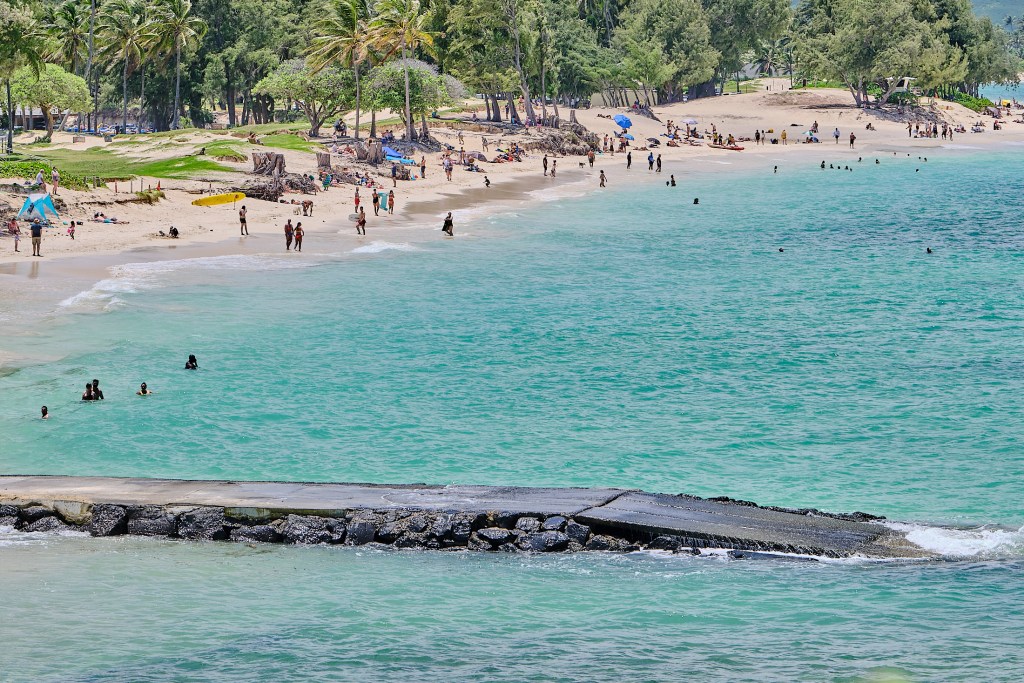
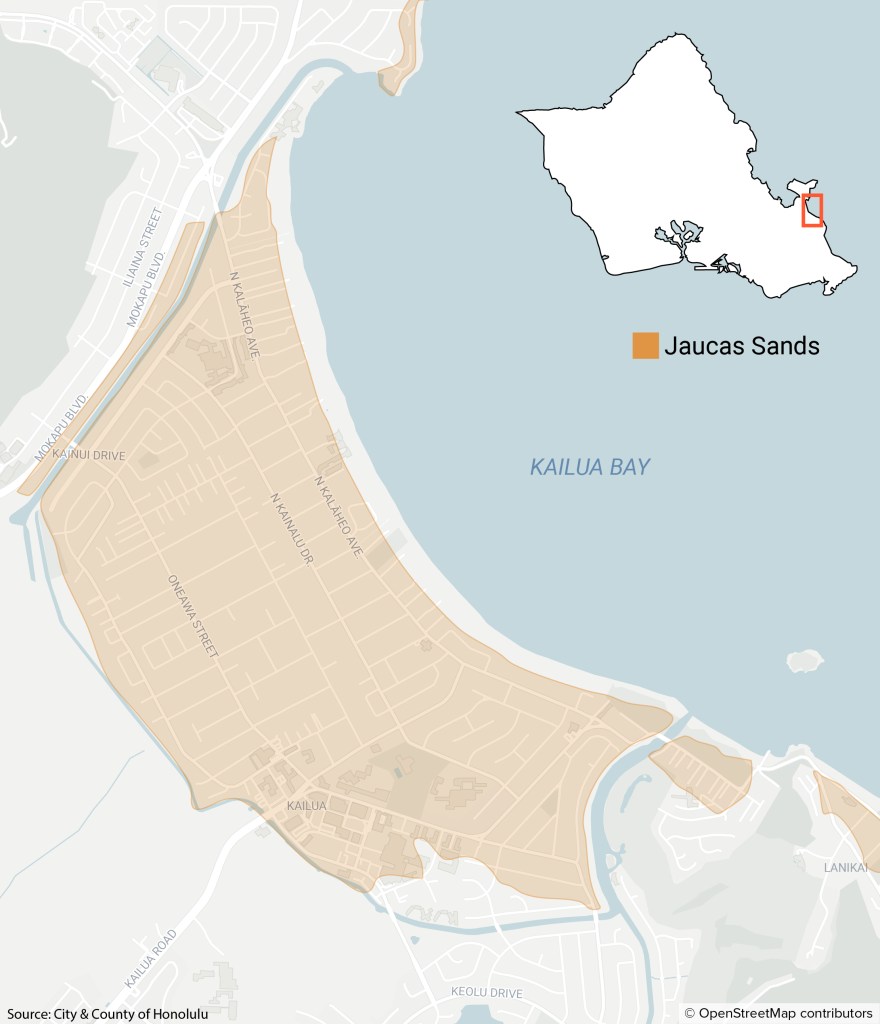
One of these agencies is the City’s Department of Planning and Permitting, which hosts the Oʻahu Historic Preservation Commission. When I volunteered to join the commission, I didn’t suspect that its first three years would be dominated by a complaint brought forward by the Association of Hawaiian Civic Clubs that DPP is denying customary protections for human burials in the sandy soils of Kailua. (“Kirstin Downey: New Protections Sought For Kailua Neighborhoods.”)
The commission’s research estimates that there are thousands of unmarked burials in the Kailua burial ground. The situation is similar to neighboring Kāneʻohe, where more than 1,700 individuals were removed from the Mōkapu Burial Area sand dune during World War II era construction of military facilities.
State archaeologist Susan Lebo told the commission that DPP misinterprets a statute designed to exempt tract homes from historic architecture review in order to strip historic preservation protection for the Kailua burial ground. DPP has confused the residential property, or home, with the lot on which the home is built to exempt from historic preservation review projects that have nothing to do with architectural renovations.
Exempted projects have ripped apart human burials in neighborhoods that have recorded dozens of burial finds, where historic preservation review would have urged cautious excavation and a plan for burial finds in consultation with the Hawaiian community.
DPP’s denial of Hawaiian custom has left descendants to cry over the desecration of their ancestors’ graves. It exposes landowners to unpredictable delays and expenses while construction crews sit on the sidelines and archaeologists sift sand piles for broken human bones.
DPP ignores a half century of Hawaiʻi Supreme Court deliberation in its rush to join Robertson’s outdated denial of Hawaiian custom. Its confusion over the partial synonymy of “property” and “land” eerily echoes an argument Lee made to the King in Privy Council nearly two centuries ago that helped establish Wyllie as the King’s advisor on land matters.
Hopefully, it is not too late to honor Hawaiian custom.
Recently, the commission resolved to build a community of burial stewards in Kailua to offer landowners a property tax break for stewarding a burial in perpetuity and to speed up and regularize permitting and construction. The primary goal of the burial steward community is to protect Hawaiian custom by preserving the Kailua burial ground. (“Kirstin Downey: New Protections Sought For Kailua Neighborhoods.”)
The commission needs your help to slow, and hopefully stop, the destruction of the Kailua burial ground encouraged by DPP’s denial of Hawaiian custom. So far, DPP appears unwilling to take this step on its own.
Please show your respect for Hawaiian custom by resolving to join the community of burial stewards. Encourage your family, friends, and government representatives to join the burial steward community, too.
Hopefully, it is not too late to honor Hawaiian custom.
 Sign up for our FREE morning newsletter and face each day more informed.
Community Voices aims to encourage broad discussion on many topics of community interest. It’s kind of a cross between Letters to the Editor and op-eds. This is your space to talk about important issues or interesting people who are making a difference in our world. Column lengths should be no more than 800 words and we need a photo of the author and a bio. We welcome video commentary and other multimedia formats. Send to news@civilbeat.org. The opinions and information expressed in Community Voices are solely those of the authors and not Civil Beat.
Local reporting when you need it most
Support timely, accurate, independent journalism.
Honolulu Civil Beat is a nonprofit organization, and your donation helps us produce local reporting that serves all of Hawaii.
ContributeAbout the Author