Will Bailey: From Pāhoa to Honoka‘a, These Projects Offer Housing And Hope
A fragile, improvised network of services stretches across East Hawai‘i island.
September 3, 2025 · 6 min read

About the Author

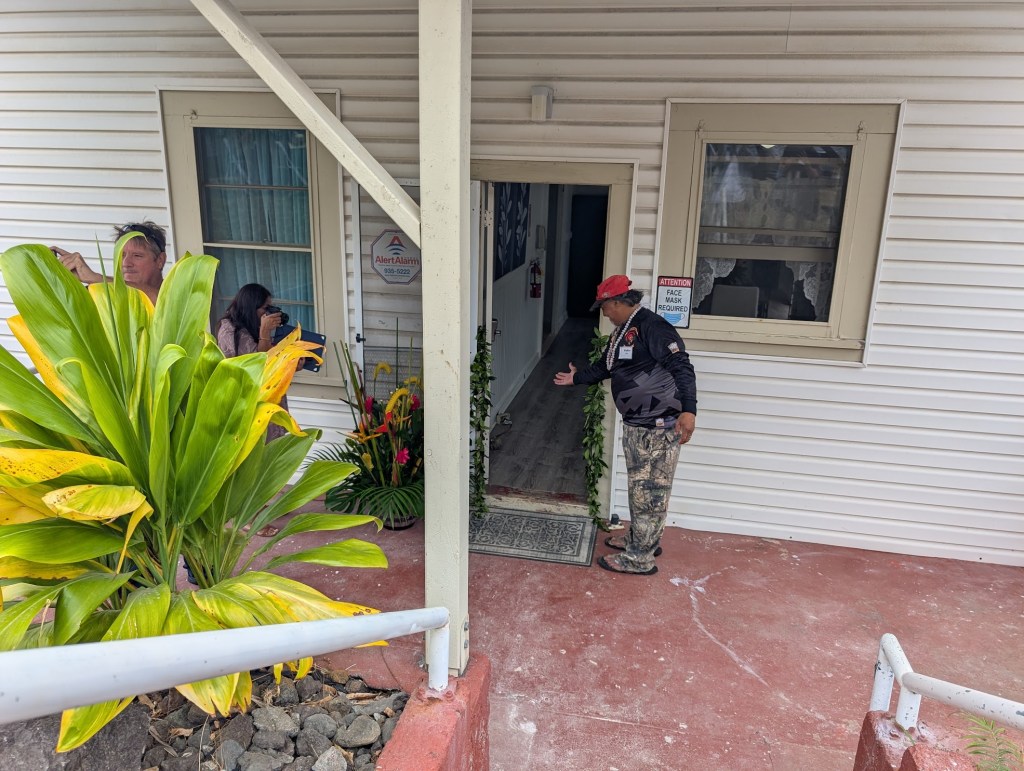
In Honoka‘a this week, I watched the old nuns’ quarters at Our Lady of Lourdes Catholic Church being blessed into kūpuna housing — the Hale Ulu Lehua project, made possible by HOPE Services Hawai‘i.
The setting was simple: a shade tent, folding chairs, a small podium. The mayor was there, a state representative, the governor’s coordinator on homelessness. But it was the place that carried the weight — the steeple rising just above the roofline, the building perched between the main street and the high school, looking out toward the ocean and toward Waipi‘o’s ancient entrance.
At the doorway, Walter Silva was named the guest of honor. A kupuna already housed in HOPE Services’ earlier project in Pāhoa, he is living proof of what this model can do. He stepped forward to untie the maile lei. Only after that did the priest come forward with the holy water blessing.

Ideas showcases stories, opinion and analysis about Hawaiʻi, from the state’s sharpest thinkers, to stretch our collective thinking about a problem or an issue. Email news@civilbeat.org to submit an idea or an essay.
Silva spoke simply, without ceremony: “Now I can walk. HOPE Services made it possible.”
That moment — an elder untying the maile, a priest sprinkling holy water, a building shifting from one life of service to another — showed what’s at stake. A place with memory, now carrying new possibility.
The Patchwork Of Care
Hale Ulu Lehua in Honoka‘a is not an isolated achievement. It’s part of a fragile, improvised network across East Hawai‘i island.
In Pāhoa, the original kūpuna housing project is already home to older adults like Silva, who now walk with steadier steps.
In Hilo, the new Anchor Point Youth Center opened this spring. Upstairs, 22 units for adults ages 18 to 24. Downstairs, a safe space with computers, Wi-Fi, and staff to help with documents, case management and life skills.
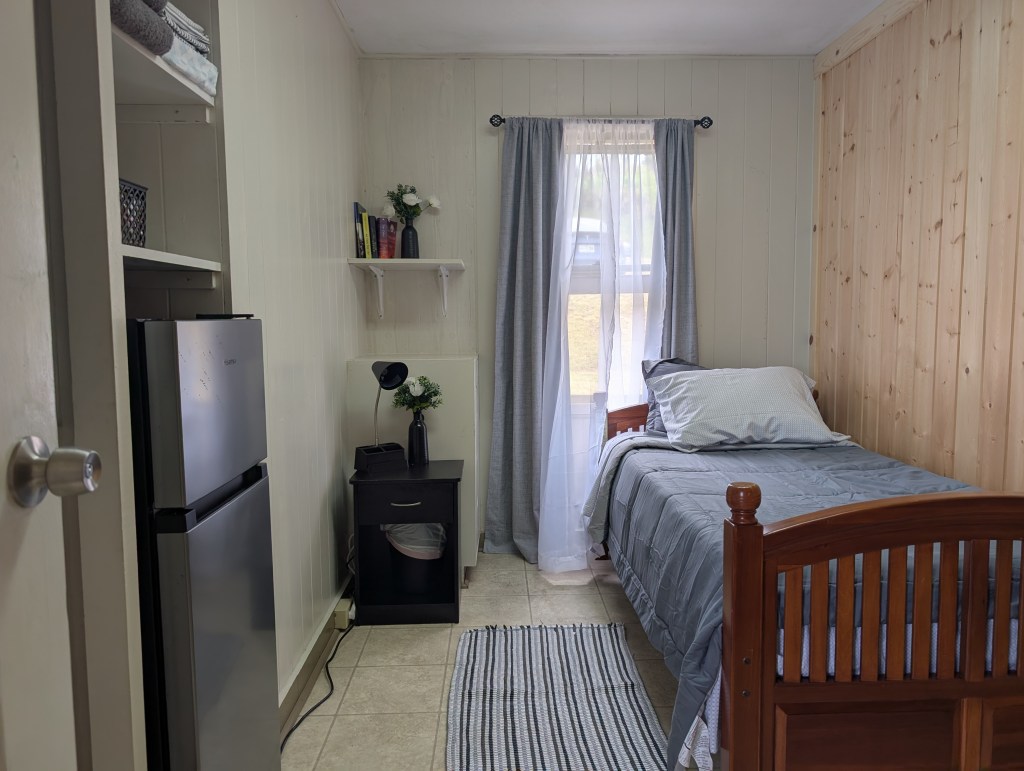
Last summer, Wilder House Medical Respite opened quietly in a Hilo neighborhood. Instead of being discharged back to asphalt, patients leaving the hospital can recover in a small home, with nurses, case management and even a therapy dog.
And just days ago, the Salvation Army doubled its overnight safe space in Hilo, now offering 50 beds — many of them filled by kūpuna — with meals and showers included.
These aren’t glossy developments. They’re survival projects — small and improvised, but real.
What The Numbers Hide
Even with new doors opening, the numbers tell a harsher story.
Hawai‘i’s last official count listed about 6,500 people experiencing homelessness statewide. But experts estimate another 30,000 are “hidden homeless” — couch-surfing, living in cars, squeezed into motels. On Hawai‘i island, nearly 1 in 3 households face food insecurity.
For youth, the pipeline is brutal. Almost 40% of young people experiencing homelessness have been in foster care. Nearly half have been caught up in the justice system. In Hilo, the most recent count listed only nine homeless youths in shelters — a number everyone knows is far below reality.
Veterans, too, remain at risk. Progress has been made — veteran homelessness has dropped by half statewide since 2015 — but on Hawai‘i island, the fallback is stubborn.
I know how quickly the ground can shift when you come home carrying things that don’t fit neatly into paperwork. For many of us, the struggle isn’t a lack of discipline or effort — it’s untreated trauma, the kind that drags people back down no matter how hard they try to stand.
That’s why projects like Anchor Point, Wilder House and HOPE’s kūpuna housing in Pāhoa and Honoka‘a matter. They aren’t just roofs and beds. They’re lifelines with counseling, case management, life skills training, even financial literacy classes. Without that, the cycle repeats: house to crisis to street to shelter to street.
HOPE Services says its mission is to make homelessness rare, brief and nonrecurring. In East Hawai‘i island, that work is steady, human and unfinished.
Mental health is the pivot. Stable housing can’t last if untreated trauma, addiction or depression keep dragging people under. That’s as true for a 19-year-old leaving foster care as it is for a 70-year-old kūpuna or a veteran trying to make sense of civilian life.
Meanwhile, in Washington, D.C., homelessness has been framed as a crime.
This August, the federal government took control of the city’s police, citing “crime and homelessness.” Seventy encampments were cleared. People were told to accept shelter or face penalties.
That’s the other way to respond: to treat poverty as disorder, to hide the problem rather than heal it.
Hilo, Pāhoa and Honoka‘a are building differently. Slowly, with too few resources, but in a way that acknowledges people as people.
Not boots on necks. Hands extended.

Where We Stand
And then there is Sola.
She’s 73, a retired special education teacher who taught in nine schools across this island. Sola, who declined to give her last name, raised a family, farmed in Pāwela and carried her share of weight. But today, she does not have a steady home.
What matters to her is continuity. Honoka‘a was once the biggest sugar community on Hawai‘i island. When the cane fields shut down, the land was divided, and plantation families were given leases. Their descendants are still here. You can see it in the last names on mailboxes, in storefronts, in memory.
Honoka‘a has always been diverse — Portuguese, Japanese, Chinese, Hawaiian, Filipino — and deeper still, it is the gateway to Waipi‘o Valley, the sacred seat of chiefs and kalo.
“This town is strong,” Sola told me. “The families are still here.”
If Silva is proof of what’s possible, Sola is the reminder of what remains unfinished. She is hope, waiting for a room of her own, standing in the shadow of a place that has seen generations endure and adapt.
That is the challenge: to honor both the success already won and the hope still unmet. To see our neighbors not as numbers or as nuisances, but as people carrying weight most of us would buckle under.
HOPE Services says its mission is to make homelessness rare, brief and nonrecurring. In East Hawai‘i island, that work is steady, human and unfinished.
Hope is here.
But hope alone isn’t enough.
 Sign up for our FREE morning newsletter and face each day more informed.
Read this next:

Local reporting when you need it most
Support timely, accurate, independent journalism.
Honolulu Civil Beat is a nonprofit organization, and your donation helps us produce local reporting that serves all of Hawaii.
ContributeAbout the Author