Licensed Engineers: The Modern Stewards Of Our Communities
The Big Island should reject proposed legislation weakening job requirements for the Public Works director.
October 9, 2025 · 5 min read

About the Author
Bill 64 is being read before the Hawaiʻi County Council this week. The current draft relaxes the requirements for the director of the Department of Public Works by removing the requirement to be a licensed professional engineer.
I am strongly opposed to this as it is a step backwards in safety, reliability, and accountability for our county’s infrastructure.

Ideas showcases stories, opinion and analysis about Hawaiʻi, from the state’s sharpest thinkers, to stretch our collective thinking about a problem or an issue. Email news@civilbeat.org to submit an idea or an essay.
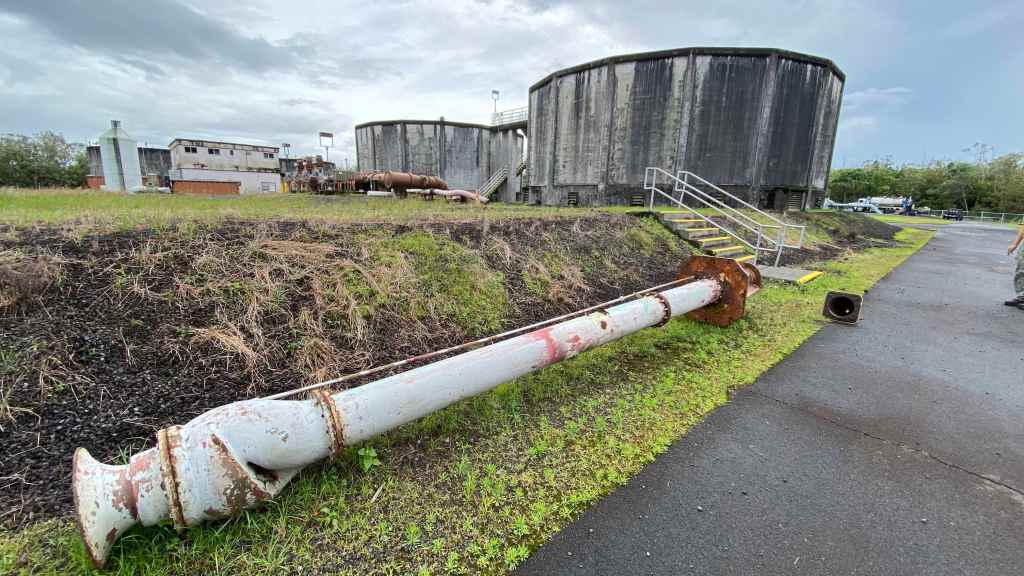
In every community, the roads we drive on, the water we drink, and the systems that manage our waste and protect our environment are the result of careful planning, design, and oversight. These systems don’t build or maintain themselves — they require leadership rooted in technical expertise and public accountability.
That’s why the role of director of Public Works must be held by a licensed engineer.
This isn’t just a matter of credentials. It’s about ensuring that the person responsible for our infrastructure has the education, experience, and ethical commitment to protect public safety and serve the long-term interests of the community.
Why Licensing Matters
Licensed engineers undergo years of rigorous education, practical training, and examination. They are required to understand complex systems — hydrology, structural integrity, environmental science, and more — and to apply that knowledge in ways that meet legal and safety standards. Their license is a public promise: they are accountable for the decisions they make, and they are bound by a code of ethics that prioritizes the welfare of the people they serve.
When a community entrusts its public works to a licensed engineer, it ensures that infrastructure decisions are made with precision, foresight, and integrity. It means that the person in charge understands not just how to build a road, but how that road affects stormwater runoff, traffic safety, and long-term maintenance costs.
The Kāhuna Of Ancient Hawai‘i
In Hawai‘i, the importance of technical and environmental expertise in infrastructure is deeply rooted in tradition. Ancient Hawaiian society relied on the wisdom of the kahuna kilo wai, kahuna kilo honua, and kahuna kuhikuhipu‘uone — experts who studied water, land, and architecture with great care and reverence.
- The kāhuna kilo wai were water watchers. They understood the flow of streams, the behavior of rainfall, and the sacred role of water in sustaining life. They advised on where to build lo‘i, how to manage watersheds, and how to protect aquifers.
- The kāhuna kilo honua observed the land. They studied soil, erosion, and the spiritual significance of place. Their insights guided agriculture, settlement, and conservation.
- The kāhuna kuhikuhipu‘uone were master planners and builders. They designed heiau, fishponds, and villages with precision and cultural sensitivity, balancing function, aesthetics, and spiritual alignment.
These kāhuna were not chosen for their status — they were chosen for their knowledge, training, and service to the community. Their roles were earned through years of study and practice, and their decisions shaped the physical and spiritual landscape of Hawaiʻi.
Licensed Engineers: Modern Kāhuna
Today’s licensed engineers carry forward this tradition of stewardship. Like the kāhuna, they are trained to observe, understand, and shape the environment in ways that support life and community. They design systems that manage water, protect land, and build structures that endure.
The director of Public Works is essentially a modern kahuna. This person must understand how to plan and build in harmony with the land, how to protect natural resources, and how to serve the needs of the people.
Requiring a licensed engineer for this role is not just a technical decision — it is a cultural affirmation that expertise matters, that stewardship is sacred, and that our communities deserve leaders who are prepared to serve with knowledge and integrity.
Protecting Our Future
As our communities face aging infrastructure, climate change, and increasing demands on public systems, the need for technically competent leadership grows. The director of Public Works must be someone who can anticipate challenges, design resilient systems, and make decisions that protect both people and the environment.
Without a licensed engineer in this role, we risk short-term decisions that ignore long-term consequences. We risk infrastructure that fails, systems that pollute, and budgets that balloon. But with a licensed engineer, we gain a leader who is trained to think in systems, to balance cost and safety, and to uphold the public trust.
A Community Standard
Requiring a licensed engineer for Director of Public Works is not exclusionary — it is protective. It ensures that the person responsible for our infrastructure is qualified, accountable, and committed to serving the public.
It honors the legacy of the kahuna and affirms that our communities deserve leaders who are prepared to guide us with wisdom and skill.
 Sign up for our FREE morning newsletter and face each day more informed.
Community Voices aims to encourage broad discussion on many topics of community interest. It’s kind of a cross between Letters to the Editor and op-eds. This is your space to talk about important issues or interesting people who are making a difference in our world. Column lengths should be no more than 800 words and we need a photo of the author and a bio. We welcome video commentary and other multimedia formats. Send to news@civilbeat.org. The opinions and information expressed in Community Voices are solely those of the authors and not Civil Beat.

Local reporting when you need it most
Support timely, accurate, independent journalism.
Honolulu Civil Beat is a nonprofit organization, and your donation helps us produce local reporting that serves all of Hawaii.
ContributeAbout the Author