Makana Eyre: Who Should Be Writing The History Of Hawaiʻi And Why Aren't They?
We need a new general history of Hawaiʻi that retells our history and bridges pioneering Hawaiian scholarship to a broad audience.
October 13, 2025 · 8 min read

About the Author

Editor’s note: Makana Eyre joins us as a regular columnist, writing from the perspective of someone who, like so many others, was born and raised in Hawaiʻi but left the islands for opportunities elsewhere. Still, Makana has retained a deep connection to his homeland and plans to bring readers a mix of history and culture along with stories about the diaspora and how Hawaiians on the mainland and abroad are faring.
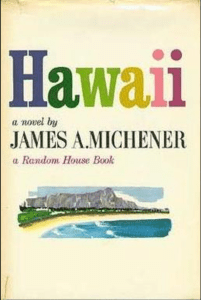
Earlier this year, while on a call with a prominent journalist on the East Coast, I was surprised to learn that during a holiday to Oʻahu, he’d picked up a copy of James Michener’s “Hawaii” to get a sense of the place. Who still reads this novel, I wondered, perplexed that a book I long viewed as antiquated still seemed to carry cachet, 66 years after publication.
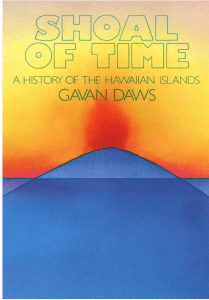
This brief exchange brought me back to a day, eight months earlier, when I walked into Bookends, a beloved bookstore in Kailua. On the Hawaiiana display table, centrally located near the front of the store, I found gleaming stacks of Michener’s novel alongside another prominent book about Hawaiʻi: Gavan Daws’ “Shoal of Time.”
The prime placement of these works suggested their sales appeal. Presumably, tourists strolling through Kailua Shopping Center pick up copies before heading to Lanikai Beach or Bellows. Seeing the books got me thinking. Both are now more than five decades old. Many scholars have published convincing critiques of them. Yet they continue to sell. And not only that, they’re seen — at least by a certain demographic — as essential reading about Hawaiʻi, literary points of reference for anyone hoping to learn about our beloved islands. What explains their staying power? And more importantly, why have successors never replaced them?

Ideas showcases stories, opinion and analysis about Hawaiʻi, from the state’s sharpest thinkers, to stretch our collective thinking about a problem or an issue. Email news@civilbeat.org to submit an idea or an essay.
Daws hinted at these questions in the prologue for “Shoal of Time’s” eBook edition, from 2018, acknowledging that “History needs to be rewritten every generation. Shoal of Time is two generations old now.”
Daws seemed to suggest that, as of 2018, history had not been rewritten, a book to replace “Shoal of Time” had yet to appear. Was he right? That depends a lot on whom you ask.
Since Daws and Michener, a multitude of books about Hawaiʻi’s history has been published, including several cornerstone works from scholars like Jonathan Kamakawiwoʻole Osorio, Noenoe Silva and Haunani-Kay Trask.
Books of broader public appeal — mostly works in narrative style from non-local journalists like Sarah Vowell, Julia Flynn Siler and James Haley — have also been published with the colophon of respected New York houses.
Yet none of these books have seeped into the culture in the way that Michener and Daws have. Osorio’s “Dismembering Lāhui” and Silva’s “Aloha Betrayed” — groundbreaking as they might have been — are specialized and academic in feel. Vowell’s account is glib, concerned more with humor than depth. And Siler and Haley, capable as they might be, only focus on a slice of the history, and they themselves lack the deep link to Hawaiʻi that many find necessary. In other words, none of the books feel like clear successors.
As I reported this column, I quickly felt how emotionally charged the topic was. People even cautioned me against exploring it — including members of my own family. When I started asking scholars, editors, agents and writers, I received a good deal of evasion and misgivings, if I heard back at all. Some people, especially those on the business end of publishing, offered stock replies, noting the books’ merits or shortcomings in the sort of sterile language a public relations specialist might generate.
If the business folks were reluctant to weigh in, that wasn’t the case in the scholarly community. To this group, the perseverance of Daws (Michener, as a novelist, holds little relevance to them) seemed like a lingering cut. Even asking the question felt like edging uncomfortably close to taboo. Critiques of Daws go back a long way — a quick internet search will yield broadsides from several prominent scholars. While their protests are nuanced and often multifaceted, one way to sum them up is that “Shoal of Time” gives too much heed to an outsider’s narrative — to Captain Cook, to the missionaries, to the men who would go on to overthrow the monarchy.
Without a doubt, the topic brings up myriad questions about whose stories are told and perhaps most importantly, who gets to tell them, who benefits from them, who is missing from them. The New York Times summed it up well when, in a review of “The Wide Wide Sea,” Hampton Sides’s 2024 bestseller about Captain Cook’s last voyage, it wrote, “It’s still Cook’s story that we are retelling with each new age.”
So where is the Hawaiian, the Indigenous, the up-to-date response to Michener, Daws and Sides? Fraught as this question may be, it’s essential that we ask it if we care who tells our stories and how they’re told. Here’s my stab at an explanation.
An obvious culprit is the dynamics of publishing. The barriers to a book contract—even with local or regional presses — are famously steep. They grow even more sheer with national trade houses like the ones that published “Hawaii” (Random House) and “Shoal of Time” (Macmillan).
Market forces could also be to blame. With readership continuing to decline nationally, appetite among agents and editors for sweeping histories has grown tepid, and those books that do go to contract come with dwindling advances, the crucial sum of money authors rely on while writing their books.
Another persuasive rationale is Michener and Daws’ first-mover advantage. Both books — the former as a novel, the latter as a work of narrative nonfiction — presented a wide sweep of Hawaiian history in a single volume and were largely the first to do it. Their timing was also impeccable: both books appeared at the boom time around statehood.
Yet I have a hunch that something far simpler might be at play. Without downplaying the real barriers that exist in publishing, I suspect that an answer might be in the approach both Michener and Daws took in writing their books. They presented a breadth of Hawaiian history while emphasizing character, scene and narrative above all, delivering stories in clean, unencumbered prose. This makes for books with strong forward momentum, the sort of thing that is appealing to the general reader.
In a certain sense, dwelling too long on the reasons of Michener and Daws’ lasting appeal distracts us from what matters more: the need for a new general history of Hawaiʻi, a true successor that retells our history and bridges pioneering Hawaiian scholarship to a broad audience.
My strong opinion is for a kanaka maoli or at least a deeply grounded kamaʻāina to undertake this work, someone proficient in ʻōlelo Hawaiʻi who also possesses the crucial skills of deep archival work and narrative craft.
Without a doubt, the topic brings up myriad questions about whose stories are told and perhaps most importantly, who gets to tell them, who benefits from them, who is missing from them.
I also believe that such a project needs the buy-in of a major trade publisher. These are the kinds of publishers that bring editorial might, sophisticated distribution, relationships with booksellers and influence to yield national review coverage that makes finding an audience a far more likely affair. A book that hits these marks, I’d wager, can be a viable replacement to Michener and Daws.
It’s time now to turn to those with the power to make it happen. I have no doubt that a good number of people in Hawaiʻi have the credentials I listed above. Now, we need the buy-in of agents and editors, the gatekeepers in the business of publishing. Over the last decade, social justice movements have exploded across the country, calling for more diversity in our culture through new books and films and television series from marginalized voices. Curiously, Hawaiʻi is often left out of these discussions. A new primer about Hawaiʻi’s history, told from the perspective of someone with deep ties to it and a stake in the culture seems like an obvious contribution of value.
And if the moral reasoning isn’t convincing, here’s an argument in plain dollars and cents. Every year, something in the arena of 10 million people visit Hawaiʻi. If just one quarter of a percent of them buy this book, that makes for about 25,000 copies sold — an excellent result.
And who knows what could happen. After all, Michener’s “Hawaii” has sold upward of 7 million copies, and the sales figure for Daws’ “Shoal of Time” is around a quarter million. There is clearly an audience.
Since 1959, the year that both “Hawaii” and “Shoal of Time” end, Hawaiʻi has gone through an immense transformation. Pivotal moments in our history like the Hawaiian Renaissance, the occupation and return of Kahoʻolawe, the constitutional convention and the growing sovereignty movement have occurred. This is immensely fertile ground to till, the sort of material that would entice any historian.
To return to Daws and his prologue one final time, these are “interesting times to live through, and interesting times for someone to write about.” This column, I hope, is a summons to do it.
 Sign up for our FREE morning newsletter and face each day more informed.

Local reporting when you need it most
Support timely, accurate, independent journalism.
Honolulu Civil Beat is a nonprofit organization, and your donation helps us produce local reporting that serves all of Hawaii.
ContributeAbout the Author