Safeguard Papahānaumokuākea: The Future Of Our Oceans Depends On It
It’s a sanctuary and a global model of ocean protection grounded in Native Hawaiian leadership.
October 13, 2025 · 4 min read


About the Author
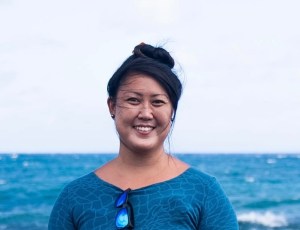
Imagine diving into an ocean alive with stories, memories, and reminders of our responsibility to care for the sea. Dozens of ulua (giant trevally) and manō (sharks) circling in schools, hāhālua (manta rays) gliding through currents, seabirds striking clusters of fish, and dense clouds of ʻiao/nehu (sardines) blocking the light.
This is Papahānaumokuākea — the largest marine conservation area on Earth, and one of the last places where we still have the chance to get it right.
These are not just dreams — they are my living memories as a Kanaka ʻōiwi (Native Hawaiian) marine biologist. As a mother, scientist, and community member, Papahānaumokuākea has given me lessons no book could offer and a kuleana to protect this place until my last breath and beyond.

Ideas showcases stories, opinion and analysis about Hawaiʻi, from the state’s sharpest thinkers, to stretch our collective thinking about a problem or an issue. Email news@civilbeat.org to submit an idea or an essay.
But the Trump administration’s Executive Order to Restore American Seafood Competitiveness could open Papahānaumokuākea to commercial fishing, eroding the precedent that made it a global model of ocean protection grounded in Native Hawaiian leadership and decades of community advocacy.
Papahānaumokuākea is a sanctuary for Hawaiʻi — a puʻuhonua no Hawaiʻi as Uncle Buzzy Agard Jr., a longtime kanaka ʻōiwi fisherman and esteemed kūpuna (elder) reminds us. It is a bank and living testament to the ocean’s abundance and fragility. It demands our greatest protection as a large-scale sanctuary where profit should never dictate care.
A Reawakening Is Happening
Our kūpuna pass on a legacy of allowing this place to thrive, where interconnected ecosystems function and seed surrounding areas. Colonizing every corner of the ocean for profit is unsustainable. Abundance is possible when we honor limits, a model for protection that must endure.
This is not only my story, but one of many reawakening to kūpuna wisdom from the past, present, and future. I have returned to Papahānaumokuākea nine times, most recently as National Oceanic and Atmospheric Administration chief scientist on an intertidal research trip. Every time, I am reminded how the ocean reveals its power, showing why maintaining kapu (restriction) and noa (no restriction) is essential to sustaining abundance and adjusting our behaviors. This place has shaped how we steward healthy, productive ecosystems through ʻōiwi-led biocultural management.

Papahānaumokuākea is ecologically unmatched and spiritually inseparable from Hawaiian identity. Our kūpuna passed down traditions of approaching this sacred realm with humility and restraint. It was never a place of open fishing but of reverence — an ʻāina akua, a realm of the ancestral spirits, where the islands return to the ocean in which they were born.
I have felt that reverence in unforgettable ways: the hair rising on my neck sensing a 16-foot manō before I saw him, or five ulua circling close, one turning completely black with the action and curiosity. At Nihoa, 40 sharks rode the current as the ocean floor seemed to move.
From the deep sea to the islands above, everything here is connected migration corridors of whales and turtles, vast seabird networks, and biodiversity hotspots with species found nowhere else.
In the twilight zone 60-150 meters below the surface, one study found 100% of fish species were endemic to Hawaiʻi. This special place embodies the genealogical wisdom passed down through a millennium of kānaka ʻōiwi, strengthening our connections with our ancestral islands.
As a UNESCO Mixed Natural and Cultural World Heritage Site, Marine National Monument, a National Marine Sanctuary, and a model of Indigenous-led protection, it would be reckless to weaken protections. If we fail to safeguard Papahānaumokuākea, we risk losing not only a globally unique seascape but also the wisdom it carries for managing our shared future.
It is not our right to fish every inch of ocean.
Papahānaumokuākea is a living ocean treasure, a place where Native Hawaiian communities guide the weaving of Indigenous and Western science, passing the weight of kuleana (responsibility) to the next generation. Forgetting history and reopening commercial fishing in the name of American seafood industry profit will unleash cascading consequences we cannot afford. It is not our right to fish every inch of ocean.
We must use our voices to speak up: public comments on the executive order are due by 11:59 p.m. EDT on Tuesday and the petition is open.
Now, more than ever, it remains clear: Papahānaumokuākea must remain a refuge.
 Sign up for our FREE morning newsletter and face each day more informed.
Community Voices aims to encourage broad discussion on many topics of community interest. It’s kind of a cross between Letters to the Editor and op-eds. This is your space to talk about important issues or interesting people who are making a difference in our world. Column lengths should be no more than 800 words and we need a photo of the author and a bio. We welcome video commentary and other multimedia formats. Send to news@civilbeat.org. The opinions and information expressed in Community Voices are solely those of the authors and not Civil Beat.
Read this next:
Local reporting when you need it most
Support timely, accurate, independent journalism.
Honolulu Civil Beat is a nonprofit organization, and your donation helps us produce local reporting that serves all of Hawaii.
ContributeAbout the Author