Senator Voted For Bills Backed By Lobbyists He's Going To Work For
Meanwhile, the state Ethics Commission plans to consider addressing the “revolving door” between state officials and the private sector.
October 5, 2025 · 10 min read

About the Authors


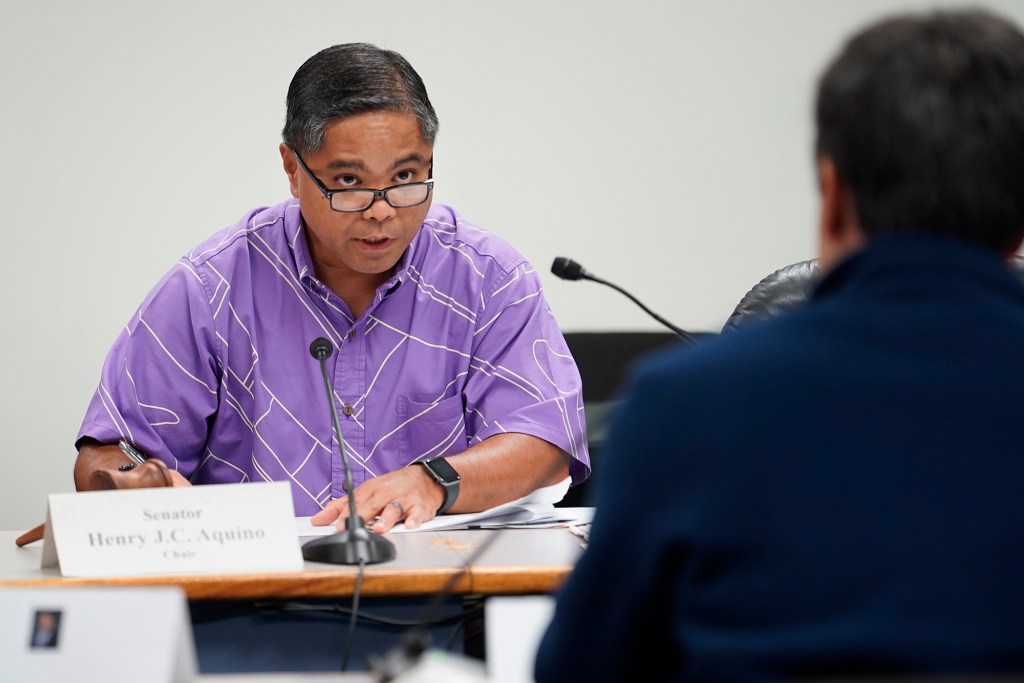
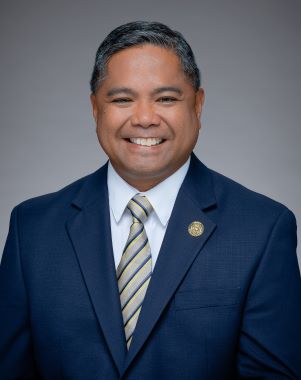
State Sen. Henry Aquino is stepping down to go to work for one of the biggest lobbying firms in the state after serving in the Hawaiʻi Legislature for 17 years.
Just this last session, Hawaiʻi Public Policy Advocates backed two dozen bills before Aquino’s Labor and Technology Committee, which voted to approve more than a third of them.
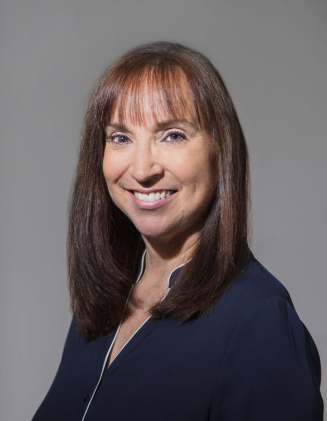
The head of the lobbying organization, Melissa Pavlicek, said in a text Friday that Aquino “has experience as a nonprofit executive director and that is the kind of work we have asked him to help us with at our consulting firm.”
She said Aquino will not be lobbying during his first year with her firm, adhering to the state’s “cooling off” law that governs what happens when a legislator leaves office.
But it is Aquino’s legislative experience that may be of the most interest to a business like Hawaiʻi Public Policy Advocates with wide-ranging interests. Its clients include Hawaiian Airlines, the Hawaii Government Employees Association and Kamehameha Schools.

Civil Beat reviewed the 60 bills that passed through the Senate Labor and Technology Committee, which Aquino chairs. The analysis excluded appropriations for collective bargaining agreements with public workers unions.
HPPA’s clients backed 24 of the bills that passed Aquino’s committee and opposed four — nearly half of the measures that Aquino’s committee considered. The committee advanced another 32 measures that the firm’s clients didn’t weigh in on, according to filings with the Hawaiʻi State Ethics Commission.
Nine of the bills supported by the lobbying firm’s clients ultimately became law.
One of those measures listed Aquino as the primary author and was supported by HGEA, the largest labor union in the state and one of HPPA’s most prominent clients.
The new law requires the Hawaiʻi Attorney General’s Office to defend professionally licensed or certified state employees from civil actions or proceedings under certain circumstances. It also clarifies that the employee may employ their own attorney at the employee’s own expense, and sets up a process for the attorney general to transfer or withdraw representation if the attorney general declines to defend the employee.
Aquino also advanced a measure that would have excluded retired law enforcement officials who were recently rehired by the state from collective bargaining despite HGEA’s opposition to the bill. But the bill later died in conference committee.
Aquino’s announcement that he is leaving the Legislature was unexpected. He has been in office for 17 years (he first served in the House) and was just reelected to a four-year term in November, having run unopposed.
In a press release last month, he gave little explanation for stepping down so suddenly, other than to state, “I have shifted focus on prioritizing my values for time with my family while continuing to serve our communities.”
Laws Guard Against Personal Gain
There is a well-trodden path between the Hawaiʻi Legislature and lobbying. Blake Oshiro, Pono Chong, Kika Bukoski, Jessica Wooley and Matt Matsunaga are among the former state legislators who have become lobbyists after leaving office.
Now add Aquino to that list of legislators-turned-lobbyists. He will step down Nov. 30 to join a well-connected lobbying firm whose clients also include Apple, Alaska Airlines, Blue Hawaiian Helicopter, United Healthcare Services, America’s Health Insurance Plans, Liberty Mutual Insurance, the Building Owners and Managers Association Hawaii Chapter, Hawaii Operating Engineers Industry Stabilization Fund, the Sports Betting Alliance and the Hawaii Crop Improvement Association.
Holding office can lead to a revolving door to more lucrative work in the private sector — especially for organizations that have business before the Legislature like lobbyists. But there are laws in place that legislators are required to follow when they make the transition from public official to private employee.
The laws are intended to guard against disclosing information not available to the public that the former legislator acquired in the course of their legislative work. Nor can that information be used for the “personal gain or the benefit of anyone,” including the former legislator and their new boss, according to the Hawaiʻi State Ethics Code.
State law requires a one-year waiting period on lobbying that applies not only to legislators like Aquino but legislative employees and high-level state employees such as department heads.
That means there can’t be any communication directly with a former agency on behalf of a private employer.
Also, for one year, a former legislator can’t represent a company before any state agency on matters he or she worked on while a state employee.
In Aquino’s case, from Dec. 1, 2025, through Nov. 30, 2026, he is not allowed to engage in direct communications on behalf of his lobbying firm or clients.
That includes:
- any matters that he participated in while he served in the Legislature;
- any matters involving official action by the Legislature, both the House and Senate; or
- any administrative action as defined in section Hawaiʻi Revised Statutes 97-1.
The section of the HRS referenced above specifically addresses lobbyists, including how the term “lobbyist” is defined — someone who receives or expects to receive $1,000 or more “in monetary or in-kind compensation” in any calendar year for lobbying, “either personally or through the lobbyist’s agents.”
Other definitions of lobbyist include someone who engages in the practice for more than five hours in any month of any reporting period, or more than 10 hours during any calendar year. Same goes for spending $1,000 lobbying during any reporting period.
There is also a permanent restriction on revealing confidential information.
“You may not disclose confidential information you learned while employed by the State or use it for anyone’s benefit,” according to a guide on post-employment laws from the Hawaiʻi State Ethics Commission.
In an email Friday, Aquino said, “As the incoming VP of Community Affairs, I will be specifically working with nonprofit organizations and associations. I’m also well aware of the required cooling off period and other related rules.”
Pavlicek, the president and co-founder of Hawaiʻi Public Policy Advocates, said, “We are not planning for him to lobby the state for at least one year. No activities at the Legislature or any work concerning any matter related to his work.”
Pavlicek said that, in addition to its advocacy work, HPPA serves as consultants to nonprofits “that do charitable work and don’t lobby.”
Waiting Periods Vary
Former lawmakers are ideal employees for lobbying firms. Most are intimately familiar with the byzantine procedures involved in passing legislation and the intricacies of state laws and rules. They are well-known public figures with extensive contacts inside and outside the State Capitol.
They also need to make a living after working in a job that in Hawaiʻi currently pays less than six figures.
Most states set mandatory waiting periods before a legislator may register as a lobbyist or engage in lobbying activities, according to the National Conference of State Legislatures. The time period varies from six months to two years.
Many states, including California, have a one-year waiting period, but others like Louisiana have no such restrictions.
Florida, at six years, has the longest cooling-off period, something NCSL said was enacted through a ballot measure.
Hawaiʻi Public Policy Advocates — self-billed as an “association management and consulting company” — was founded in 2005 by Pavlicek and Stephen Teves, chief consultant and co-founder. Its “company culture,” as its website explains, adheres to the principle that “relationships are at the core” of the firm’s work.
Pavlicek, long a familiar presence at the State Capitol, is an attorney, lobbyist and nonprofit executive with over 30 years of advocacy experience in Hawaiʻi state and local government affairs, according to her company bio. Teves previously served as a legislative director for the lieutenant governor’s office and as a legislative aide in the Hawaiʻi House of Representatives.
Donations from lobbyists with HPPA and their clients don’t account for much of Aquino’s campaign funds.
In the last two years, he received $5,350 combined from four client organizations and a single $250 donation from Teves. Overall, Aquino’s campaign raised more than $89,000 since the start of 2024.
During the same time period, the lobbying firm’s clients have donated just under $207,000 to candidates for the Legislature. The majority of that, $142,000, has come from funds tied to the Operating Engineers Local 3 union.
The ‘Revolving Door Problem’
In addition to running his own committee, Aquino serves as vice chair of the Senate Health and Human Services Committee. He previously chaired the House Public Safety Committee and the House Transportation Committee.
He also served on the O‘ahu Metropolitan Planning Organization and held leadership positions in the House.
Hawaiʻi Legislators
Explore detailed legislator profiles, voting records, and hearing participation on Digital Democracy. Visit Digital Democracy
The senator stressed in the press release announcing his departure that Hawaiʻi Public Policy Advocates is “a locally based consulting firm that emphasizes nonprofit organizations and association management.”
He said the new position would allow him to “continue to grow and serve for the betterment of our local communities.” That work will include his continued role as executive director for the Waipahu Community Association.
Robert Harris, executive director of the State Ethics Commission, said he was not aware of any former legislators who violated the post-employment statute. But he did say the commission is developing a proposal for a “pre-employment” ban that will be discussed at the commission’s Oct. 15 meeting.
The intent, he said, is to address “the revolving door problem” with lobbyists — that is, the practice of public officials or government employees becoming lobbyists after leaving their public positions. Harris said the problem, where legislators leave office in order to benefit themselves and their clients, has been discussed at the national level.
The revolving door swings several ways and involves not just elected officials but people who worked for them. Of the more than 2,000 lobbyists registered with the Ethics Commission over the past six years, several are former attorneys general, chiefs and deputy chiefs of staff to the governor, lieutenant governors, chairs of the Honolulu City Council, Cabinet heads and board, commission and agency directors.
Meanwhile, Oʻahu County Democrats are accepting applications through Wednesday to temporarily fill Aquino’s District 19 seat (Pearl City, Waipahu, West Loch Estates, Honouliuli and Ho‘opili). A list of three names will be submitted to Gov. Josh Green, who has until Jan. 29 to make the appointment. (The 2026 session begins Jan. 21.)
A special election to fill the remaining two years of the term will be held in conjunction with the Aug. 8 primary.
 Sign up for our FREE morning newsletter and face each day more informed.
Read this next:

Local reporting when you need it most
Support timely, accurate, independent journalism.
Honolulu Civil Beat is a nonprofit organization, and your donation helps us produce local reporting that serves all of Hawaii.
ContributeAbout the Authors