Zero Emissions By 2045? Maybe With Geothermal Or Advanced Nuclear
But both face daunting regulatory and cultural obstacles for Hawaiʻi.
October 6, 2025 · 5 min read


About the Authors


Ten years ago, state leaders signed into law our renewable electricity mandate commonly known as RPS 2045. This year, through an executive order, Gov. Josh Green raised the bar on neighbor islands, seeking to achieve this goal by 2035. Many of us are familiar with its progress seeing renewable energy projects spring up across the state.
Fewer, however, are aware of the 2024 Navahine v. Hawaii Department of Transportation court settlement, which applies a similar emissions standard to all transportation including interisland marine and aviation fleets.

Ideas showcases stories, opinion and analysis about Hawaiʻi, from the state’s sharpest thinkers, to stretch our collective thinking about a problem or an issue. Email news@civilbeat.org to submit an idea or an essay.
The intent for both has been to “lead the way” toward mitigating climate change along with the promise of some relief on our high-priced electricity.
The Challenge
Energy is the master resource. It enables everything we do. Delivering what’s needed when it’s needed underpins our entire economy. Within the next generation we must find alternatives to the imported oil used for electrical power and transportation.
Adding to the technical challenges of replacing liquid fuels are balancing traditional cultural values and protecting the environment while sustaining our state’s economic health. Public policy is the mechanism through which we manage it all.
The core of Hawai‘i’s existing public policies was codified during the 1970s and 1980s. Much has changed since then. Unfortunately, the laws of 40 and 50 years ago now deter the private sector investment that offers the only path toward complying with laws codified just 10 years ago. In other words, we have mandated change, yet we have effectively locked ourselves into the status quo.
If we truly intend to fulfill these mandates, kicking the can down the road is no longer an option. It’s time to make some tough policy decisions.
Scope And Scale
A recent analysis published by the Geological Survey of Finland and co-authored by Sustainable Energy Hawai‘i, models the Hawaiian economy operating without the use of oil. In that context, it was calculated that we will likely need to triple our power generation. The data show that intermittent systems like solar and wind alone cannot provide the capacity nor the stability a reliable grid requires without far more costly backup storage than is typically assumed.
Gov. Green’s executive order also highlights the reality that Oʻahu will be the state’s biggest challenge. More than 70% of the state’s electricity and about half of all transportation fuels are consumed on Oʻahu. Despite the number of wind, solar and battery projects that have been built on Oʻahu, the island’s economy is still dependent on oil for nearly 70% of its power generation.
Firm Powered Required
If we’re to fulfill these mandates and eventually triple our power generation, “firm,” 24-7, 365 days a year, scalable, clean-generation technologies are mandatory. There are only two technologies that meet those qualifications: geothermal and/or advanced nuclear. That’s it. Both face daunting regulatory and cultural obstacles.
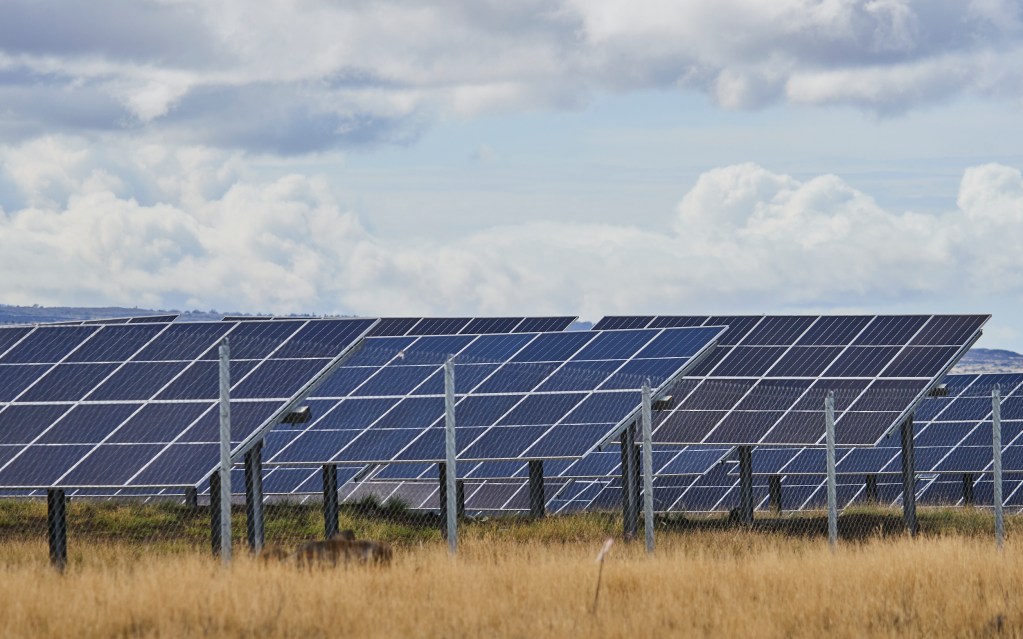
Further illustrating the essential role that firm power must play, the Hawai‘i State Energy Office recently published a feasibility study examining firm power generation using liquefied natural gas, still an imported CO2 emitting fossil fuel (however, less than oil). Even though it’s counter to our existing mandates, this study emphasizes the necessity for reliable firm power despite it likely requiring billions of dollars to build while only providing a temporary solution to our long-term energy needs.
Policy And Investment
Whatever technologies are chosen, we know the private sector offers the only path toward financing, building, and managing these systems. We’ve already experienced the consequences of our unpredictable, time-consuming, and complex regulatory environment.
The projects that are built in Hawaiʻi cost more than twice systems built elsewhere. We cannot afford to continue like this.
Hawai‘i competes in a global market, whether it’s for oil, solar panels, batteries, food — actually, all imports. It’s important to acknowledge that these mandates also offer an opportunity for Hawai‘i to pivot towards long-term self-sufficiency and better prepare for the inevitable supply chain challenges that will be present in an increasingly electrified global economy.
To that end, our power generation capability must be retooled. Without purposeful, targeted policy modernization, it’s difficult to see how the investments needed will come our way.
Perspective And Purpose
It’s important to remember that climate change is a global predicament and requires a global response. Despite decarbonization efforts, global fossil-fuel consumption relative to non-fossil-fuel consumption has shifted by less than 1% over the last 25 years while overall energy consumption has increased by more than 50%. The world is collectively heading in the wrong direction.
Humans imagine the future through stories. Stories define our purpose. Are we telling ourselves the right story here? Given the global trend, it seems that broad-based self-sufficiency represents the story best illustrating our long-term needs. The corresponding efforts will take virtually the same form, but why they’re taken just might feel closer to home.
 Sign up for our FREE morning newsletter and face each day more informed.
Community Voices aims to encourage broad discussion on many topics of community interest. It’s kind of a cross between Letters to the Editor and op-eds. This is your space to talk about important issues or interesting people who are making a difference in our world. Column lengths should be no more than 800 words and we need a photo of the author and a bio. We welcome video commentary and other multimedia formats. Send to news@civilbeat.org. The opinions and information expressed in Community Voices are solely those of the authors and not Civil Beat.
Read this next:


Local reporting when you need it most
Support timely, accurate, independent journalism.
Honolulu Civil Beat is a nonprofit organization, and your donation helps us produce local reporting that serves all of Hawaii.
ContributeAbout the Authors