Arbor Day Is The Holiday That Really Matters
And in Hawaiʻi it is celebrated in November, not April.
November 3, 2025 · 6 min read

About the Author

From shade to spirit, trees give us more than we realize.
On the list of holidays, Arbor Day (which is this Friday in Hawaiʻi) probably doesn’t rank very high. No religious ceremonies. No signature cocktails. No fireworks or parades.

Ideas showcases stories, opinion and analysis about Hawaiʻi, from the state’s sharpest thinkers, to stretch our collective thinking about a problem or an issue. Email news@civilbeat.org to submit an idea or an essay.
Some people might get a free tree. A few might even plant one.
But what if Arbor Day could be more than that? What if it became a moment each year to pause, acknowledge, and reconnect with one of our most important partners on this planet: trees.
Who Cares About Trees?
Your ancestors certainly did. From the famous Tāne Mahuta, the sacred kauri of the Ngāti Whātua people in New Zealand, to the revered oak groves of the ancient Celtic druids, cultures across the globe saw trees not as background scenery but as kin, teachers, and gods.
Here in Hawai‘i, trees have long been regarded as embodiments of akua (dieties), blurring the line between the spiritual and the practical. Kū transforming himself into the ‘ulu tree — breadfruit — so his family could survive famine is more than a story. It’s a reminder of how deeply our ancestors valued trees that fed, housed, clothed, and healed them.
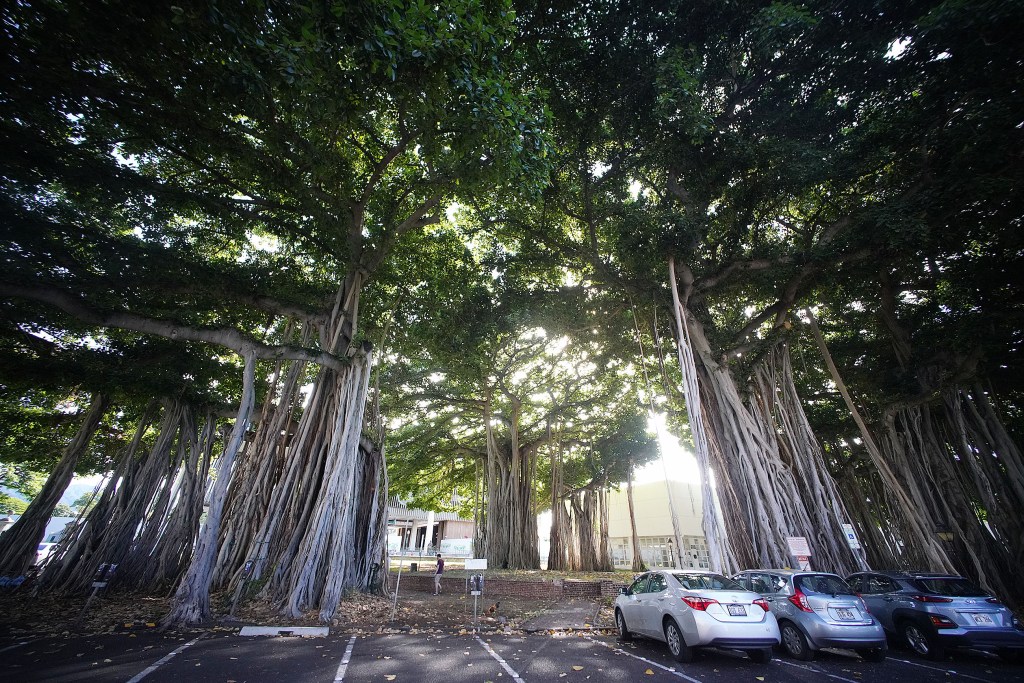
It makes sense when you think about it: food, building materials, medicines, textiles, even polymers — all can be traced back to trees. For much of human history, they were literally the pillars of civilization.
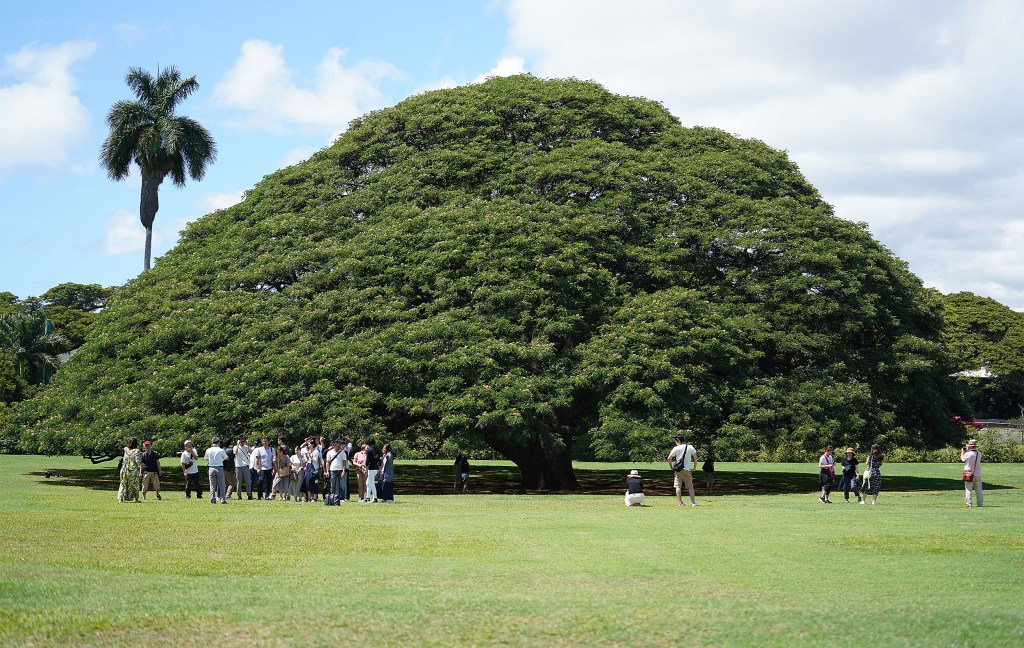
And their value goes far beyond resources. Those sweeping lines of monkeypod trees planted during the plantation era were meant to shade laborers and draft animals during long, hot days in the fields. The iconic Hitachi tree at Moanalua Gardens — often called the “$4 million tree” — has become valuable not because of what it produces, but because of the feelings and identity it evokes.
Today, with our islands and our planet facing unprecedented environmental stress, we are rediscovering what trees mean for our survival.
What Science Says
Most of us remember the basics from seventh grade science: trees produce oxygen, absorb carbon dioxide, reduce soil erosion, and provide habitat for biodiversity.
But the deeper we look, the more benefits we find. Urban forestry research now shows that trees regulate temperatures in cities, reducing the need for air conditioning. They filter air pollution and even dampen noise. They raise property values.
And their benefits reach inside of us too. Studies confirm that people living near trees experience less stress, live longer, and recover faster from illness. Trees can reduce ADHD symptoms in children and even lower crime and violence in neighborhoods. These aren’t just tree-hugger talking points — they’re hard science.
Trees In Hawai‘i Today
So what does all of this mean here at home? It means we should take Arbor Day seriously. And thankfully, there are already people and programs doing incredible work to keep Hawai‘i’s forests and urban trees thriving.
Do you want to help tree your community?
Trees have long been regarded as embodiments of akua.
The Kaulunani Urban and Community Forestry Program, part of the state Department of Land and Natural Resources, supports everything from schoolyard shade trees to massive Arbor Day giveaways — tens of thousands of trees have found homes through their efforts. Every year, Kaulunani lists Arbor Day celebrations happening across the islands, so you can easily locate a tree adoption event near you. Tree experts are on-hand to provide tree selection and planting tips.
In Honolulu, you can reach out to the Division of Urban Forestry under the Department of Parks and Recreation to request that a street tree be planted along a City and County of Honolulu roadway. They will inspect the site, and if deemed suitable, will plant a tree at no cost to you other than a commitment to water the tree.
The Community Forestry Section of Honolulu’s Division of Urban Forestry works with organizations and individuals to plant and steward city trees and educate the broader community about their benefits, and organizes events like the Mayor’s Arbor Day Ceremony and the annual Earth Day planting. Residents and visitors can reach out to oahutrees@honolulu.gov with inquiries.
Want to care for the trees in your neighborhood?
The Citizen Forester Program invites everyday people to become stewards of their community’s trees. Volunteers literally walk neighborhoods with iPads, mapping trees block by block, and feeding data into the state’s interactive tree canopy maps that helps planners, policymakers, and residents make smarter choices about where and how to plant.
Anyone can nominate an Exceptional Tree — individual trees recognized by each county for their historic, cultural, or ecological value. The program was established 50 years ago, and now many of the state’s 1,400 exceptional trees are being lost to old age.
These aren’t abstract programs. They’re ways that trees become part of daily life, and ways that we, as communities, can renew our relationship with them.
So What Does One Do On Arbor Day?
In Hawai‘i, Arbor Day is celebrated on the first Friday in November. This Arbor Day, you don’t need to make a grand gesture or plant 100 trees.
Start by simply acknowledging them. Walk down your street and imagine what it would feel like if every tree disappeared overnight. Think about the shade, the beauty, the calm — gone. Take a moment to thank the trees already in your life.
If you want to take a step further, check out a local Arbor Day event and go get a free tree to plant to do your part to honor and sustain trees in our lives. If you want longer term engagement, volunteer with community groups working to grow our community forests, or ask your kids to help plant a seedling — not just to grow a tree, but to grow a relationship.
I’ve planted thousands of trees myself, sometimes with elaborate ceremonies, sometimes with quiet prayers. But the simplest one, taught to me by friends and often shared with children, remains my favorite. It goes like this:
E ola ‘oe, e ola mākou nei. Live, so that we may live.
That, really, is what Arbor Day is about.

 Sign up for our FREE morning newsletter and face each day more informed.
Community Voices aims to encourage broad discussion on many topics of community interest. It’s kind of a cross between Letters to the Editor and op-eds. This is your space to talk about important issues or interesting people who are making a difference in our world. Column lengths should be no more than 800 words and we need a photo of the author and a bio. We welcome video commentary and other multimedia formats. Send to news@civilbeat.org. The opinions and information expressed in Community Voices are solely those of the authors and not Civil Beat.

Local reporting when you need it most
Support timely, accurate, independent journalism.
Honolulu Civil Beat is a nonprofit organization, and your donation helps us produce local reporting that serves all of Hawaii.
ContributeAbout the Author