Beth Fukumoto: Could Islandwide City Council Seats Increase Diversity?
At first glance this proposed Honolulu city charter amendment sounded like a bad idea. But maybe not.
November 30, 2025 · 7 min read


About the Author

When I first skimmed Common Cause Hawaiʻi’s new charter proposal, I thought I knew exactly what I was going to write about it.
Ranked choice voting for the Honolulu City Council? Yes, please. That part felt like a no-brainer.
But electing all nine council members at-large, on a single islandwide ballot, instead of by district? That, I was sure, would make representation worse, not better.
Then I called Common Cause Director Camron Hurt to talk it through. Somewhere in the middle of our conversation, the column I thought I was writing slipped out of reach, and something else took its place.
Every decade, Honolulu convenes a Charter Commission to review the city’s governing document. It isn’t meant to rewrite zoning codes or micromanage bus routes. Its job is more fundamental — to ask structural questions about power, organization, decision-making and representation within the city’s government.

Common Cause’s Proposal 196 is exactly the kind of thing a charter commission is for. It doesn’t tinker at the edges. It asks us to rethink the basic design of our City Council.
Right now, Honolulu elects nine council members from nine geographic districts. Most races are low on competition. If you don’t happen to live where the real fight is, you might not have much choice in who governs Honolulu.
Proposal 196 would scrap those district lines for council races and elect all nine seats together, at-large, using proportional ranked choice voting. Every voter would get the same citywide ballot. You’d rank candidates in order of preference.
Roughly speaking, any cohesive group of voters with about 10% of the islandwide vote could elect one of the nine seats. If your top choice doesn’t have enough support, your vote moves to your next choice instead of disappearing.
If you’ve read my earlier column about Portland’s election reforms, you know I’ve developed some pretty strong opinions about this stuff. In that piece, I pointed to Portland’s move to proportional ranked choice voting in multi-member districts and suggested that counties like Maui and Kaua‘i that already elect councils at-large might consider doing something similar.
In my head, the story for Honolulu was going to be simple: ranked choice voting is good, proportional representation is good, but we should be looking at multi-member districts, not at-large councils.

Outskirts Are Already Underrepresented
As a Mililani resident, I almost instantly object to at-large seats without geographic requirements because of concerns about lived experience. What happens if everyone gets elected from town? I like to know that the people who make decisions about housing and transportation have to plan their days around traffic like I do.
More broadly, what if at-large elections concentrate power where the most voters are clustered? What if a handful of big-name candidates with money blanket the island in mailers and lock everyone else out?
My concerns didn’t surprise Hurt when I shared them, and his response was disarmingly simple: “I think I would always caution people that the system that we have right now has not prevented what they fear this system will usher.”
In other words, district lines haven’t created a firewall against wealthy, well-connected and widely known candidates dominating elections statewide. Arguably, they might have enabled big names to leverage their recognition across diverse district populations. This raises an important question about the effectiveness of our current system in ensuring fair representation.
Change is scary. Even for people like me, who write columns about why we should change things.
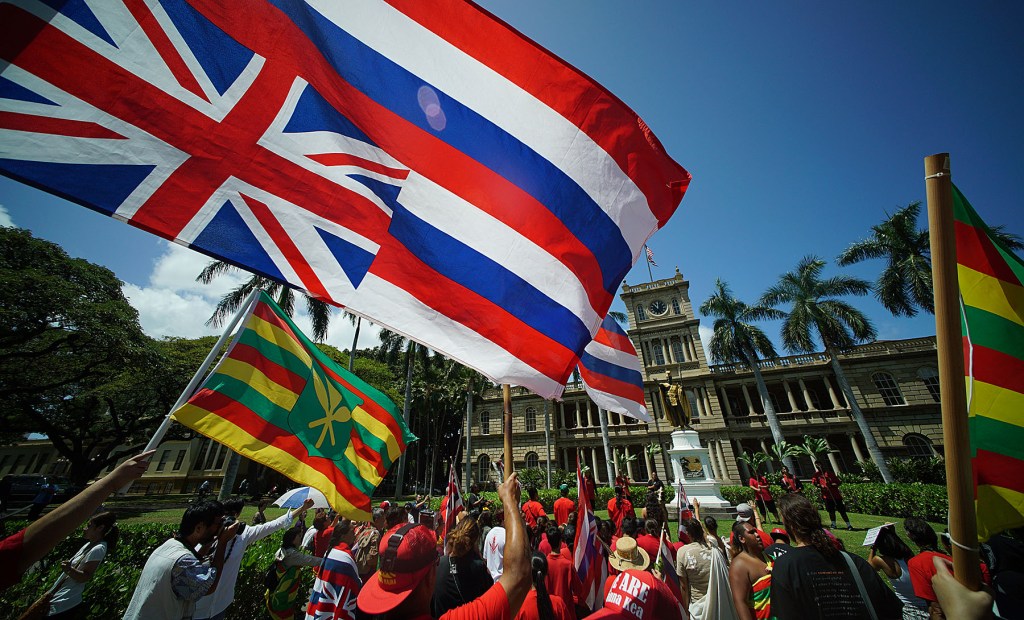
As Hurt explained, the goal of the proposal is a council that more closely reflects the full diversity of Oʻahu, including Native Hawaiian communities which are currently spread across the island and often outvoted in each district. At-large districts would give underrepresented groups like Native Hawaiians a chance to consolidate their vote.
I asked whether it really made sense to assume that any ethnic group would vote as a bloc in Hawaii. I’m half Japanese. My dad’s full Japanese. We don’t always vote for the Japanese candidate.
Hurt agreed that identity is complicated, especially in a place where so many of us have multi-racial backgrounds, but he also gently reminded me of something I forget too often.
“There’s a lot of lived-in experience for me as a minority, growing up black in Tennessee,” Hurt explained. “I think people who are not in that minority group do not realize how political power is divided.”
As hard as I try to be aware of my privileges and advocate for systems that will bring more equitable representation into our government, I have blind spots just like everything else. I may be in the minority group every other place in the world, but here, I’m not. So, I asked him to tell me more.
‘Give People A Chance To Unite’
According to Hurt, data suggests that Native Hawaiian voters who are rooted in Native Hawaiian communities often do share political priorities and “tend to vote more cohesively, like we see amongst the Black community.”
“So what we wanted is something that could give people a chance to unite, like, let’s say there’s a candidate that does come out of the Native Hawaiian community and the entire community really overwhelmingly wants to throw their support around this candidate, now they can, and they can ensure that voice will be heard,” Hurt said.
It’s a very important goal. So where does that leave me?
Honestly, a little unsettled, in a good way. I’m much more likely to support Proposal 196 than I was before our conversation. I see more clearly what problem Common Cause is trying to solve and why proportional, at-large elections might be one way to solve it in a city that is both highly diverse and relatively small. I’m also much more aware of my own biases in the debate.
I’m still not ready to plant a flag and say this will increase representation and diversity. Before doing that, I want to hear from Native Hawaiian leaders and organizers, labor and neighborhood groups, people who’ve been fighting for representation and resources on the ground for a long time. I want to make sure we’re not making things worse.
And if I’m being honest, some piece of my hesitation is probably what Hurt named: Change is scary. Even for people like me, who write columns about why we should change things.
Here I had planned to walk you through the mechanics of proportional ranked choice voting, comparing at-large systems with single- or multi-member geographic districts and unpacking the actual data behind all the possibilities.
That column is still worth writing. But right now, as the next round of charter debates begins, the more important question for me is how we, as a community, show up to the conversation and if we’ll be brave enough to approach new ideas with an open mind.
 Sign up for our FREE morning newsletter and face each day more informed.

Local reporting when you need it most
Support timely, accurate, independent journalism.
Honolulu Civil Beat is a nonprofit organization, and your donation helps us produce local reporting that serves all of Hawaii.
ContributeAbout the Author