Denby Fawcett: Some People Fear Chinatown After Dark, But Crime Is Down
We should support businesses and restaurants in Honoluluʻs most interesting and historic area.
November 25, 2025 · 9 min read

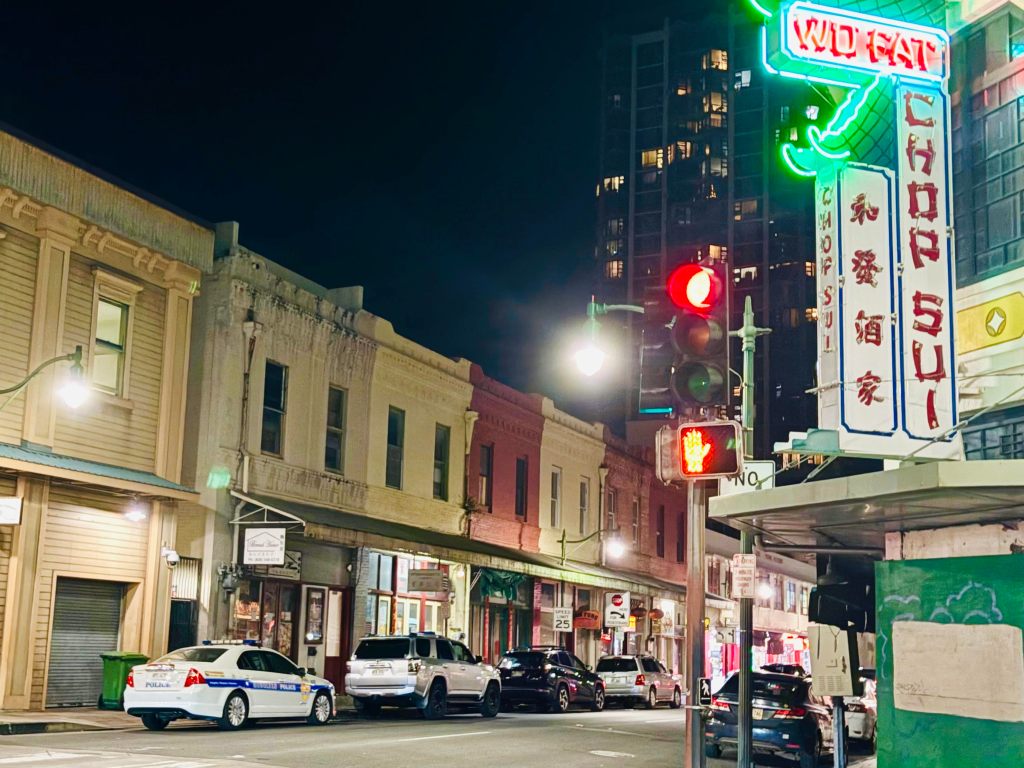
About the Author

After attending a meeting at Native Books in Chinatown recently, a younger friend suggested a group of us walk together to our cars in a nearby parking structure for safety.
My neighbor Ann Rayson and other acquaintances have the same perception: Chinatown is dangerous after dark. She doesn’t like going there even in the day, saying, “It’s sketchy with so many homeless on the sidewalks.”
I do not share that wariness about Chinatown. But I can see how the idea has taken hold.
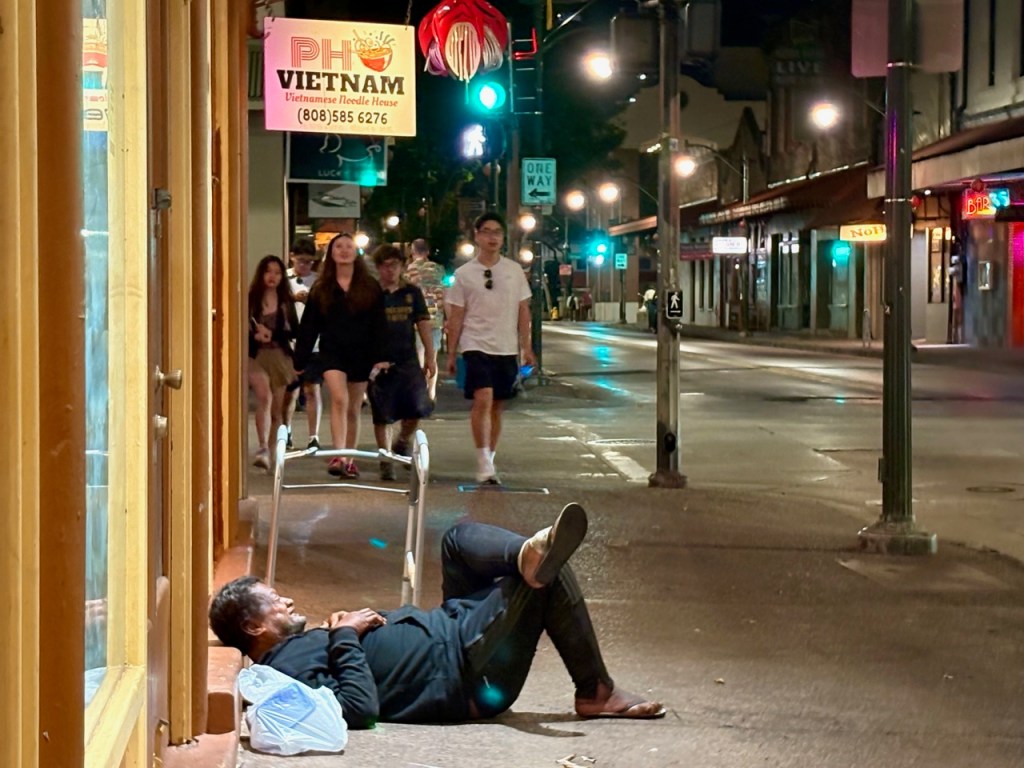
Last Saturday night after a Thai meal downtown, my dinner companion and I sidestepped a sleeping homeless man as we made our way up Smith Street. The dark, empty blocks, devoid of other strollers, gave off a lonesome, scary vibe.
“It is a chicken and egg problem,” says Tyler Dos Santos-Tam, the City Council member for the area. “Because people are afraid of Chinatown in the evening, they donʻt go there and because they donʻt go there, the dark, empty and streets can seem scary.”

Ideas showcases stories, opinion and analysis about Hawaiʻi, from the state’s sharpest thinkers, to stretch our collective thinking about a problem or an issue. Email news@civilbeat.org to submit an idea or an essay.
Chinatown deserves our respect as Honoluluʻs most interesting and historic area and we should support its businesses and restaurants by visiting them more often to enliven the streets, which in turn will make the area more inviting to others after dark.
“The more people on the streets, the better it is. Street activation has been proven time and time again as a way to discourage crime and homelessness settlements,” says Honolulu Managing Director Michael Formby.
Increased Police Presence
For sure, not every street is empty. Popular restaurants such as Ducʻs Bistro, Fete, Olayʻs Thai-Lao Cuisine, Ginger and Garlic Chinese Restaurtant and Sing Sing are packed with people most nights. Bars along Hotel Street also are filled with young patrons. But many other nearby eateries struggle to survive at night.
There really is less to fear now.
Honolulu Police Department’s data dashboard shows violent crime is down in Chinatown, in the area bounded by Bishop and River streets — known to HPD officers as Beat 154. Only one category of violent crime has increased there in the last year: forceable sexual offenses.

Acting District 1 Maj. Henry Roberts attributes that increase in sexual violence not to a sudden surge in sex crimes but rather to more frequent reporting of that particular crime. The Kapiʻolani Medical Center Sex Abuse Treatment Center is located on nearby Merchant Street.
“For decades, the Sex Abuse Treatment Center has had crisis counseling and therapy services available at its offices on Merchant Street,” says SATC executive director Lynn Costales Matsuoka. “In recent years, more victims have decided to meet with officers to file reports with the Honolulu Police Department while receiving services at SATC’s offices.”
The data dashboard also shows an increase in robberies in the area from 2000 to 2024 but, Roberts says, robberies have decreased this year with zero in Chinatown in October and one so far this month.
Roberts says he feels a special impetus to make Chinatown safer because he grew up there on North Beretania Street in a building owned by his mother, Janet Lau Roberts, who owned Jenny’s Lei and Flowers.
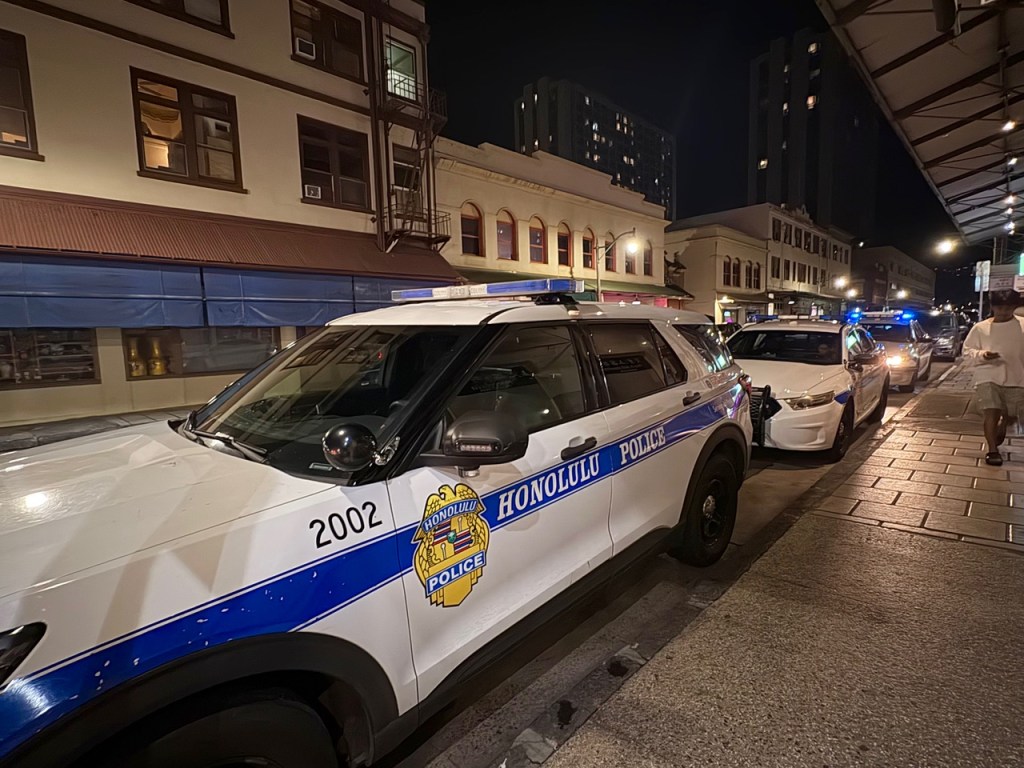
He attributes the drop in Chinatown crime to increased police foot patrols, ATV teams cruising the streets in the late hours, the Honolulu prosecutor’s Weed and Seed program focusing on the criminal element within the street population, as well as citizen patrols by Chinatown residents and business owners.
“We are not perfect but I am convinced we are moving in the right direction,” Roberts says.
Yet even if the facts show a reduction in crime, when there is a rare and particularly heinous incident such as the nighttime sulfuric acid attack on a restaurant cook near Hotel Street in August, it reinforces the view that Chinatown is to be avoided.
Progress Has Been Made
Honolulu Prosecutor Steve Alm says when it comes to Chinatown, people are quick to fear the worst.
He says there have been three acid attacks on Oʻahu in the last five years. Yet you do not hear people saying stay away from Mililani because there was an acid attack there in 2023 or fearing Ala Moana Center after the acid attack near the mall in 2021. You only hear about the Chinatown attack.
“This reinforces the impression of danger that is really hard to change,” Alm says. “If people would give Chinatown a chance, they would see it is bustling with activity in the day. If they are nervous about going at night, just take an Uber to the door of a restaurant.“
Alm says in 1997, the year before the Weed and Seed program began, police arrested 10,000 people in the Kalihi-Palama Chinatown area, most of the arrests in Chinatown proper. This year there have been 409 arrests, 118 of them felonies and 258 misdemeanors.
“Chinatown is not the place it was before,” he says.
Mayor Rick Blangiardi’s administration has made improving Chinatown a priority with breakthroughs such as reducing the numbers of homeless downtown by convincing the River of Life Christian mission to shut down its central homeless feeding center on Maunakea Street.
Today the mission delivers meals and services in mobile units to needy people in neighborhoods outside of Chinatown. When it was serving 700 to 1,000 free meals a day, Chinatown became a magnet for homeless and the criminal drug dealers who preyed on them.
Also, at times, some of the homeless meal eaters created a mess when they finished their food and dumped the foam food containers on the street and sometimes urinated and defecated on the sidewalks — to the detriment of nearby businesses.
Chu Lan Shubert-Kwock, a frequent critic of the city, says it has done a terrific job since then of keeping the streets cleaner with daily garbage pickups and power washing the streets every Tuesday and Thursday.
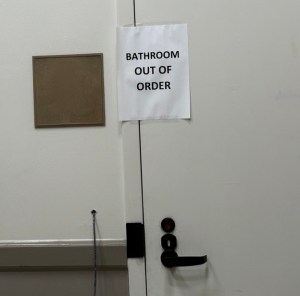
But there are no public restrooms in Chinatown, so urine and feces continue to be left on the streets. The single public restroom stall that is supposed to be open to the public in HPD’s Chinatown station is almost always closed with an out of order sign on the door because of vandalism.
Police in the substation direct people to a restroom in nearby Aʻala Park, but often that is also locked after vandals have broken a toilet or sink.
Honolulu Parks and Recreation Department spokesman Nathan Serota says Aʻala is the most frequently vandalized park in the city with 15 incidents of malicious property damage counted in the last tally in 2022.
“With no public restrooms, the merchants and restaurants have to clean up urine and poop left in front of their places, which can leave a lingering stinky smell,” says Shubert-Kwock.
She is the head of the Chinatown Business and Community Association and a co-founder of the citizens’ Chinatown Security Team.
The city is close to completing architectural drawings to put out to bid a project to remodel and open a public restroom in the city-owned Pauahi Hale on Pauahi Street where the nonprofit Mental Health Kokua previously had public restrooms before moving out in 2023.
Anton Krucky, Honolulu Community Services director, says he is considering having enhanced security and very regular maintenance in the new public restroom to discourage vandalism and crime.
“There are still people around who cause problems,” he says.
Getting Ready For A Rail Station
Formby admits the Chinatown improvements might not be happening as fast as most people would like.
He says he hopes by July to open competitive bidding for a nonprofit to be selected to improve Chinatown, street by street, before the expected opening of the Chinatown rail station in 2029.
“There are so many opportunities to make Chinatown better, prettier, more active and less smelly, “ he told Civil Beat.
He says the nonprofit that gets the city contract will work with the Chinatown community on large projects and even small improvements such as helping a private vendor fix a torn awning — all the details that will add up to making Chinatown friendlier and more inviting.
We envision people taking the train and getting off in Chinatown, eager to walk around and have lunch or dinner in one of the restaurants.”
Michael Formby, Honolulu managing director
He says it depends on the budget, but he hopes the contract will be for three years for a total $1.5 million to pay for community improvements.
“We have got to do something before rail comes,” Formby says. “It is a given. We envision people taking the train and getting off in Chinatown, eager to walk around and have lunch or dinner in one of the restaurants.”
For now, he urges residents to come on down to enjoy dinner in the evening. “If you don’t feel comfortable alone, come in groups.”
Shubert-Kwock is more adamant.
“We need to break the habit of people fearing Chinatown,” she says. “They are getting misinformation. You have to tell them to wake up. It is fine here. Don’t hurt Chinatown by abandoning it. If anyone wants, I will give them a tour at even at 10 o’clock at night if they like.”
 Sign up for our FREE morning newsletter and face each day more informed.
Local reporting when you need it most
Support timely, accurate, independent journalism.
Honolulu Civil Beat is a nonprofit organization, and your donation helps us produce local reporting that serves all of Hawaii.
ContributeAbout the Author