Rep. Tina Grandinetti: Union Plaza ‘Hell Hole’ Reveals Systemic Issues
Hawaiʻi needs a movement of organized tenants to take on the power imbalance of landlords.
November 28, 2025 · 6 min read

About the Author

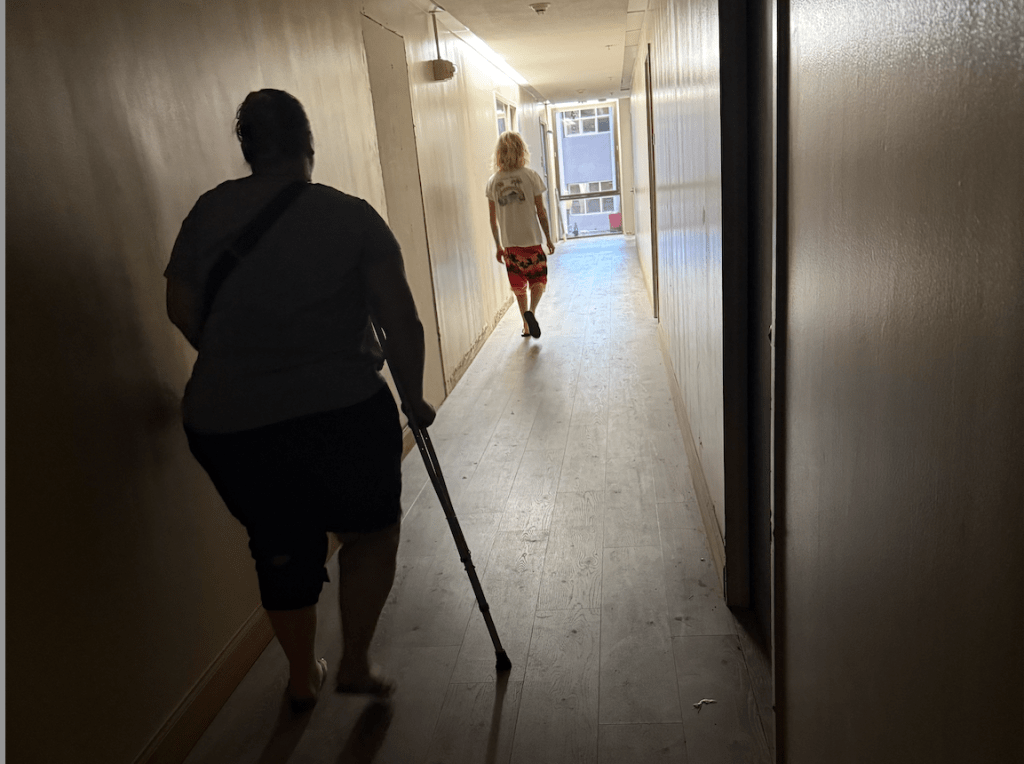
Over the last several weeks, tenants at Union Plaza (also known as 1136 Union Mall) have endured a cascade of abuses from local developer Chad Waters. Slipshod renovations, inadequate ventilation, illegal utilities shut-offs, and retaliatory evictions, have culminated in Waters hiring an unlicensed security force that has reportedly assaulted and intimidated tenants in the dark of night.
The escalating situation at Union Plaza serves as a warning about the weaknesses in Hawaiʻi’s landlord — tenant laws, and how those gaps endanger the health, safety, and housing security of the 40% of Hawaiʻi households who rent. Union Plaza may be a worst-case scenario, but it reveals systemic issues we can no longer ignore.
Hawaiʻi’s landlord tenant laws are self-help laws that put the onus on renters to access their rights through private action. But this presents major barriers to justice for tenants who are often already overwhelmed, under-resourced and fearful of retaliation. In crisis situations like Union Plaza, it shifts responsibility onto victims.
When Waters cut off electricity to the entire building, tenants were left literally in the dark. Members of the Honolulu Tenants Union showed up with laptops, Wi-Fi hotspots, and portable batteries so that residents could file temporary restraining orders.
Weeks later, the power is still off. Meanwhile, some Union Plaza residents have been bravely challenging retaliatory evictions in court with some success, but without legal support, others have been forced to leave without a fight.
For weeks, Union Plaza tenants and organizers at the Honolulu Tenants Union have been sounding the alarm, holding press conferences, and calling for government action. They appealed to Gov. Josh Green to direct the Office of Consumer Protection to investigate Waters. Yet OCP rarely investigates landlord-tenant violations and even when they do, they do not file lawsuits on behalf of tenants.

In fact, they are limited to providing a neutral informational role between landlords and tenants. Decades ago, the office was tasked with providing counsel to indigent tenants if appointed by the courts, but in 1976 the Legislature repealed this language, finding that the most valuable role for OCP is to provide information to both landlords and tenants through the state Landlord-Tenant Hotline. Today, renters have no dedicated advocate in government — despite being among those most vulnerable to displacement and homelessness.
Given these limitations, how do we protect tenants and hold predatory landlords accountable? We organize, legislate and build a system that treats housing as a human right, not a commodity.
We need a movement of organized tenants. In the absence of government action, Union Plaza tenants have rallied together to keep each other safe and housed. The Honolulu Tenants Union and other grassroots organizations have stepped up to coordinate mutual aid, document violations and empower residents to assert their rights.
Across the country, tenant unions have become powerful, member-driven organizations where renters work together to confront exorbitant rent increases, retaliatory evictions and unsafe living conditions.
They organize building by building to counteract the structural imbalance of power between landlords and renters. They have also partnered with allied organizations to fight for policies that prevent displacement.
As housing pressures intensify in Hawaiʻi, we need this kind of collective approach — grounded in community power and a vision of housing as a human right.
Stronger Tenant Protections Needed
Tenant unions across the country have been integral to housing justice coalitions that have won major victories in the fight for tenant protections and anti-displacement policies.
Seven states, and countless cities have passed rent stabilization laws that place caps on allowable annual rent increases, while guaranteeing a fair return for landlords. Ten states have passed good cause eviction requirements, which prohibit arbitrary lease non-renewals.
These are not radical demands. They are basic protections that recognize the fundamental importance of stable housing and the dangers of leaving tenants at the mercy of unchecked market forces. Research shows that they provide immediate relief to renters, promote housing stability and produce broad social and economic benefits for the entire community.
Tenant Representation Needed
Rights are only fully realized when people are able to access and defend them. While some Union Plaza tenants have taken Waters to court to challenge the utility shut off and retaliatory evictions, many have not felt empowered to navigate the legal process alone.
In Hawaiʻi, tenants are not guaranteed a right to legal counsel, and the resulting imbalance is stark. While 70% of landlords in Hawaiʻi show up to court with legal representation, less than 5% of tenants do.
The stakes are high, because evictions have severe consequences. A recent study showed that the impacts of eviction on youth educational outcomes are roughly the same as juvenile incarceration. Even when tenants win in court, they still carry an eviction filing on their record — a “scarlet letter E” that creates a long-term barrier to housing.
Four states and 21 local municipalities have addressed this issue by guaranteeing the right to counsel for tenants in eviction court. Robust right to counsel programs reduce both eviction filings and actual evictions significantly by providing tenants with the resources they need to defend their rights under the law.
Proactive Code Enforcement Needed
As Union Plaza makes painfully clear, city and state agencies often lack the tools and authority to hold negligent property owners accountable for providing healthy and habitable housing to tenants.
Fortunately, proven models exist.
In Los Angeles, tenants can file complaints directly with the Housing Department. If a violation is confirmed, landlords have 30 days to fix it before the unit is placed into the Rental Escrow Account Program. Tenants then pay rent into an escrow account until the landlord resolves the issue.
In New York City, the Housing Preservation and Development Department enforces the Housing Maintenance Code, conducts inspections, educates property owners, brings cases to Housing Court, and orders emergency repairs when necessary. Through the department’s Emergency Repair Program, the city directly addresses immediately hazardous conditions and bills the cost to the property owner — charges that can become tax liens on the property if left unpaid.
Opponents of tenant protections often argue that such measures are harmful to “mom and pop” landlords, but landlords who act responsibly should support these efforts because we all benefit when our community is safely and securely housed.
Union Plaza is a stark reminder that bad actors are real, predatory practices are widespread and the consequences for Hawaiʻi’s families are devastating. Ultimately, there is a profound and systemic power imbalance between landlords who rely on housing as a source of profit, and tenants who depend on housing for their basic human need for shelter. It’s time that we acknowledge that imbalance and work to correct it.
 Sign up for our FREE morning newsletter and face each day more informed.

Local reporting when you need it most
Support timely, accurate, independent journalism.
Honolulu Civil Beat is a nonprofit organization, and your donation helps us produce local reporting that serves all of Hawaii.
ContributeAbout the Author