Makana Eyre: They May Call It Poke, But It Doesn't Come Close To Ours
A traditional Hawaiian dish has been appropriated around the world, but in name only.
November 3, 2025 · 5 min read

About the Author

When I think of the strangest places I’ve seen poke around the world, a few memories come to mind. There was the pre-packaged teriyaki, rice and red bell pepper “poke bowl” I found in a Paris grocery store. Another was the “Lunch Hawajski,” a concoction of cubed cheese, diced pineapple and chopped chicken I sighted at a Warsaw mini-mart.
These days, no matter where you go, you’re bound to encounter an abundance of this beloved Hawaiian dish. European cities, big and small, are packed with places offering it. Within a mile of my Parisian apartment there are at least 10 restaurants selling “poké.”
Farther afield, poke pops up in Cairo, Cape Town, Dubai, even Istanbul. And if Google Maps is to be believed, there’s even a joint in the Iranian capital of Tehran.

Ideas showcases stories, opinion and analysis about Hawaiʻi, from the state’s sharpest thinkers, to stretch our collective thinking about a problem or an issue. Email news@civilbeat.org to submit an idea or an essay.
It’s time to face facts. Poke, a cornerstone of Hawaiian cuisine, is now global. Its spread happened fast, seemingly overnight about 10 years ago. For many people from the islands, its rise has been a sore point.
Once again, it seemed to many of us, something deeply woven into our culture had been taken and distorted to the tastes and wishes of others. Perhaps just as unsettling, those enterprising folks behind poke’s export seemed to do so cynically, more out of the promise of profit than of cultural bridge-building. To them, it was a commodity, the perfect food to package with a twist of pineapple and sell to health-conscious passersby.
Take Heart — This Can’t Be Copied
For some years, I thought this too. When poke began to proliferate, I started taking pictures when I encountered it in strange places or forms. There was the poke burrito I spotted in Manhattan or the restaurant in the Norman city of Caen which used the slogan, “Caen is better than Hawaï.”
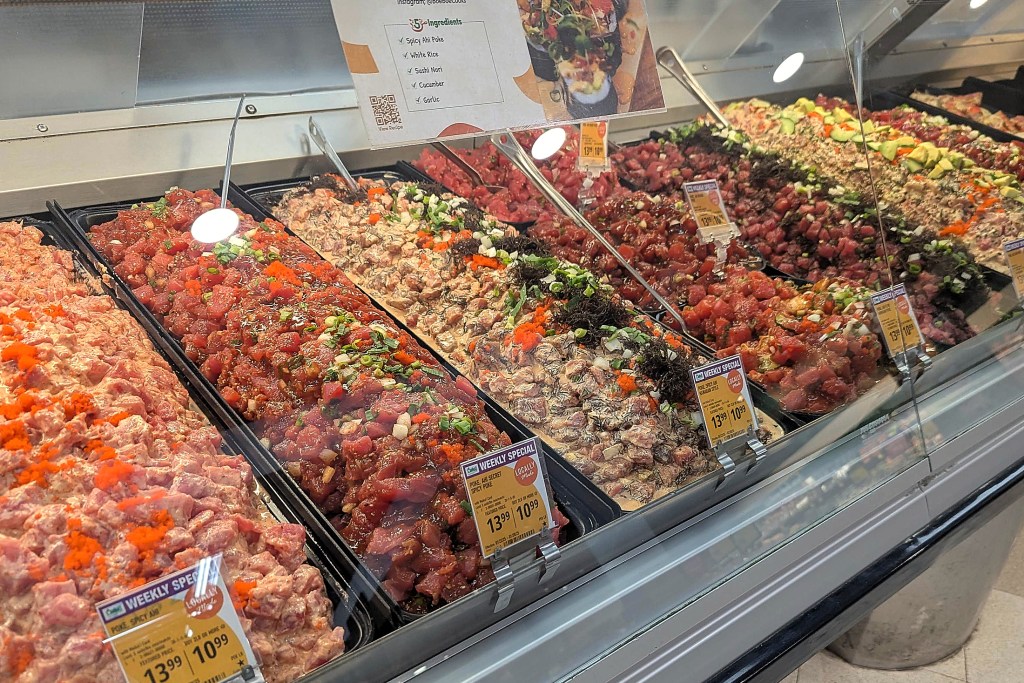
Yet recently, I’ve changed my tune. The shift came in the wake of a realization. While it’s fair to be frustrated about the appropriation of this dish, the truth is that what people around the globe are scarfing down hardly resembles anything I’ve ever taken home from Foodland or Kaohu Store or Tamashiro Market. It’s so divorced from our cherished original, prepared daily and then presented in gleaming stainless-steel trays, that it’s hard to call it poke at all.
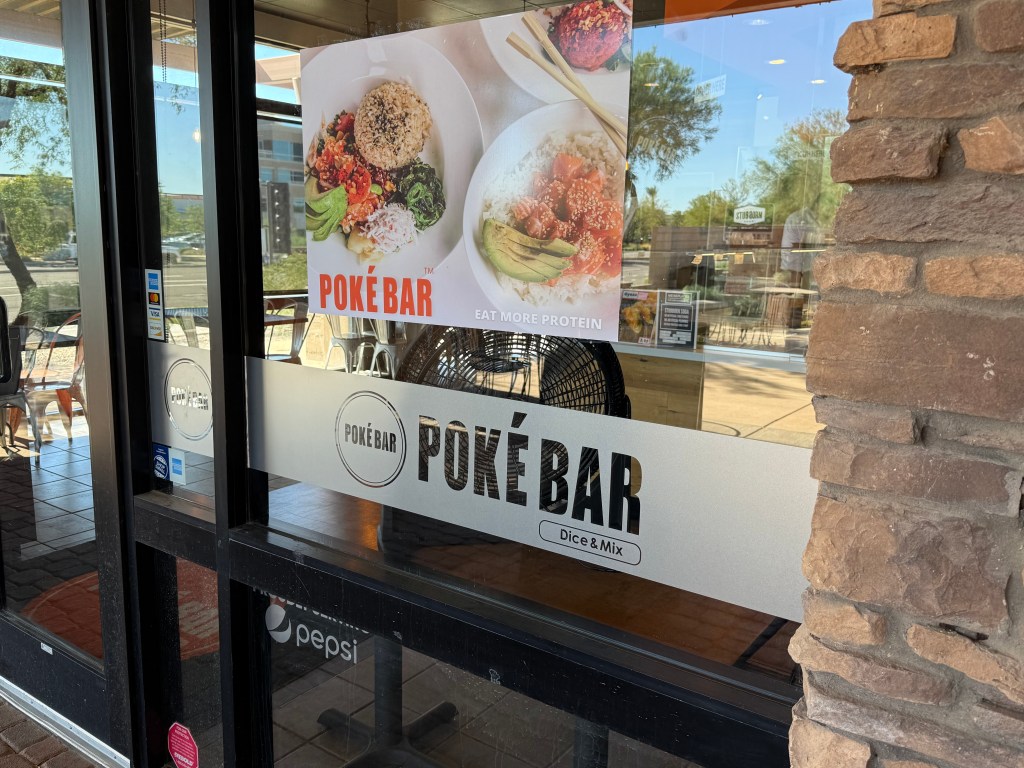
The rest of the world seems to think poke centers around brightly lit counter-service restaurants where crews of chipper university-aged workers assemble bowls for takeaway.

The fish, almost always cubed, unseasoned salmon, plays a supporting rather than lead role alongside ingredients like pomegranate seeds, black radish, tzatziki, guacamole or cream cheese, all dusted with toppings like shredded coconut, cashews or pumpkin seeds.
Rice often forms the bowl’s base, but you’ll regularly see people opting for quinoa or a healthy if dull bed of grated carrot. The final touch? A good drench of dressing with names like “smoked teriyaki” or “Thai passion.”
Strangest of all might be the fact that fish seems to be optional. The protein element can just as often be marinated chicken or balls of falafel.
In recent years, the poke bowl has seemed to become ever more elastic. A chain of restaurants in Paris sells a curry version that includes snow peas, honey and thyme-roasted carrots and chicken topped with a generous ladle of garam masala gravy. Another proposes “sweet poke,” which features toppings like caramel, Breton cookies or Belgian speculoos that you can eat over chia seed pudding or Greek yogurt.
Savor The Real Deal
What’s frustrating about these iterations of the dish might also be the thing that brings us Hawaiʻi folks some consolation.
They certainly feel hollow, though not so much because of their strange combinations of ingredients or tendency to see fish as optional. It’s instead due to their lack of the context and ritual that make Hawaiian poke special.
For most of us, poke is most often a communal experience. It’s family food, something you eat from a big tray at weddings and parties. It’s linked so closely to our geography and history. The fish, limu and salt all make up essential parts of our islands and our heritage.
What is poke beyond our shores? It’s gas station California rolls to a Tokyo temaki. It’s Pizza Hut pepperoni pie to a Neapolitan diavola. Against the odds, our precious culinary secret remains unrevealed. What New Yorkers or Parisians, Capetonians or Tehrani are eating isn’t poke. They are knockoffs and poor ones at that.
Let’s go on savoring poke at baby showers and lūʻau, while watching Sunday football, at New Year’s gatherings or simply on quiet afternoons among family. Let’s continue as we have for decades, eating ʻahi with sesame oil, limu and ginger, chewing on tako, and teasing the meat out of white crabs.
No matter how much poke you see on the continent or abroad, no matter how badly it’s warped to meet a more global palate, this essentially Hawaiian dish is still ours. The trendy set in London or New York or San Francisco can go on eating their cubed salmon bowls. There’s no sense in lingering on resentment. We have it good.
 Sign up for our FREE morning newsletter and face each day more informed.

Local reporting when you need it most
Support timely, accurate, independent journalism.
Honolulu Civil Beat is a nonprofit organization, and your donation helps us produce local reporting that serves all of Hawaii.
ContributeAbout the Author