The Sunshine Interview: Hawaiʻi Correctional System Oversight Commission Leaders
Coordinator Christin Johnson and Chair Mark Patterson discuss funding challenges, staffing shortages, safety issues, investigations and rehabilitation at the state’s prisons and jails.
November 9, 2025 · 38 min read


About the Author

The independent, five-member Hawaiʻi Correctional System Oversight Commission was created in 2019 by the Hawaiʻi Legislature to help improve issues with the state’s troubled corrections system, including prison overcrowding. On Tuesday, Civil Beat editors and reporters met with Christin Johnson, the state’s first oversight coordinator who was reappointed to a new two-year term in January, and Mark Patterson, the commission chair who is a former administrator of the Hawaiʻi Youth Correctional Facility and a former warden of the Women’s Community Correctional Center.
Johnson began by speaking on the commission’s top priorities. This interview has been edited for length and clarity and with an eye toward future reporting.
Christin Johnson: The big focus for me right now is really building up the capacity for true investigations. The commission has had a very interesting history. Even though the law was passed to make the commission in 2019 and the commissioners were chosen and started meeting in 2020, the reality is that the office wasn’t open until July of 2022. When the office was open, many people don’t realize, we didn’t have a phone, we didn’t have a website, we didn’t have anything. So it was truly starting from the ground up.
Where are you physically located?
In the State Office Tower right off South Beretania. When the office opened, the other hurdle that we didn’t necessarily anticipate was funding. We were almost immediately defunded, and the governor’s office did step in and fund us for one year with agreement that if you don’t get funded by the Legislature, it’s a wrap and you’re done. So that put a lot of our hiring on hold because I could only offer somebody six months of guaranteed work, and that felt way too risky to bring in an investigator with access to extremely confidential information for that short period of time.

So now that we are officially funded and we’re a true permanent entity, we’re building up everything that we wanted to do years ago, and that includes hiring our investigators. We have a jail oversight specialist we hired six months ago. That was our first investigator we brought on board. On Dec. 1 we’re going to be bringing in our prison oversight specialist, a brand new position of its kind. Just as the title presumes, one is investigating the jails and then systemic issues on that side, one is investigating the prisons, systemic issues on that side. So right now, my main priority is really building up the true function of the office — well, at least a quarter of our mandate — which is the investigative function to look into individual complaints, complaints from people in custody, complaints from staff, family members, etc.
Mark, do you want to chime in with what Christin just said?
Mark Patterson: I think a lot of what Christin just shared is really from building the office, building the support and staffing that we need to fulfill the mandate that we’ve been given from a commissioner’s perspective. And if you look at the mandate in terms of population control, moving from a punitive to a therapeutic system and the investigations, the system is stagnated. It’s not moving. So it’s really our concern. How do we kick start this so that everything moves in the same direction? I mean, there are multiple layers of problems within the system, but the bottom line is, bodies are not moving. The system is clogged in the front and nothing in the back. So why is that happening? And that’s important for us, because in order to do our mandate, all of that has to move.

What is your budget status right now? Are there needs still pending? And are you administratively attached to any agency?
Johnson: We are administratively attached to the Attorney General’s Office. The Attorney General’s Office has been a fantastic partner for us in that they support our mission and our mandate, but they recognize that we’re completely independent, and they really, truly do respect that.
We’ve been really fortunate to be funded 100% of our (budget) ask (to the Legislature) the past two years in a row. We went from being on the chopping block to now being able to double our office capacity every year. Right now, we’re actually asking for a larger office space. That’ll be our only ask (next year). We’re going to wait to ask for more staffing until we have a solid year of investigations under our belt, just so that we can come back with some solid numbers and be able to really give the Legislature a good idea of what we need. We just want to be able to measure that first.
But right now, we just need a bigger office space. We’re in the same conference room that we were when I first started. There’s no private offices either. So it’s very difficult to have any level of a confidential conversation for investigations.
You’re paid, obviously, full-time. Mark and the other commissioners are volunteer positions. How many permanent staff do you have, not including these investigators that you’re hiring?
Johnson: Right now we have myself, my special assistant, our reentry oversight specialist, and then our jail oversight specialist. We’re about to bring on our prison oversight specialist, and then we also have a position for a research policy analyst.
My main priority is building up the true function of the office, part of our mandate, which is to investigate complaints.
Christin Johnson
Tell me about these investigators that you’re bringing on board. You indicated that one was separate for the prisons, the other is separate for the jails. Could you just briefly walk me through that?
Johnson: I’m relatively new here. I came three years ago to take this position. And one thing that was really surprising to me is that, although Hawaiʻi is a unified system, jails and prisons are very, very different. And I found that because it’s a unified system, many stakeholders and community members didn’t understand the difference between jails and prisons, and we’re trying to use the same policies and procedures for jails and prisons.

You have oversight of how many facilities total?
There’s nine total. Eight are in Hawaiʻi. We have four jails that are on each county — the Big Island, Kauaʻi, Maui, Oʻahu — and then we have three prisons on Oʻahu, the women’s facility (in Kailua), which is also hybrid — it has jail in prison. And then you have Hālawa (correctional facility). And then you also have Waiawa Correctional Facility on Oʻahu, and that is a minimum facility. Then you have one prison on the Big Island, which is Kūlani, a minimum correctional facility. And then we also send, I think — 820 (inmates) is the most recent number — up to Arizona, to a privately contracted facility called Saguaro Correctional Center.
I wanted to come back to something that Mark said, which was the idea that the system is stagnant, that we’re not moving people where they need to be, or something’s missing. I think it’s been about two years since Department of Public Safety was changed to Department of Corrections and Rehabilitation, and I want to get your guys’ sense of what’s been accomplished to that end. It sounds to me like you’re concerned that it’s not moving fast enough.
Patterson: Part of going from a punitive to a therapeutic correctional system is really understanding your programmatic needs. Just off the top of my head, we talk about anger management, cognitive thinking, substance abuse treatment, mental health, treatment, family counseling, etc. Those are the basic things that most of the individuals come in, somebody is going to say, “Do you have to take these courses?”

In addition to that, you’ll have educational opportunities, your GED, your college, etc., and sometimes there’s other programs that are offered along the cultural lens. And of course your faith-based programming. When I talk about stagnation, there’s not a system or journey of programming readily seeable that cannot explain to me why we have minimum empty beds. Both our minimum security facilities are at 40% vacancy — Waiawa and Kūlani.
So that’s a concern for me, because that’s where they go at the end of their sentencing, where they go to begin their transition back into the community. I don’t know what the exact numbers, but I will say (there are) hundreds of bed spaces (vacant). In our jails is what we call the furlough population. Once they complete their minimum custody programming, they’re sent back to their home district jail, if they’re from the Big Island, Maui, Oʻahu or Kauaʻi, and they enter into the furlough program, which they still stay there, but they leave and go to work. Those beds are empty — significantly.
My understanding is that there’s minimum security inmates in Arizona and Hālawa as well.
Yes.
Do you have any idea what those numbers are? Is it significant?
Johnson: It’s hundreds.
Patterson: So we’re trying to figure out, “What is the oversight process for the case management? Is there a lack of programming?” Every one of those beds would relieve pressure from the front if the bodies were moving. We have enough beds in our furlough jails and in our minimum facility to bring at least 400 inmates from Arizona. We are moving the minimums from Hālawa and then backfilling.
Well, that begs the question — is the system answering as to why that is?
Patterson: No.
You can’t get an answer.
Patterson: We haven’t got one that basically —
Johnson: — that makes sense.
Patterson: I’d be honest. We’ve been asking it for two years, and the beds are still empty.
Is that for (DCR Director) Tommy Johnson to answer?
Johnson: Yeah. I think it has to come from a higher level. I think a part of the issue is that there’s a lot of reliance on the wardens to make transfer decisions. So the reality is, is that the minimum facilities, when they receive people coming in, they can say no. Some people are denied because they have different medical issues. Some people are denied over, you know, a potential behavior situation that happened that maybe could have been addressed at the facility, give them another chance.
If you look at the mandate in terms of population control, moving from a punitive to a therapeutic system and the investigations, the system is stagnated.
Mark Patterson
But I think that’s a challenge. When you’re trying to really shift from a punitive system to a rehabilitative and therapeutic system, you have to give people chances. And when people are coming from really restrictive spaces like Hālawa, that’s a massive change. That’s a massive change — to be locked in the majority of your day. Many people are getting programs, but many people are not, and then going to Waiawa or Kūlani, where you’re busy either working or programming eight to 10 hours a day, every day. That’s a huge change. So a lot of it that we’re seeing is just not preparing people for shifting into these spaces and then putting a lot of blame on them when things don’t quite go as perfect as we expect them.
Is it frequent that the people are rejected by the receiving facility, the minimum security facilities, because of misconduct?
Johnson: It’s a variety of reasons. But it’s interesting, because what we hear from Hālawa is we’re trying to send 30 people, and they’ll take nine, and they’ll send them all back. And then what we hear from Waiawa is, if you send a large group of people, you get a lot of group think, and they want to cause problems, and so we just send them right back — there’s no real opportunity for mentorship or patience or helping people.
Patterson: I’ll give you an example: There was a lot of complaints a while back where people were being violated for parole because they failed a phone call or they failed the check in, so they would bring them back into parole. We would be saying, “That’s just a technical violation. Does that really deserve for him to come back and wait another nine months or a year to go back out? He just lost his job, he lost all of this because he didn’t make a phone call.” Those are things that should be talked out in a different type of consequence, rather than just end this whole reentry journey. That’s what’s happening — just to get out. They may have a writeup or something, they say, “Okay, now you disqualify your points. Go back up again.” So they’re not moving them forward. And they’ll say, “He’s not ready.”
Johnson: And another example of that is, when we were up at Kūlani, we received a bunch of complaints from, I don’t know, it felt like at least 20 people who were very suddenly transferred either back to Hālawa or Saguaro. And what they were saying was that they were working on the farm all day. It’s really hot. They’re drinking a ton of water. So then when they had to do a drug test, their urine came out, quote, unquote, too clean. So then they were shipped out. And it was interesting, because when I talked to the corrections officer, they’re like, “No, they truly are chugging water. All day. Like, it’s hot out here. They’re working on the farm. They’re working hard.”
I’ll give credit to Director Tommy Johnson: When I brought it up to him, he brought them all right back. But it’s the fact that that happened in the first place, and the fact that the director wouldn’t have known about it if we didn’t bring it up. And so we’re finding various issues like this along the way. We’re trying to find the larger systemic issue of what’s happening across the board consistently, so that we can really put together some solid recommendations to fix this.
What kind of impact is this having on the inmates themselves, that they’re not able to transition into where they’re supposed to be going?
Johnson: Oh, people completely lost faith.
Patterson: They’ve lost hope. And then (they are) just gonna play the cultural game and just stay there and sit and do what they got to do, because they have no hope of moving, because nobody’s moving. “I don’t want to work all this hard and then I’m not gonna go nowhere because he did it. He didn’t go nowhere,” you know? A flowing system can influence behavior change in a correctional environment.
I’m reading the first section of Act 179 that established the commission: You are supposed to provide positive reform toward rehabilitative and therapeutic correctional system. It doesn’t seem like currently that that mandate is being fulfilled. Are you seeing any progress in it?
Patterson: It’s still punitive in the back end. It did not move. It needs to be. I refer to it as intentional, focusing on moving bodies. There needs to be departmental leadership saying, “No, he’s going, you need to move five now, and that’s an awareness, okay, then move.”
It’s not a priority, is the way you’re describing it.
Patterson: Yeah, because it’s the bottom not cooperating. So they need oversight from above.
We’ve been hearing for years from people, from critics of the system, who say that we shouldn’t be sending inmates to Saguaro. You seem to be suggesting that we could bring back nearly all of them with the existing facilities that we have today. Is that correct?
Patterson: It would probably take a year or two, but we could bring all as you start processing.
And we’re dropping about $35 million a year on housing over there, correct?
Patterson: If not more, if not more.
Johnson: But especially, if you really focus on all of the reentry mandates that are in place right now, much of them we found — we put out a massive reentry report looking at Hawaiʻi Revised Statutes 353H — it’s a law specific to a reentry. What we did was we put together a report as a part of our mandate — we oversee reentry in that law specifically — and we literally measured out the department’s compliance.
We found that they weren’t compliant with the vast majority of what the mandate calls for. Some of it was because of funding, but much of it was because of a lack of innovation. And so when we talk about getting these people out and moving them through the system, even if the department would put a larger focus — which I think they are trying — on 353H, which is the reentry system, as we bring people home and as we get people out, we’re creating more bed space.
If you’re not moving people through the system, you’re not moving people into the lower level, step-down beds — how does that impact the overcrowding in the more maximum security parts?
Patterson: When we talk over crowding, we are talking about the jails, right? The prisons are fairly empty.
Johnson: But not Hālawa, though — Hālawa is pretty full. I mean, it is under construction, so there’s a full unit of 124 beds being worked on, which is great. That needs to happen. So once that construction is done, that’s 124 more people coming home, which is great.
But to answer your question, one thing that really shocked us when we did this reentry report, we put it right in there — 50% of people are maxing out. Maxing out. That means for individuals who may not be familiar with the criminal justice system, they’re maxing out without programs. They’re maxing out without being put on parole. This means that they serve the entirety of their sentence and now they’re just going out to the street straight from a medium-slash-plus prison, and that’s not the way that the system was designed.
How does that impact recidivism?
Johnson: Badly, horrifically. Think about it. Most of these people who are coming out of prison are going to be our neighbors — 95%-plus, easy, are going to be coming out and being our neighbors. Most people are not lifers. Okay? And so when we think about it in that context that most people are coming out, would you rather have somebody coming out who’s been through extensive programming, who’s really worked on their behavior, who has moved down from a higher-level facility to a lower-level facility and then furlough where they have more opportunity to get out in the community and be a part of the community? Would you rather have that person?
When you’re trying to really shift from a punitive system to a rehabilitative and therapeutic system, you have to give people chances.
Christin Johnson
Or would you rather have somebody who is potentially still heavily gang affiliated, who hasn’t had potentially any type of programming or education, maybe not even a GED, because those numbers are also problematic. And again, not coming out of a facility that is a minimum, where they’ve had a lot of opportunity to move around and have that freedom of space. They’re coming from being locked in the majority of their days to then coming out on the street.
So when we’re talking about recidivism, that’s a massive, massive problem, and that’s why Chair Patterson is saying that has to be a huge focus area for the department. When you’re not focusing on how shifting these people through the system from medium to minimum to furlough to out, you’re not focusing on recidivism, you’re not focusing on public safety.
Let’s talk about staff shortages — that’s a big issue. It’s been a couple of years since Covid came through, and we’re still dealing with shortages, and we’re not just talking about (during the) Super Bowl, right?
Johnson: This is nationwide, and this is a massive issue for the director, so I do have a lot of empathy here. When Covid happened, there was a mass exodus of correction staff, because, mind you, a correctional facility was really where Covid was flying rampant, and so many, many, many people left, and when you already had vacancies before covid happening.
It’s not an easy position to fill. In general, not a lot of people want to work in corrections. It has been very, very challenging for the department to even try to make up for those numbers. Then you get into the whole silver tsunami, right? Many officers who came in 30 years ago, they’re ready to retire. And so those are huge challenges of the department, and I will say they have put a huge focus on recruitment.
Where do you feel that you’re at in terms of acceptance of the commission as a partner in state government?
Johnson: I think that we are a lot further than what we were just a few years ago. It was really interesting the year that it was make or break for us and we were either going to get funded or get shut down. It was very scary for me, professionally and personally, right in the midst of all that. In the same legislative session, there was a bill that came out to cut my salary, specifically, nobody else in the state but mine. That was a big hit for us at the time. It felt like one of the worst things that could have happened, because it felt like everybody was sending a message, right? “We don’t want you. Sit down and be quiet. We don’t want to hear about these issues.”
But it actually ended up being the best thing that possibly could have happened, because when that hearing came about, we had so much testimony from various stakeholders. We had prosecutors’ offices, we had public defenders, we had community groups like ACLU, ‘Ohana Ho‘opakele from the Big Island, we had representation from every island, from state stakeholders, judiciary.
Groups not always necessarily in unison. How about the unions?
We had both unions (United Public Workers and Hawaiʻi Government Employees Association) come. We even had two uniformed staff come on a Friday night when the hearing was scheduled. They came in person and testified. That was monumental. It’s one thing to talk about your own work, and it’s one thing to talk about the impact of your own work. It’s a totally different thing to have that many stakeholders from various parts of the government, of the community, of all these different pieces, come forward and say, “This commission is groundbreaking because of x, y and z. This commission has helped me because of x, y and z.”
So when that happened, I think it really helped show any potential naysayers that any issue you may have, there’s bigger issues going on, and we’re really trying to address it. We’re not here to cause the state problems. We’re here to bring the state solutions. But with that said, it doesn’t slow the work, it doesn’t stop the work, and I just feel really proud of all the different partnerships that we’ve built and created.
You brought this up several times — it almost sounds like a hostility from some quarters, an effort to shut you down, to cut your pay. What was that about? Did you ever get a clear explanation?
Patterson: Those are political questions. (Laughter.) I look at the fact that, one, Hawaiʻi does not have a good reputation. The Hawaiʻi Legislature can create task forces, but they don’t follow recommendations. And sometimes the next step, if they have to, if they’re getting pressured, then they create commissions. And if you really look at all the commissions across the state, you have very active commissions and you have very silent commissions. We were lucky enough that we came with some funding in the original bill, which in 2019 we found ourselves having to ask the governor several times to release the funding so we could hire. And when we interviewed in January of 2020, then boom, Covid hit. So we didn’t pick up an oversight coordinator at that time. They used the money for Covid, and then only in 2022 did they release funding so that we could hire her.
So I think that a lot of the information within the first six months she was working, they were overwhelmed. And oh my God, all this stuff is coming out. All these things are coming out, you know. And I think a lot of people who were affected — because it was being brought to light — (who) may not have been saying nice things to policy decision-makers on whether or not the reporting was valid and (that) it was not as bad as they think.
But I think all of that caused in particular direction to go up to the commission. There was also another bill, I’m just gonna say real quick — there was a bill (that) was introduced. It didn’t last. People who, if you held a state administrative job, you couldn’t be on a commission.
Oh, that was for you, huh?
Patterson: Yeah. You know, (prison reform advocate) Kat Brady called me to say, “Hey, Mark, did you see this one?” (Laughter) And so I don’t know how to best define that. You can read into it and create all kinds of scenarios. But no doubt in my mind, there are a lot of people that were against the commission and the work that (we do).
Are there leaders that are starting to come around to your concerns and your work?
Patterson: The public safety committee chairs are not the same as when Christin started.
That’s Sen. Brandon Elefante and Rep. Della Au Belatti. You feel that you are getting a sympathetic ear from them.
Johnson: From the judiciary (committees) too. I think that we have built up enough of a reputation where the various legislators that we sit down and talk with, they know that if we’re bringing up something to them, it’s based on fact, it’s based on things that we’ve personally seen or have experienced or have looked into, and so that within itself, just building of that credibility, because we are such a new office.
Patterson: The judiciary has always been key. So you got the two judiciary chairs.
Sen. Karl Rhoads and Rep. David Tarnas.
Patterson: Yes, they’ve always been supportive. And then the chief justice (Mark Recktenwald) was a big supporter. You look at his whole tenure, so much reform has happened.
Of course, he too had been stymied through the years, and this session was kind of a breakthrough finally for him.
One of the things that comes up quite frequently in your reports is an insufficient number of staff on mental health boards, and in particular the Women’s Community Correctional Center report that you guys just did. There was a note in there about lots of vacancies, but also lots of very high-level needs amongst the inmates. Where do we stand now in terms of standing up of the mental health unit?
Johnson: It’s still problematic. WCCC was particularly concerning because they had received the jail population. That’s new for that facility. They received the jail population earlier this year. And it was interesting, because when we did our large staffing surveys, one of the biggest concern coming out of WCCC was staff saying, “We’re about to get this jail population. We’ve received no training. We’re not prepared for this. We don’t know what’s about to happen. We’ve worked with the prison population our whole careers.” So it’s been a huge adjustment for them.
And again, when you’re looking at the mental health needs of the jail population versus the prison population, it is very different. The jail population is more transient, you have people coming right off the street. People are less stable, whereas the prison population, there’s still issues there, and there’s still definitely mental health issues there, but the population is more stable.
The other thing is that with the prison population, you have kind of the time to really get to know somebody and sit down with somebody and say, “Hey, you’re acting kind of off. What’s going on?” Right? With a jail population, they’re so transient, you don’t always have that opportunity.
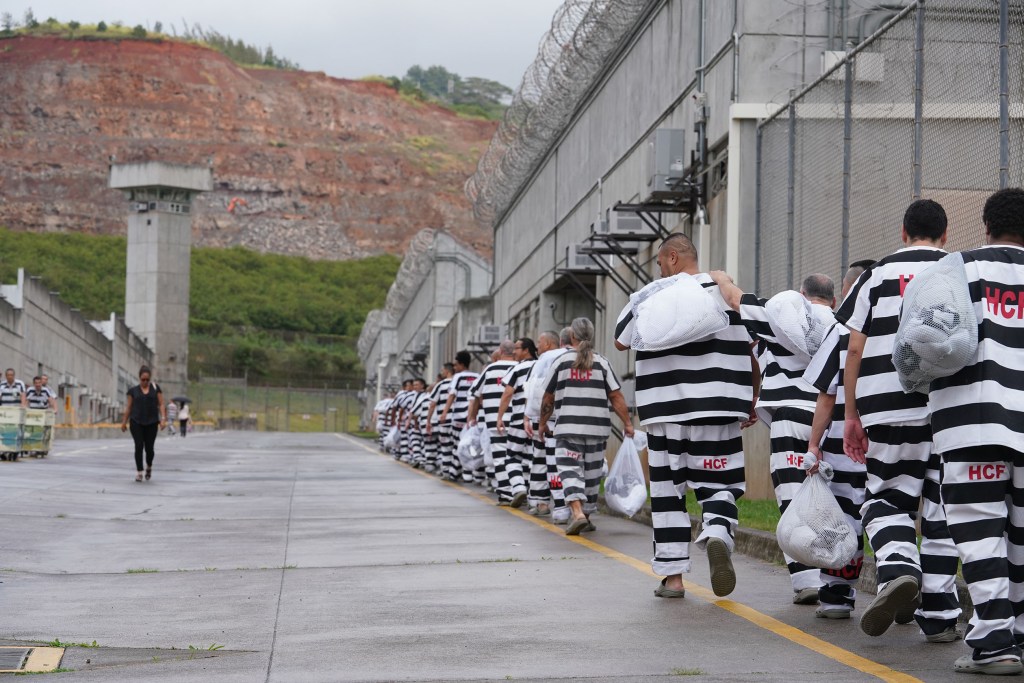
And so you have a lot more crisis in the jail population, which is why mental health staff is imperative across corrections as a whole, because of the amount of trauma that people come in with. But I would say, particularly for the jail population, the staffing is still a challenge. It’s a huge challenge. A part of that is the pay when you know mental health practitioners or therapists or counselors, whoever it may be, when they’re looking at potential job opportunities and you might get paid the same or less working in a correctional facility with some of the hardest clientele versus working in a hospital or elsewhere. And that’s going to impact who you have applying. So, yeah, it’s extremely difficult for the department.
How does the state hospital work in this discussion?
Patterson: HRS 702 to HRS 704 (are the applicable laws). The court will say we need an evaluation on this individual. Then they’ll tell (Oahu Correctional Community Center) and OCCC will send them to the State Hospital. That’s where the majority of the guys over there are waiting for their review, right?
Johnson: A lot of them are reviewed in the jails. Basically, if they’re determined that they need treatment to reach competency so their trial process can continue, then they’re going to get treatment at the State Hospital. But keep in mind that in the interim of getting treatment, however long that treatment may take, their trial process is completely on hold. So when we see people who were charged a couple years ago, or whatever the time frame may be, oftentimes it’s this evaluation process that is playing into that.
Are our jails and prisons safe for employees, inmates and detainees? That’s another part of your charge. Do you feel confident that people that work there, the people that are held there temporarily, the people that are there for a long time — is it safe for them?
Patterson: You know, that’s a double-edged sword. First off, off the top of my head, we haven’t had any reports with staff (having) been hurt, like attacks or anything — or have we?
Johnson: There have.
Patterson: In terms of the safety question, for me it is really in our jails because of the structures. If you go to the neighbor island jails, for me, that would be a nightmare for me to manage, because it’s such a small space with so much bodies. And then the tension, the ability to program or recreate, you’re building tension. It’s like a powder keg going to work, knowing that something’s going to happen that you’re going to have to get involved with. So I would say, no, they’re not.
Not safe.
Johnson: I would agree with that. I think it’s primarily the jails. I think there’s a few different factors. I would not say that they’re safe for people in custody or for staff. I think overcrowding can be a huge issue. Now, that’s mostly applicable to OCCC. I think lack of staff is a very serious issue, and not just the vacancy rate, but the amount of people who end up calling in or using (Family and Medical Leave Act time). What Director Johnson has come out and said — and when we looked at the numbers, I believe him — that on average, correction staff are working seven months out of the year. So that’s between three months of FMLA, and then, as a state worker, you get a fair amount of sick leave, and then you get state holidays too. And so when you add it all up together, it is crazy.
I also think that staff have reached a level of desperation where they are so burned out from working consistent sixteens and sometimes 24-hour shifts that they have desperation where, if they can find a way to utilize the system in a way that benefits them to not come into work to get that break, that’s what they’re doing. That’s what we found in our staff surveys. We found that staff do not feel safe. We found that staff do not feel supported by administration. They don’t feel supported by their own facilities. Their mental health is horrific, their wellness, their well-being, is horrific.
What’s being done about that?
Well, I will give the department credit. I think they took our staffing report very seriously, and they were very supportive of it to begin with, I have to say, and they’re creating basically a response team that if something happens in the facilities that’s traumatic for staff, that they have a team who’s trained in mental health, who’s trained in trauma informed care, who’s trained in all these different entities, who can come out and meet with the staff on an individual basis, also a group basis. Because what I was finding is that, if a suicide had occurred, as an example, and I went out to see what happened, and let’s say that I watched the video, everything else, and there’s truly nothing that the staff member could have done.
Some deaths that happen in custody are not preventable. Many are. Some are not. If I go out and I see it’s not preventable, and I go out and talk to the staff member, one thing they member, one thing that was shocking to me is that the staff member would tell me, “You’re the first person who came in and asked me if I’m okay after cutting somebody down. You’re the first person.” That was unacceptable to me.
It’s a little clearer now to the public that there’s a serious problem, at least at OCCC, with prison gangs and prison gangs running parts of the prison literally, in some cases, and I know you guys probably read this stuff and hear about this. But has the commission at all been involved in any way with the prison gang issue and the problem with it being brought to your attention?
Johnson: We’ve definitely engaged in this issue. I think one of the challenges with the commission and its recommendations is that if we put out recommendations and the department doesn’t acknowledge or follow the recommendation, then how good is that recommendation to begin with? So that is one of the challenges that the commission has, is not that we’re not engaging and not that we’re not aware and not that we’re not putting out — you know, “Hey, maybe you should consider XYZ” — is that if the leadership doesn’t take advantage of that, then we can be a little bit limited in change that we can create, because there is a fine line between oversight and operations. I can’t force the department or the director to do anything. But that is definitely an issue that we are well aware of and involved with.
Mark, you were a strategic threat group guy at Hālawa. So you were actually monitoring gang activity in your day. Are you seeing something different now than there was before?
Patterson: Everything is handled at the facility level. They’re led by the department level. So the gang officer, and that’s a position in the larger facilities, and if someone’s normally assigned in the jails — I think it’s (called) a “warden select” — the warden has a group of eight officers that has specific duties to do. Gang (officer) is one of them. Hālawa and OCCC I know have them, and there is a state coordinator, but it all depends on how much support the warden gives this individual in order for him to do what he needs to do, and then how much support is coming from the department to give the warden in order for him to do. All that has to be managing like a system. And they need to be trained. So when I share with you that how I managed the gangs (when I was a warden), I had access to all the phones, I had access to their mail, I had access to their visit list, I had access to their housing. I just had total access that I can track and then speak to interview.

I actually had officers work with me as well, because one of the things you do as a gang officer is you do intel, right? So your intel is coming from the nurses. It’s coming from the operation staff. It’s coming from other officers. You just have a complete information intelligent operation going on, and that takes a lot to do, and I was trained to do that by the guy who pretty much started gangs investigations in Hawaii. And I don’t see that happening right now — that type of specific training in order to manage.
Johnson: But I have seen some good changes at OCCC. The gang officer there actually came from a different state, which I’m biased in that, but it can be very beneficial when you’re familiar with other correction systems. One issue that I had when I first started touring OCCC was that they were housing all the gang members together. That is a huge no-no. They did that at Rikers (correctional institutions in New York) for a period of time and realized real quick that anybody coming into that housing unit, if they weren’t gang-affiliated before, they are now. And officers are typically either afraid to work in that unit and would be taken advantage of, or the officers would become gang affiliated themselves. Massive, massive issue.
I will give OCCC credit with their new new warden, John Shell, and also their gang intelligent officer. When we looked at the numbers, and because we have access to all of that, we could look at the exact housing units, how many gang (members) of each gang or in every housing unit. And they did a great job at divvying it up and spreading them throughout the facility, which is best practice when it comes to managing gangs.
One of the things when you’re talking about staff, I just want to clarify something. I have heard that in the current short-staffing situation, is you come to work and the next shift doesn’t show up, or enough people don’t show up, you can’t leave, correct? And that is how people get forced into sixteens or 24-hour shifts.
Johnson: That is the way it works. Let’s say that you work second shift, which I think is seven to three, seven to two. If you have your kids birthday at 5 p.m. and you know for a fact you can make it if you work your normal shift, that wouldn’t be an issue. But the bottom line is, people don’t know if they’re going to get stuck until they’re in the facility. Right before that shift begins, nine times out of 10 they’re going to get stuck. They know that. And so oftentimes that’s one of the reasons why people call out, because they may have an event that if they’re working their normal schedule they could have made
To call out means to say, “I’m not coming in,” right?
Johnson: Yeah, they call out sick. We had the worst case I’d ever seen. This was actually during our staffing surveys that we learned about this. I think it was a lieutenant at Kauaʻi Community Correctional Facility who got stuck for 72 hours. They got stuck at the facility because nobody would come in. It was a holiday weekend. People just made plans. And the worst part about that was that this was a staff member who truly, truly was so passionate about his job. I loved sitting down, talking story with him and learning about all his ideas. He is so innovative. I like to take many of his ideas and put them in our reports, just to try to uplift some of the things that he was saying. And after that happened, I mean, it was like just a complete change in just the outlook of the job, the outlook of every day. Just the burnout. It was just so clear.
You guys have taken tours of all the prisons and jails. Have you also been to Saguaro?
Johnson: Yeah.
Is there any special challenge with trying to keep a handle on a facility that’s so far away?
Johnson: Yeah. As far as us overseeing, one of the challenges (is) simply the distance. If I get a phone call, it’s very difficult. With Hālawa, I can just drive over and go right in. I can do unannounced visit.
Patterson: The first challenge for her was convincing the department that we did have jurisdiction.
Johnson: You’re right. That was the first challenge the Department of Corrections and Rehabilitation had tried to fight us on our jurisdiction over overseeing Saguaro. They didn’t want us to oversee Saguaro. They felt like that was a different jurisdiction and that we didn’t have jurisdiction. And the irony of that is me reminding the director that you are still liable and responsible for every single person in that facility. But the one of the biggest challenges is simply the distance.
The other big challenge is just the lack of cultural competency with the staff there — mainland culture, as you all are well aware, is very, very different than Hawaiʻi culture, but particularly in corrections. If I could give Hawaiʻi one major, major gold star towards rehabilitative and therapeutic transitions, it’s simply the culture within itself. People genuinely care about each other here, and I get a lot of complaints from staff members about people in custody and their conditions.
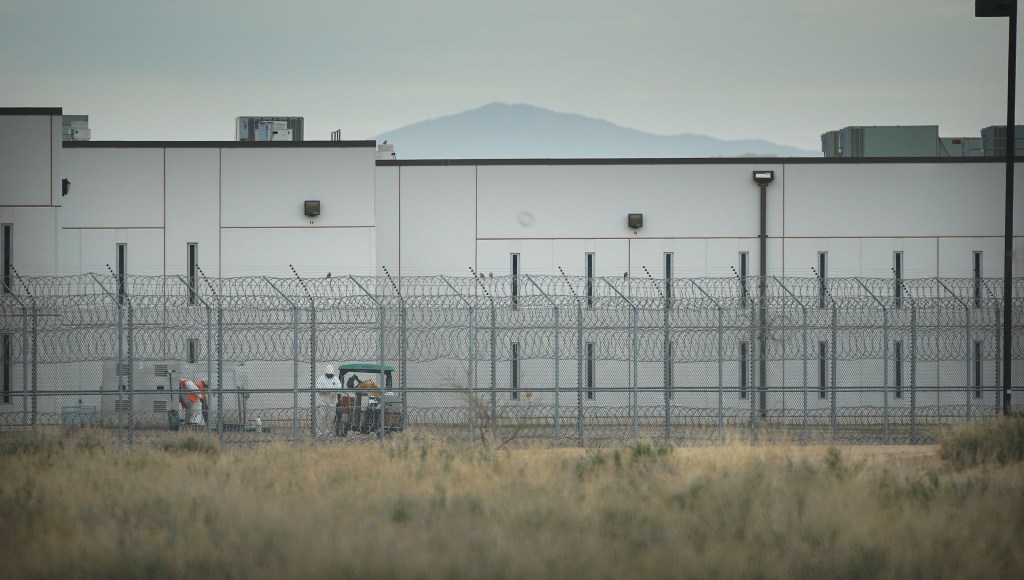
That does not happen on the mainland. Mainland is very us versus them. With staff and with people in custody, you get a little bit of that here, but it’s not the same, and so that can be very challenging. In general, that’s that’s one of the big ones.
The other big challenge is we send a lot of our lifers and long-term folks there and they feel very forgotten about. I don’t blame them for that. And so, just being able to show up and remind people like, “Hey, we’re here, we care, we’re here doing our job. I know you don’t see us all the time, but truly, we’re looking into A, B, C, D.” The good news is that our prison overstay specialist will be going out there quarterly. I go out there at least annually, if not more, but we will have more consistent presence there.
Patterson: Just so you know, the commissioners as a group go to each facility every year. We’ll have a meeting on that island. And then after the meeting (we discuss what we will do).
When you go to Arizona, as opposed to the facilities here, is there a resistance in that regard, not giving you full access to where you got to go?
Johnson: No, I’ll give them credit — the warden up there in Arizona. They’re really good with our access. The staff are visibly uncomfortable, that’s clear, but the warden has always been really great in support of it, making sure that wherever we want to go, whatever we need to see, we’re able to have that now. With that said, that was before we were doing very thorough individual investigations. So I’m interested to see if and how that changes. But best believe we will be fighting for our access, just as we have every day since we started.
 Sign up for our FREE morning newsletter and face each day more informed.
Read this next:

Local reporting when you need it most
Support timely, accurate, independent journalism.
Honolulu Civil Beat is a nonprofit organization, and your donation helps us produce local reporting that serves all of Hawaii.
ContributeAbout the Author