The Supreme Court Should Not Shield Monsanto From Lawsuits
The rights of states and the right of citizens to hold corporations accountable must remain absolute.
December 17, 2025 · 6 min read


About the Author

The U.S. Supreme Court is currently weighing a decision that could grant Bayer, the owner of Monsanto, permanent immunity from lawsuits over its weedkiller, Roundup.
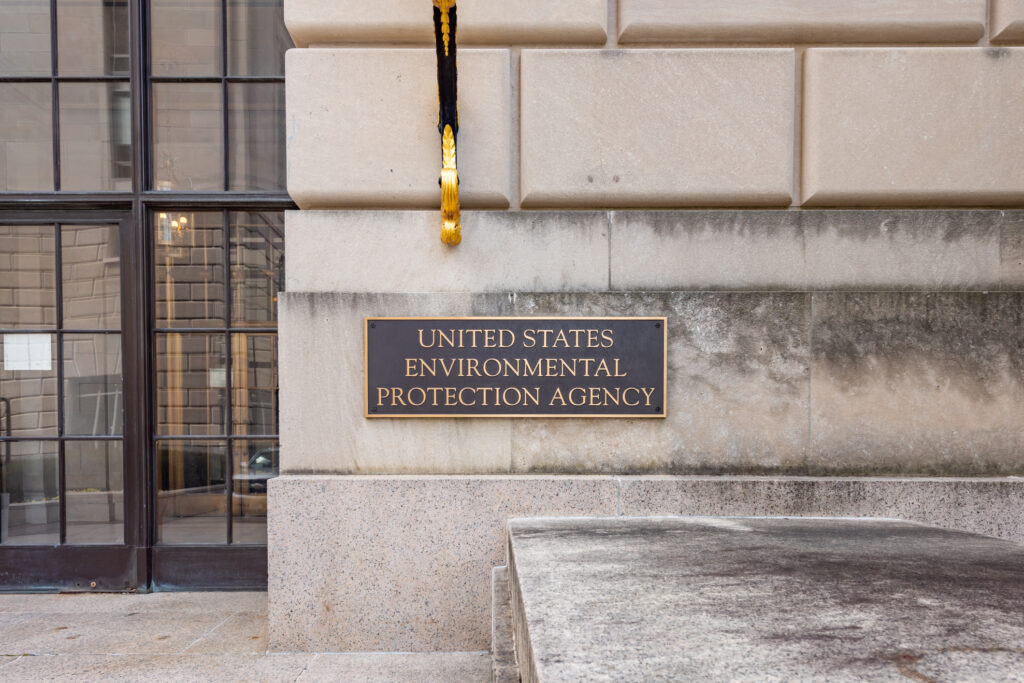
The company’s argument is simple: Because the Environmental Protection Agency approved the label, federal law should preempt state-level claims that the company failed to warn consumers of risks.
In a brief filed this month, the U.S. solicitor general urged the court to hear the case, signaling that the current administration may side with Bayer. In short, they argue that if the EPA says it’s safe, a jury shouldn’t be allowed to decide otherwise.

Ideas showcases stories, opinion and analysis about Hawaiʻi, from the state’s sharpest thinkers, to stretch our collective thinking about a problem or an issue. Email news@civilbeat.org to submit an idea or an essay.
In Hawaiʻi, we know exactly what it looks like when federal oversight fails. As a pediatrician and member of the state’s pesticide task force, I saw firsthand how chemical companies fought to keep toxins on our islands.
Despite intense industry opposition, we became the first state in the nation to ban the neurotoxic insecticide chlorpyrifos. We had to act because our communities, facing spray rates far higher than the mainland and troubling health statistics, could not wait for the EPA to catch up.
Now, Bayer wants to strip us of the only tool we had left to protect ourselves: the courtroom and/or state legislative action.
Their defense relies on the idea that the EPA’s regulatory review is comprehensive and authoritative. But that foundation is crumbling.
For example, this month, a landmark scientific study that regulators worldwide relied on for two decades to declare glyphosate safe was retracted. The journal’s editors stated they had “lost confidence” in the results due to highly questionable methodology, ethical violations, and corporate ghostwriting.
Simultaneously, emerging research suggests that the agency’s safety testing is outdated. It fails to account for a mechanism of harm that may promote inflammation and injure multiple organ systems.
To grant legal immunity based on such a flawed regulatory record would be a miscarriage of justice. It could accelerate the chronic disease epidemic and crush an American healthcare system already at its breaking point.
The Ghost In The Machine
For 25 years, the “Williams, Kroes & Munro (2000)” paper was a bedrock of glyphosate safety. It concluded that the chemical was safe for humans, and the paper was cited incessantly to dismiss findings of toxicity.
We now know Monsanto employees ghostwrote this “independent” review. Internal emails revealed scientists boasting about “doing the writing” and having academics “just edit & sign their names.”
The journal Regulatory Toxicology and Pharmacology recently retracted the paper. The editors explicitly concluded that they had “lost confidence in the results and conclusions of this article.”
This fraudulent document underpinned the EPA’s safety consensus for a generation. If the Supreme Court rules that EPA approval preempts state law, it is effectively ruling that a label based on corporate fraud is the final word on American safety.
The Tip Of The Iceberg
Bayer defends this retracted paper as an outlier, arguing that “hundreds of other studies” support safety. But which studies?
A clear divide has emerged: industry-funded research consistently finds no harm, while hundreds of independent studies tell a disturbing story. Peer-reviewed research demonstrates that glyphosate-based herbicides can promote systemic inflammation, damage cells, and induce DNA damage.
Furthermore, this single retraction is merely the tip of the iceberg. In trial after trial, plaintiffs have presented internal documents revealing a culture of deception, from ghostwriting papers to bullying scientists.
This trail of fraud was a decisive factor in juries awarding billions in punitive damages. It was not just the science that convinced these juries; it was the deception.
It’s Not Just Cancer
While courts obsess over whether glyphosate causes cancer, they are missing a larger catastrophe. The EPA’s toxicology models were built in the 20th century to detect direct toxins, chemicals that injure cells or cause tumors. They fail to detect 21st-century mechanisms of harm.
For decades, the industry’s central defense was that glyphosate inhibits an enzyme found in plants but not in animal cells.
This, we were told, made the chemical safe for livestock and humans. But this dogma overlooks a critical biological fact: while human cells do lack this enzyme, the trillions of bacteria in our microbiome possess it.
Dozens of recent studies demonstrate the disruptive effect of glyphosate-based herbicides on microbiomes. An animal study by University of British Columbia researchers, published in September 2025, is particularly concerning. This research suggests that by disrupting gut bacteria, glyphosate is not only directly toxic, but also a generational time bomb.
The study found that prenatal exposure triggered a cascade of dysfunction lasting for generations. Most alarmingly, these effects occurred at doses 175 times lower than what the EPA considers “safe.” The regulatory limit is a mirage if it fails to account for the disruption of the gut barrier and the depletion of beneficial bacteria.
The Ozempic Irony
This regulatory failure is also affecting our metabolism. The British Columbia research indicates that glyphosate’s effect on the microbiome includes a reduction in naturally produced GLP-1.
The irony is bitter: We are witnessing an explosion in the use of GLP-1 receptor agonists like Ozempic to treat metabolic disorders. We are paying the pharmaceutical industry billions to chemically mimic a hormone that an herbicide in our food may be systematically suppressing.
A Verdict For The Future
Bayer argues we must wait for the EPA’s scheduled reviews to update safety warnings. These reviews are highly political and occur every 15 years.
Science moves faster than bureaucracy. The “Generational Echo” of microbiome damage suggests the chemical legacy we absorb in the womb can rewire immune systems for life. If we wait for the EPA to catch up, we will condemn another generation to metabolic chaos.
Bayer is asking the Supreme Court to make the federal label a shield against accountability. But a label cannot be a shield when it is printed with ink synthesized from ghostwritten studies and outdated science. Regulatory agencies may falter, and science will always evolve.
No matter what the EPA decides, states’ rights and the right of citizens to hold corporations accountable in court must remain absolute.
 Sign up for our FREE morning newsletter and face each day more informed.
Community Voices aims to encourage broad discussion on many topics of community interest. It’s kind of a cross between Letters to the Editor and op-eds. This is your space to talk about important issues or interesting people who are making a difference in our world. Column lengths should be no more than 800 words and we need a photo of the author and a bio. We welcome video commentary and other multimedia formats. Send to news@civilbeat.org. The opinions and information expressed in Community Voices are solely those of the authors and not Civil Beat.
Read this next:

Local reporting when you need it most
Support timely, accurate, independent journalism.
Honolulu Civil Beat is a nonprofit organization, and your donation helps us produce local reporting that serves all of Hawaii.
ContributeAbout the Author