Alexander Silvert: 'Our Work Is Not Done Yet'
The fact that the AG is now investigating the $35,000 potential bribe is a good thing. But it doesn’t let the Legislature off the hook.
January 25, 2026 · 7 min read


About the Author
The Attorney General has “agreed,” reluctantly, to investigate the $35,000 transaction. While it is a step in the right direction, people may now be wondering what’s next. A lot. There remain many unanswered questions. Our work is not yet done.
First, is the legislator who accepted the $35,000 still an active member of the Legislature? This all-important question was put squarely before Acting U.S. Attorney Ken Sorenson in a letter authored by five members of the House of Representatives led by Reps. Della Au Belatti and Kanani Souza but never directly answered. Rather, Sorenson severed the $35,000 transaction from the ongoing federal investigation and turned this one portion of his investigation over to state authorities.
It goes without saying that this question must be answered as the 2026 legislative session gets underway. It would be highly inappropriate for this individual to take part in pending legislation involving campaign finance reforms and/or changes to the bribery and campaign spending statute of limitations for criminal offenses. All these measures may have a direct bearing on the legality or ethics of their actions.

The federal investigation reports that have been turned over to the Hawaiʻi attorney general most likely include reports or statements made by former Rep. Ty Cullen, as well as the secret recording of the transaction itself. The AG now knows exactly who this individual is. As no further investigation is required to answer this one limited and narrow question, any further delay seems highly inappropriate given these circumstances and the necessity of knowing if this individual is a current member of the Legislature. Moreover, the answer must be made public now through an official source, i.e. the AG, not through rumor or gossip, so the Legislature knows how it should proceed.
However, the identity of the legislator who took the money need not be made public pending the completion of the AG’s investigation, as whoever this individual is has rights — rights that also need to be protected until wrongdoing has been established. Nevertheless, the public and legislators still have the right to know whether this individual is a current member of the Legislature. This limited disclosure would serve to foster the public’s belief in the integrity of the legislative process, transparency and good governance, something sorely needed at this time. It would be a grave disservice to the people of Hawaiʻi to keep this information confidential.
The identity of the legislator who took the money need not be made public pending the completion of the AG’s investigation.
Second, would disclosing whether the individual is a current member of the Legislature interfere with the now ongoing state investigation? The answer is a resounding “No.” Common sense tells you that answering this limited and narrow question cannot possibly affect any criminal investigation the AG may conduct.
Third, what if the individual who took the $35,000 is currently a member of the executive branch of government? This is a distinct possibility as several former legislators work for the governor. If the person is a member of the executive branch, then the AG may need to recuse her office and appoint independent counsel to investigate and prosecute this matter as it presents a possible conflict of interest. Only the AG knows the answer to this question.
Fourth, should we expect the AG’s investigation to take a long time? No. Given the unique circumstances of this case, the public should expect, and demand, that the AG’s investigation will be handled in an expeditious manner. Considering the years-long delay that has already occurred and the fact that the statute of limitations is fast approaching, and that the reports and the recording of the transaction have already been completed by the FBI, the AG’s investigation should be expeditious.
While there certainly will be some follow-up investigation to do, the heavy lifting has already been completed. The main question left for the AG to decide is whether the transaction violated any state laws and/or ethical rules. Any longterm delay will rightfully be perceived by the public as a cover-up, something that should be avoided at all costs lest it provide further fuel that our political system is biased and unjust.
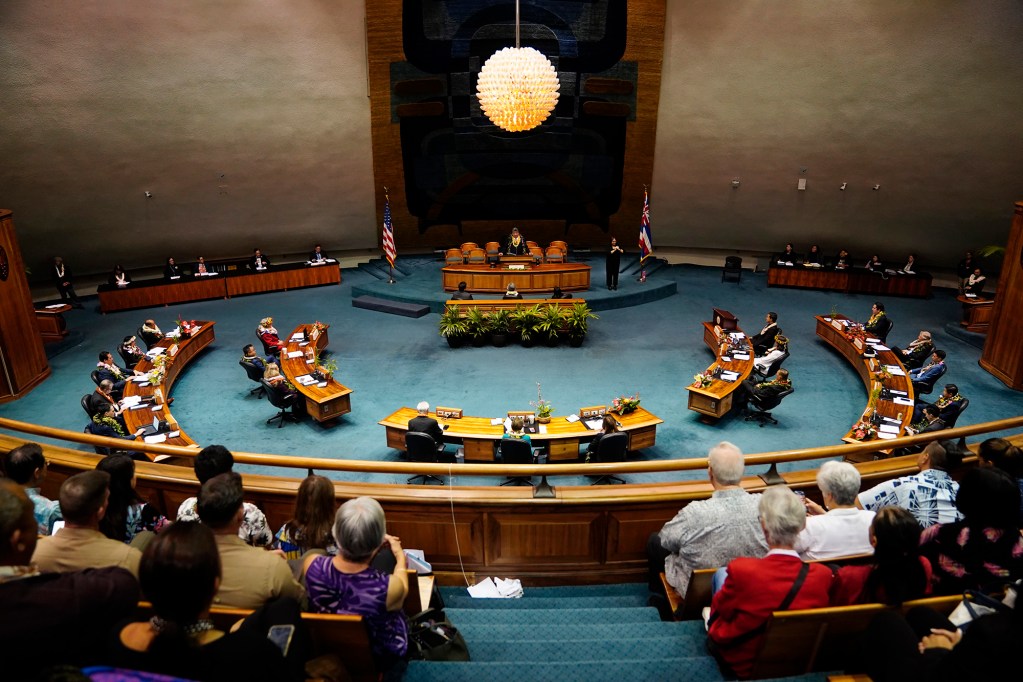
Lastly, does the AG’s investigation render moot a citizen’s petition demanding the Legislature get to the bottom of what happened? Again, the answer is “No.” The Legislature is an independent branch of government apart from the executive branch, where the AG resides, and has the full authority to conduct a limited inquiry to safeguard its own institutional interests. Given that the AG’s investigation will be conducted in total secrecy, it is incumbent upon the Legislature to conduct its own limited and focused inquiry into the facts and circumstances surrounding the $35,0000 transaction to be able to better understand what occurred and whether further campaign finance reforms are necessary.
In fact, under its own rules, the House of Representatives has the full authority apart from the AG to conduct its own investigation, even if it is determined that the individual who took the $35,000 is no longer a sitting member. House Rule 61 adopts “Mason’s Manual of Legislative Procedure” as its parliamentary authority. Section 796 of Mason’s Legislative Manual specifically states that “either house of the legislature has the power to investigate and institute an inquiry into the truth of an alleged bribery of any of its members or the members of a previous legislature.”
Moreover, because the Legislature is its own branch of government, Section 563 of the manual states that not even the judiciary can interfere with the Legislature’s authority to conduct disciplinary proceedings against one of its members when considering bribery allegations, which includes conducting preparatory investigative proceedings.
Why? Because any interference by the judiciary would violate the separation of powers doctrine of the Constitution. This same principle applies equally to the AG, a member of the executive branch of government.
Under its own rules, the House of Representatives has the full authority apart from the AG to conduct its own investigation, even if it is determined that the individual who took the $35,000 is no longer a sitting member.
Accordingly, having adopted “Mason’s Manual of Legislative Procedure,” the House must consider these rules in deciding how it will move forward, with or without the petition pending before it. The question is whether House leadership will honor their own rules.
What is clear is that even with the AG’s pending investigation, the petition is still relevant, is not moot, and must be addressed. In this instance, it would be a disservice to the people of Hawaiʻi if the Legislature voluntarily surrendered its powers to the AG. We do not need to repeat the mistakes occurring in Washington, D.C., here in our home state.
With no notice to the public and little fanfare, the Senate, at the end of all the speeches that accompany opening day ceremonies, noticed the petition and had it “filed” without referring it to any committee. In so doing, it appears the Senate has essentially tabled the petition without debate or discussion, ignoring and disrespecting the wishes of 929 Hawaiʻi citizens who signed the petition demanding action.
While the fact that the AG is now investigating the $35,000 transaction is a good thing, it does not let the Legislature off the hook. The public must continue to demand action by its elected officials to ensure good governance and that the rule of law is properly and fairly applied, no matter how difficult and distasteful it may be for some legislators to police themselves. That is their duty. That is the oath they took.
And it is our duty, as citizens, to participate in our democracy by reminding them of their duty as our elected officials. And our duty as citizens continues when elections roll around in November.
 Sign up for our FREE morning newsletter and face each day more informed.

Local reporting when you need it most
Support timely, accurate, independent journalism.
Honolulu Civil Beat is a nonprofit organization, and your donation helps us produce local reporting that serves all of Hawaii.
ContributeAbout the Author