Kirstin Downey: Maui Properties Get State Money For Preservation
Advocates want the Legislature to fully fund the Legacy Land program to save even more areas that are at risk from developers.
January 23, 2026 · 8 min read

About the Author

After an emotional and sometimes tearful two-day meeting in Wailuku, the state Legacy Land Conservation Commission announced it had chosen four iconic properties to recommend for purchase under a cash-strapped state-funded program that rescues at-risk real estate.
A fifth property was recommended for partial funding.
The nine-member commission visited and examined seven properties around the state that applicants, most of them community groups allied with environmental organizations, had presented for consideration. Several community activists described their petitions as a race against time, as some of the properties are being actively marketed for sale on Zillow or are being prepared for luxury home development.
The commission had $6.8 million to dispense but the requests totalled about $12.5 million.

Ideas showcases stories, opinion and analysis about Hawaiʻi, from the state’s sharpest thinkers, to stretch our collective thinking about a problem or an issue. Email news@civilbeat.org to submit an idea or an essay.
Dozens of community leaders from Maui and Moloka’i earnestly testified on their plans to provide stewardship and management of the properties. In some cases, teenagers pledged to spend their lifetimes helping maintain the sites for future generations.
Four sites, including two on Maui and two on Moloka’i, won the commissioners’ support to receive preference for full funding for purchase and preservation.
Two projects actually tied for the top recommendation from the commissioners.
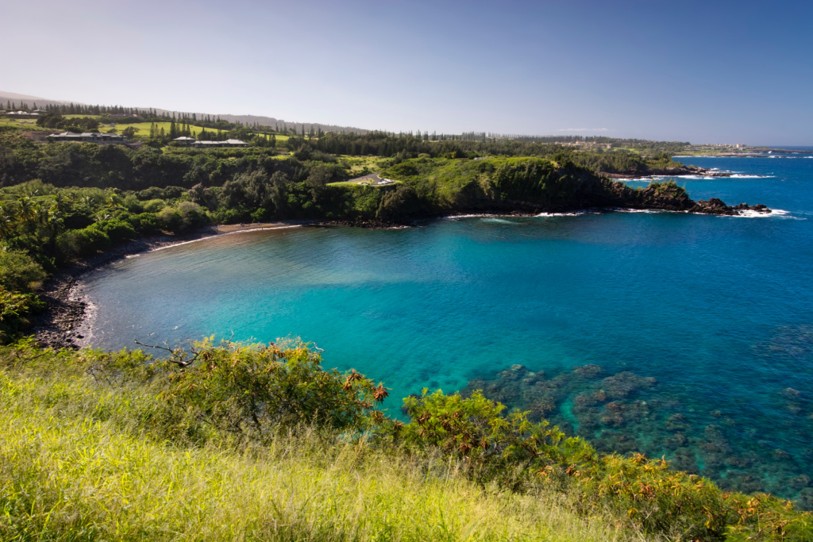
The Save Honolua Coalition, a community group backed by the Trust for Public Land, was awarded about $2 million to buy 17.8 acres on the mauka and makai sides of Honoapiʻilani Highway, which is Hawaiʻi Route 30, West Maui’s scenic coastal road. The beautiful bay, formerly the site of a Hawaiian fishing village and the embarkation point of the original Hōkūleʻa voyage to Tahiti, is the site of a future state park, popular surf spot and marine conservation district that attracts hordes of snorkelers.
It has been overrun with tourists without adequate infrastructure to handle the crush. The only sanitation facilities to accommodate up to 1,600 visitors per day are three porta-potties that, as the commissioners were told, have sometimes been kept clean by community volunteers.
The Save Honolua Coalition plans to use the money to purchase three land parcels now used as unmanaged shoreline access to Honolua Bay. Maui County will hold a conservation easement but Save Honolua Coalition will own title.
“We are grateful to the Legacy Land Commission for recognizing the importance of Honolua Bay — one of Maui’s most cherished landscapes — rich in marine life, cultural sites and generations of stewardship,” Alyse Takayesu Parker, Maui project manager for the Trust for Public Land, said.
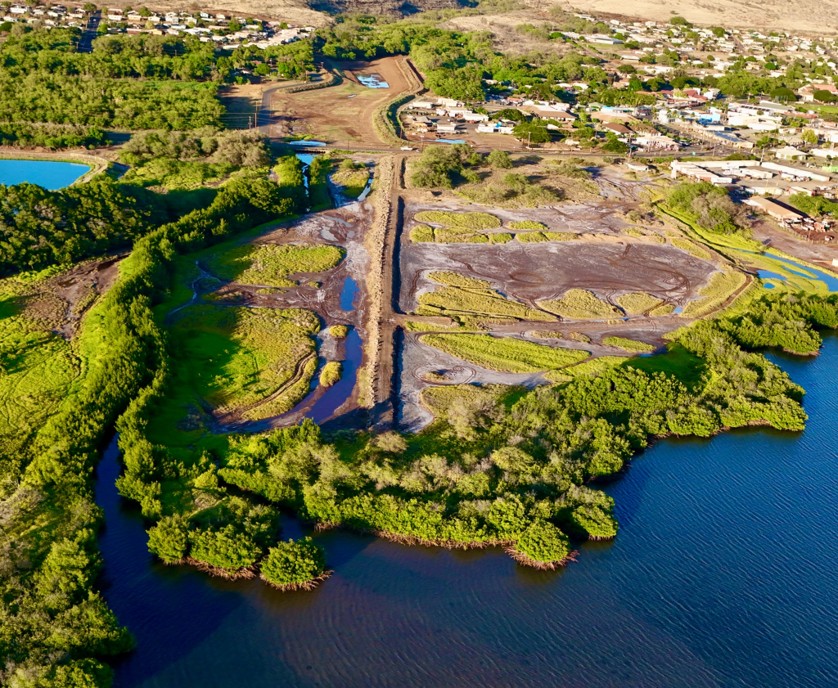
Hui Wa’a O Moloka’i was recommended to receive $318,750 to buy a 23.8-acre coastal property that includes part of Kaunakakai Stream and is a key parcel on the shoreline of Kaunakakai. Now a barren and overgrown site known locally as the “dustbowl,” community supporters intend to restore it as a coastal wetland and to use it as a base for promoting and teaching Polynesian voyaging techniques on the island.
In third place was Ka Honua Momona International, also in partnership with the Trust for Public Land, which intends to buy 7.19 acres of land at Kaloko’eli shoreline on Molokaʻi. The land will provide needed and permanent access to Kaloko’eli Fishpond, which community groups have been actively restoring and using as a youth education center for teaching about sustainable food production.
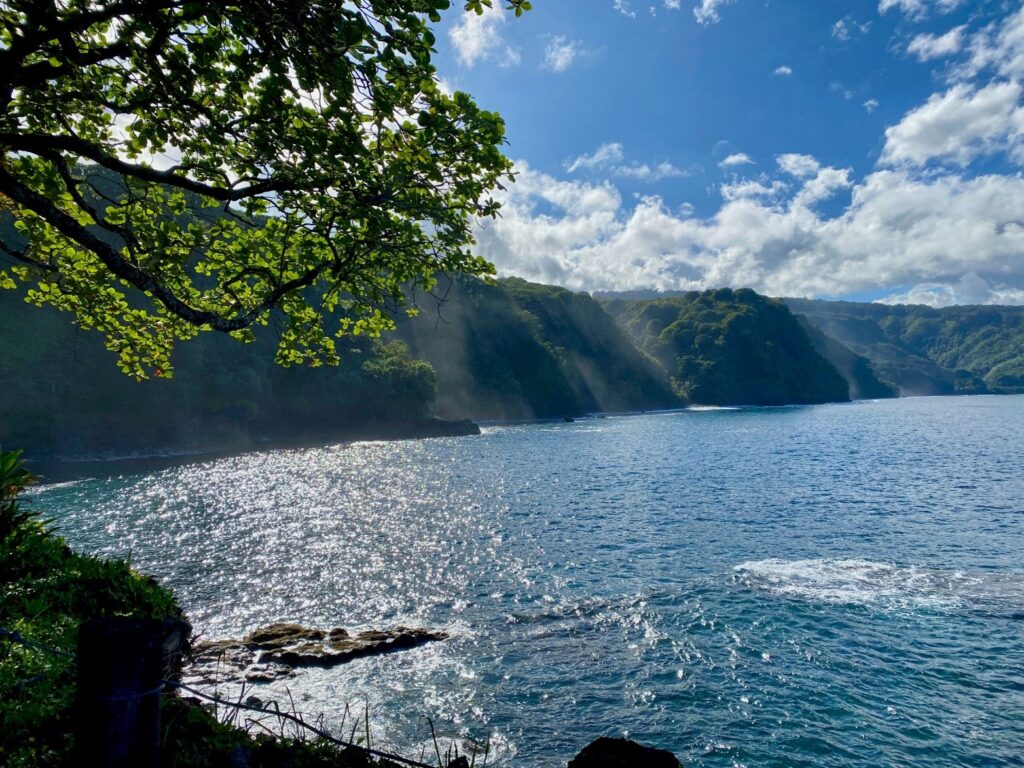
The largest single funding beneficiary was the East Maui Coastal Forest, a 542-acre site in Hāna proposed for preservation by the state Department of Land and Natural Resources and Division of Forestry and Wildlife, in cooperation with the Trust for Public Land. The historic Hawaiian Pi’ilani Trail passes through two of the parcels to be purchased. The acquisition will permit managed public access to the site.
The commissioners awarded the project approximately $3 million they sought for the package of properties to be acquired, though the total estimated cost to acquire them is $13.3 million.
Most of the shortfall will be made up from some $9.9 million in federal funding for the project announced recently by U.S. Sen. Brian Schatz. The funding was part of a federal appropriations bill that passed the Senate on a bipartisan 82-15 vote and is expected to be signed by President Donald Trump.
One other site on Maui, Haneo’o ʻĀina, which seeks to purchase 115 acres of land near the coast in Hāna, was recommended for partial funding. The group sought $4 million to stave off development of a set of luxury homes in an area studded with historic ancient sites. The sum they will receive will depend on whether and how much the Legacy Lands Commission has left to give after the other purchases are made and the agency receives some expected reimbursements.
The commissioners declined to provide funding for two other proposals, including an agricultural sustainability project in Kahaluʻu on Oʻahu and a 1.43-acre parcel in Hāna being advertised on Zillow. In both cases, commissioners indicated the projects had merit but decided they presented management challenges that needed to be resolved.
The commission’s work is purely advisory though generally supported by other state officials. The commission’s recommendations need approval from legislative leaders and the Board of Land and Natural Resources. Gov. Josh Green then needs to release the money.
The Legacy Land Conservation Program was created by the Legislature in 2005 to provide a dedicated source of money for the acquisition of lands especially valued because of their unusual beauty, cultural or environmental significance or importance as habitats for endangered species. The program focuses on sites that are in danger of development or damaging changes of use.
It is funded by the real estate conveyance tax. Under the 2005 law, the state transfer tax on higher-cost homes was increased, with 10% of the revenue dedicated to the Legacy Land fund. In 2024, based on the strong level of real estate sales, the fund should have had $10 million to disperse, but the Legislature instead capped the amount that can go into the fund at $5.1 million, with the excess money going into the general fund for use elsewhere.
For the past few years, state employees and conservation organizations have been pleading for the Legislature to give the fund the original intended amount.
The fund took another major hit in 2020, when the Legislature withdrew $15 million from the Legacy Land trust fund in anticipation of slowed revenues during the Covid-19 pandemic. Instead, although federal funds gushed into the state, the money in the Legacy Land trust fund was never restored. There appears in retrospect to have been little reason to have raided the Legacy Lands’ funds.
The program’s supporters are preparing to raise the issue in this year’s legislative session, making the point that more eligible properties could be considered for purchase if the fund got more funding.
The commission, which is normally based at the Honolulu offices of the state Department of Land and Natural Resources, chose to travel to Maui to hold the hearing because so many of this year’s applicants, coincidentally, involved properties on Maui or Moloka’i. That means that more of the applicants were able to make their cases in person than would have been possible to do so if the meeting had been held in Honolulu.
That meant the commissioners, a volunteer board, found themselves face-to-face with applicants over two long days of deliberations as they decided which projects were most worthy of funding and how much to give them.
Environmental advocate Scott Crawford, a supporter of the Haneo’o ʻĀina project, which received partial funding, told the commissioners he knew there wasn’t enough to go around but that they would gratefully receive whatever they got.
“We realize that you have hard decisions and there’s a lot of very deserving competing applications, so whatever award we would be fortunate enough to get, we would take that and use it to go raise funds as a sort of leverage point … Anything would be appreciated and would help us toward our goal,” he told them.
Civil Beat’s coverage of Maui County is supported in part by a grant from the Nuestro Futuro Foundation.
 Sign up for our FREE morning newsletter and face each day more informed.
Local reporting when you need it most
Support timely, accurate, independent journalism.
Honolulu Civil Beat is a nonprofit organization, and your donation helps us produce local reporting that serves all of Hawaii.
ContributeAbout the Author