Federal Housing Programs For Maui Fire Survivors Extended Until 2027
The program will now run through Feb. 10, 2027.
Federal officials approved the state’s request to extend for a year the program that hundreds of Maui wildfire survivors still rely on for temporary housing and financial assistance, Gov. Josh Green announced on Friday afternoon.
“Stability matters,” Green said in a statement. “This extension gives families breathing room and it gives our recovery efforts the time needed to deliver lasting results.”
The Federal Emergency Management Agency’s Individuals and Households Program — which includes the continued temporary housing assistance and the direct housing programs — was previously scheduled to end on Feb. 28, but U.S. Department of Homeland Security Secretary Kristi Noem agreed to extend it through Feb. 10, 2027.
“This extension is critical for Maui’s people and our state,” Green said. “Recovery doesn’t follow an artificial deadline and I appreciate Secretary Noem and the administration for recognizing the reality families are still facing on the ground here in Hawai‘i.”
The extension will not only provide more certainty for survivors, but also give state and federal officials the opportunity to continue to coordinate long-term housing solutions, state officials said.
Maui Faces Unique Housing Challenges
FEMA housing programs have been critical to Maui’s recovery efforts since the island was devastated by the August 2023 wildfires that killed 102 people, destroyed thousands of structures and displaced more than 12,000 residents.
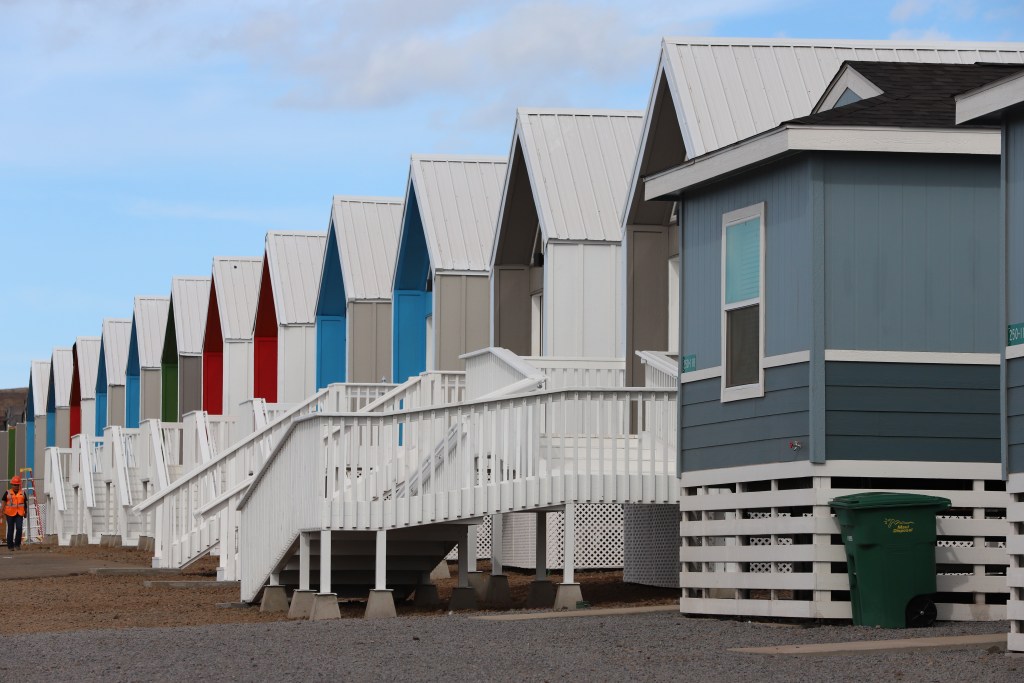
Almost 1,300 households have been housed in units leased directly from landlords or in temporary units, including 167 modular homes at the Kilohana Temporary Group Housing Project in Lahaina. Others have been provided with rental assistance.
Earlier this month, nearly 1,000 households still lived in temporary housing or relied on rental assistance provided by FEMA, according to a statement from the agency last week. Many survivors worried that they would soon be forced to vacate their units and find new living arrangements on an island with a severe housing shortage.
During a community meeting in Lahaina last week, Mayor Richard Bissen told residents that he remained optimistic that federal support would be extended, but he also said that survivors should try to take steps to transition out of FEMA programs.
“If you’re offered a place to stay as either a rental or a purchase or something that you can transition from the temporary housing, my first advice to you as a plan is to take that,” he said. “Please consider that as your first option.”
Homes have only been rebuilt on 114 of the 1,399 residential properties cleared by the U.S. Army Corps of Engineers, and according to data collected by the University of Hawaiʻi Economic Research Organization, median rent prices on the island increased between 40% and 100% between July 2023 and August 2025.

Green said he highlighted Maui’s unique housing challenges when he personally reached out to Noem and advocated for an extension.
Bissen said the extension was a “vital step in maintaining stability for displaced families.”
“Our families have endured so much and I’m relieved we’re able to share this good news,” he said in a statement. “This extension comes at a critical time, as we continue bringing permanent housing online during an ongoing housing crisis.”
Both Bissen and Green said they were committed to working together with community partners to transition families into permanent homes as quickly as possible.
“It is imperative that we keep our momentum,” Bissen said. “We remain fully committed to seeing this recovery through and delivering permanent solutions for every household — whether through long-term rental, rebuilding, or homeownership.”
‘We Were All Celebrating’
May Wedelin Lee, who has been living in a studio apartment in Kāʻanapali as part of FEMA’s direct lease program since April 2024, was on her way to the Bank of Hawaiʻi in Lahaina when she learned that the housing programs for survivors had been extended.
“I got a text message from a friend of mine with a screenshot of the announcement,” Wedelin Lee recalled a few hours later. “I just started screaming.”
Unable to contain her excitement, she was still screaming when she ran into the bank.
“I said to everyone, ‘FEMA housing was extended!’ And everyone else that was in there just started yelling, ‘yay!'” Wedelin Lee said. “It was like a movie moment. We were all celebrating together.”
Anticipating the potential end of federal housing programs, Wedelin Lee said she began searching for housing on the west side about six months ago, but there was next to nothing available.
“It’s just been so doom and gloom not knowing for a long time,” she said. “Today feels like we all have a chance to finally exhale and heal a little bit more.”
Civil Beat’s coverage of Maui County is supported in part by a grant from the Nuestro Futuro Foundation.