Hawaiʻi Was Once A National Leader In Long-Term Care Financing
We are now playing catchup, but proposed bills at the Legislature show we can chart our destiny once more.
February 18, 2026 · 4 min read

About the Authors




It’s a tale of woe, a tale of renewed hope.
Hawaiʻi’s three-plus decade quest for an affordable, fair, sustainable, and effective financing mechanism to pay for essential long-term care services and supports has been a tale of woe, a tale of renewed hope, lost and squandered opportunity, and now a chance to reclaim the financial destiny of all Hawaiʻi families.
Where Hawaiʻi could rightfully lay claim to being a visionary leader among states three decades ago, we have lost opportunities to actualize that vision and fallen woefully behind what other states have done and are doing.

Ideas showcases stories, opinion and analysis about Hawaiʻi, from the state’s sharpest thinkers, to stretch our collective thinking about a problem or an issue. Email news@civilbeat.org to submit an idea or an essay.
The year 2026 appears to be a pivotal year in many leading states like Massachusetts, Minnesota, New York, and Oregon — with Washington having already established the mandatory payroll tax funded WA Cares public insurance program. Hawai’i needs to be among them again.
The existential fiscal crisis of paying for essential long-term care services Hawai’i and across the nation is undeniable. The plight of Hawaiʻi families trying in vain to cope with unsustainable costs and the financial and physical toll of caregiving is almost unimaginable:
- Skilled nursing home care now exceeds $230,000 annually and comparable skilled care at home can be even more.
- Hawaiʻi’s total annual long-term care service bill now exceeds $3.2 billion; $2.3 Billion of that borne by more than 160,000 unpaid caregivers.
- More than 50% of Hawaiʻi families earning between $25,000 and $125,000 annually have no practical means of paying for or protecting themselves against catastrophic long-term care services expenses — except to become impoverished and qualify for Medicaid.
In the late 1980s the Executive Office on Aging examined public insurance as the most effective means of financing long-term care, resulting in the 1991 report, “Financing Long Term Care: A Report to the Hawaiʻi State Legislature,” and the introduction of HB-31 in 1993. It sought to establish a comprehensive universal public insurance program funded by a dedicated income tax.
HB-31 failed despite strong public support for the measure.
In the early 2000s, there was a renewed effort to create a mandatory state-run long-term care public insurance program, predating Washington’s WA Cares by nearly 20 years.
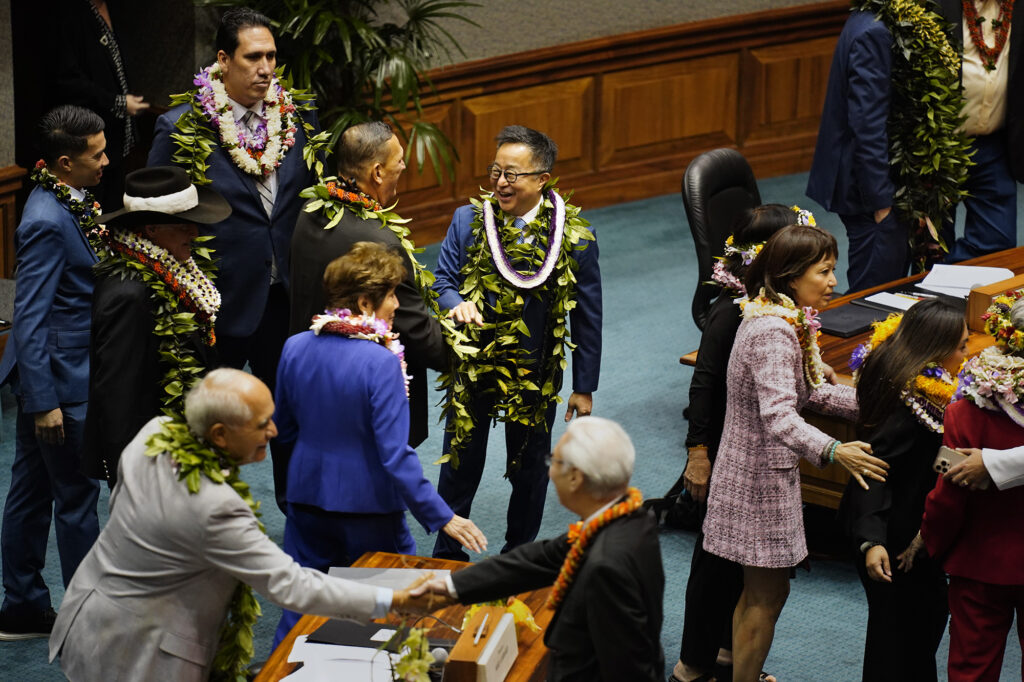
In 2003, the Legislature passed Senate Bill 1088 creating “Care Plus,” a mandatory, state-administered public insurance program funded by a monthly dedicated tax. Despite legislative passage, Gov. Linda Lingle vetoed SB 1088, halting momentum for over a decade.
But there’s reason to hope.
This year, House Bill 1804 and Senate Bill 2554 were introduced by Rep. Lisa Marten and Sen. Sharon Moriwaki, supported by 19 of their colleagues in the House and seven in the Senate. The companion bills will establish an independent Long-Term Care Financing Advisory Commission within the Legislature.
The commission has a three-year agenda to objectively assess financing options that are affordable, sustainable, and inter-generationally equitable. It will submit objective evidence-based legislation to the Legislature by the end of 2028.
A broad multi-disciplinary body of voting members ensures robust representation of diverse stakeholder interests and active engagement throughout the assessment process.
The commission has three specific responsibilities: 1) assessing the actuarial solvency and effectiveness of financing options; 2) assessing policy reforms for home and community-based services; and 3) public engagement to build fact-based awareness and gather public-stakeholder input.
The bills identify 21 actuarial-fiscal measures for objectively assessing alternative financing mechanisms and 18 program policy factors for reform of the home and community-based service system to assure serious, rigorous, impartially objective, and trustworthy findings.
The commission will also look at equitable progressively graduated financing mechanisms that help alleviate the crushing cost-of-living for middle and lower income Hawaiʻi families.
HB 1804 and SB 2554 represent a legislative commitment to reclaiming the future financial destiny for affordable, effective, equitable access to universal long-term supports and services for all Hawaiʻi residents and families after decades long inaction.
 Sign up for our FREE morning newsletter and face each day more informed.
Read this next:

Local reporting when you need it most
Support timely, accurate, independent journalism.
Honolulu Civil Beat is a nonprofit organization, and your donation helps us produce local reporting that serves all of Hawaii.
ContributeAbout the Authors