LNG Is A Sensible Solution For Oahu's Future Energy Needs
Let’s encourage and subsidize rooftop solar but also recognize that 69% of the island’s power comes from burning oil.
February 19, 2026 · 6 min read

About the Authors


Change in Hawaiʻi is difficult, and the pushback to Oʻahu’s energy pathway plan from Governor Green and the State Energy Office is all but predictable.
Opposing or even banning liquefied natural gas would be a big mistake, codifying and carrying forward an unfortunate decision by Governor Ige some 10 years ago — a decision that has cost Oʻahu ratepayers well in excess of $1 billion. And which will continue to cost ratepayers at least that much per decade in the future, unless we’re willing to move on from the status quo.
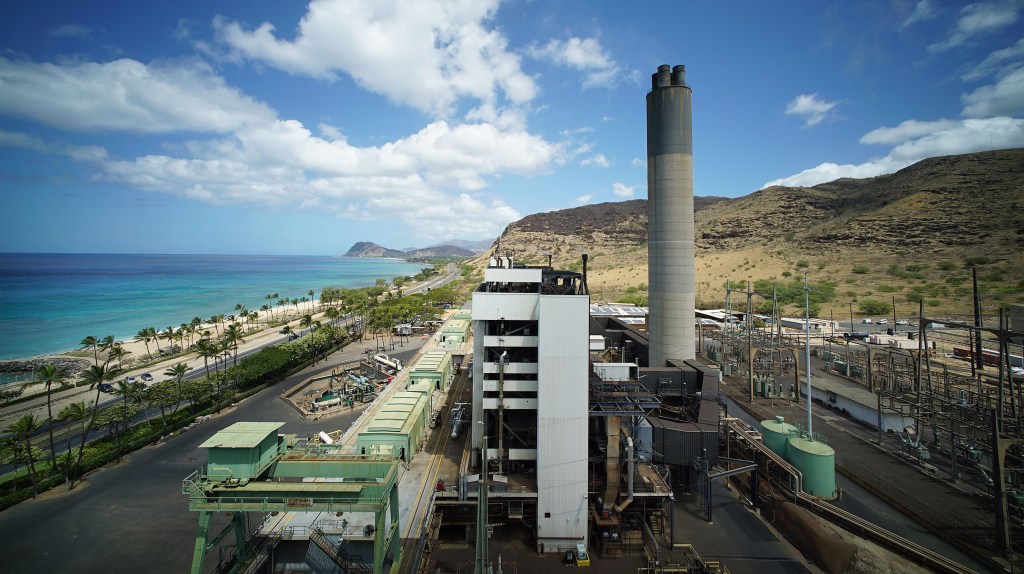
It would also be a mistake for the environment by effectively preventing a 30% reduction in CO2 emissions to the extent that the Kahe and Waiau power plants continue to burn thick, black fuel oil as we move forward, at whatever pace, to achieve a higher percentage of renewables.

Ideas showcases stories, opinion and analysis about Hawaiʻi, from the state’s sharpest thinkers, to stretch our collective thinking about a problem or an issue. Email news@civilbeat.org to submit an idea or an essay.
The basic premise of those opposing LNG is that we will be at 100% renewable energy on Oʻahu by 2045, so switching to natural gas would be foolhardy. But that’s far from a given. Our institute points out a “what if” — that despite everybody’s best efforts, we simply can’t get there.
Even the state’s own Climate Change Mitigation Commission seems to concur; their pathways report projection for 2045 shows a full 26% of Oʻahu’s power coming from natural gas.

We’re now a full decade into the quest for 100% renewables since the de facto LNG ban, yet a full 69% of Oʻahu’s power comes from burning oil. Our view is that we should absolutely continue to encourage and subsidize rooftop solar.
But it’s going to hit the wall. We’re at more than 50% rooftop penetration on Oʻahu, but that provides only about 16% of total demand; at an optimistic 75% penetration, we’ll be at about 24%.
Thus there will clearly be a need for a huge utility solar farm component. But they will hit a wall as well, in the form of how much land will be required. Our analysis shows that some 13,000 acres that will be required for utility solar farms to achieve the Climate Change Mitigation Commission’s projection of 32% from this source, based on the commission’s demand projection.
We feel that committing that much land would be imprudent. Since the idea of giant floating windmills is dead, and pushback from rural Oʻahu communities against new land-based windmills will likely be fierce, the reality is that it is not likely that more than 50% of our power will come from renewables by 2045.
Another argument against LNG is that infrastructure cost, some $2 billion, will be too costly. But we point out that the infrastructure cost of to assure solar farm reliability will be far greater that the cost of LNG infrastructure. HECO’s utility solar farms are required to provide only four hours of battery backup, nowhere near enough to assure reliable power from 5 p.m. to 7 a.m. every day, much less on overcast days.
There will be a significant need for utility battery farms. The first such farm at Kapolei cost some $220 million but provides only 565 megawatt hours of power availability-less than 3% of a day’s demand. HECO’s own estimate is that ratepayers will pay some $500 million over 20 years, as the power provider recovers capital cost, a rate of return, and a throughput charge for power drawn down.
To achieve reliable electricity from the grid, will we need some 10 to 20 such farms? The cost will surely be well, well in excess of the cost of LNG infrastructure. To quote the Climate Change Mitigation Commission’s own report: “Crucially, the plan emphasizes massive investments in utility-scale battery energy storage systems (BESS) such as Kapolei Energy Storage.”
And importantly, solar farm batteries will have to be completely replaced some 10 to 20 years after placement in service versus a 30 to 40-year life of LNG infrastructure.
A myth pertaining to the cost of solar power from utility solar farms needs to be dispelled. Yes, some early low-cost solar farms were implemented, but those days are over. Far more farms were cancelled when developers presumably couldn’t achieve economic feasibility at their initially quoted rates.
Indeed, the contracted rate for the most recent solar farm contract being finalized, the Mahi Solar project on Oʻahu, is 23 cents per kilowatt hour at or even higher than the cost of oil-fired generation. Importantly, this will be for intermittent, unreliable power. Coupled with the cost to achieve reliability, the “all in” cost per kWh of solar farm power will likely be higher, not lower, than the current fossil fuel cost.
Those opposed to LNG point to the volatility of the cost of fossil fuels. By banning LNG, we would miss an opportunity to significantly reduce current volatility as we move forward to 2045. The chart below provides a useful comparison of oil versus natural gas price volatility, the latter based on Canadian natural gas, which has emerged as a likely source of shipping LNG to Hawaiʻi.

More than 15 million metric tons of annual export capacity from British Columbia will be available within two years. Hawaiʻi will need about 1 million metric ton per year. Contracts ranging from five to 20 years will likely be available. And should there ever be a waiver to or repeal of the Jones Act, Hawaiʻi will have access to the world’s largest exporter of LNG, the United States Gulf Coast.
Another argument raised is curious; since it will take several years for approvals and infrastructure construction, we won’t be able to accurately predict the cost of LNG. But considering the relatively less-volatile cost of LNG, as shown in above, plus the ability to enter into long-term contracts, isn’t there a far stronger argument that continuing with the status quo, burning oil, will be far riskier?
Our institute has consistently encouraged the conversion of HECO’s aging generation units to natural gas. And we have consistently encouraged rooftop and parking lot solar, while encouraging utility solar farms consistent with prudent land use.
But given the likely barriers to achieving anywhere near the 100% renewable goal, wouldn’t we be far better off having natural gas-based electricity in place versus the status quo continuation of burning higher cost, more price volatile, and higher-emitting oil?
Opposing or banning LNG would assure the latter. We need to give Governor Green and his State Energy Office our full support, not misplaced pushback.

 Sign up for our FREE morning newsletter and face each day more informed.
Community Voices aims to encourage broad discussion on many topics of community interest. It’s kind of a cross between Letters to the Editor and op-eds. This is your space to talk about important issues or interesting people who are making a difference in our world. Column lengths should be no more than 800 words and we need a photo of the author and a bio. We welcome video commentary and other multimedia formats. Send to news@civilbeat.org. The opinions and information expressed in Community Voices are solely those of the authors and not Civil Beat.
Read this next:

Local reporting when you need it most
Support timely, accurate, independent journalism.
Honolulu Civil Beat is a nonprofit organization, and your donation helps us produce local reporting that serves all of Hawaii.
ContributeAbout the Authors