Smart State Investments Deliver Real Returns For Hawai‘i
Small, targeted investments in state agricultural capacity can unlock outsized federal returns.
February 20, 2026 · 3 min read

About the Authors


As states are increasingly faced with federal uncertainty, the need to make the most of limited resources and leverage of public dollars has become critically important in navigating higher costs and lower revenues.
Legislators’ strategic support of the Hawai‘i Department of Agriculture and Biosecurity’s recent investment in in-house grant-writing has paid off. In the first year, $8.89 million in federal funding was awarded to HDAB through the U.S. Department of Agriculture’s New England and Pacific Block Grant Program, representing the largest grant in HDAB’s recent history and a 54-times return on investment relative to the cost of maintaining that in-house expertise.
This is not a surprising outcome. It reflects a state (re)positioned to more strategically compete for increasingly constrained and complex federal resources. As many across the state are aware, federal funding is now more limited with numerous opportunities having been reduced or eliminated entirely. Federal funding opportunities are also more competitive than ever, with continuously evolving requirements.

Ideas showcases stories, opinion and analysis about Hawaiʻi, from the state’s sharpest thinkers, to stretch our collective thinking about a problem or an issue. Email news@civilbeat.org to submit an idea or an essay.
Not having internal capacity to pursue the opportunities that remain risks leaving federal dollars on the table. Working in partnership with the governor’s federal funds team and the Department of Budget and Finance, having in-house grant support enabled HDAB to move quickly when the USDA opportunity emerged.
That award, administered statewide to support farmers and ranchers recovering from weather-related losses, supports Hawai‘i producers by strengthening food security, sustainable local economies, and interstate supply chains, as well as feeding our keiki and making Hawai‘i more resilient.
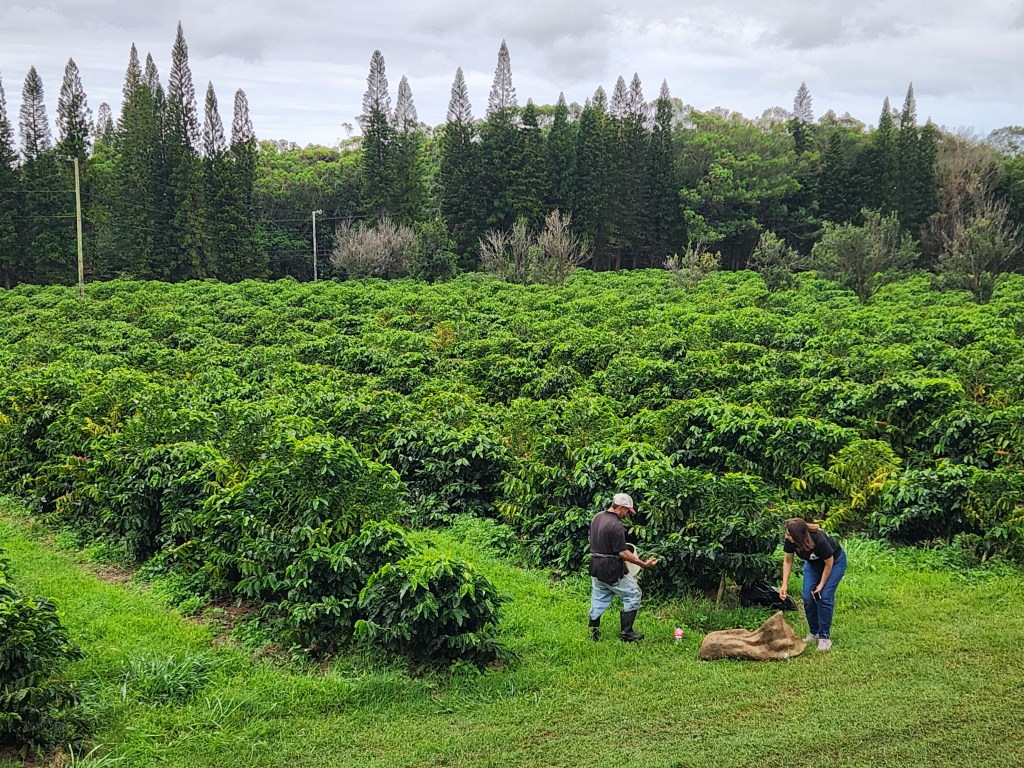
According to the 2022 USDA Census of Agriculture, there are 6,569 farms across the state, with the majority operating on fewer than ten acres. These small operations are especially vulnerable to disruptions, and are, unfortunately, routinely left out of large, national programs, despite being the backbone of a number of state mandates, including Act 151 to Double Local Food Production and HRS 302A in which the Hawaii Department of Education must purchase 30% of their food from local sources, among others.

The broad lesson is clear: small, targeted investments in state capacity can unlock outsized federal returns. In this case, a modest ongoing investment enabled Hawai‘i to leverage millions of federal dollars to support local farmers, strengthen resilience, and reduce the need for future state-funded interventions.
As legislators consider budget decisions this session, the question should not be limited to what programs cost, but what they return. Investments that expand federal funding into Hawai‘i, lower long-term risk, and produce measurable public benefits should be understood not as administrative overhead, but as essential infrastructure.
“Seismic” was how the newly appointed director of the Department of Budget and Finance, Seth Colby, described the changes within the federal policy environment in the first state budget House Finance Committee briefing of 2026.
In a time of heightened competition for federal funding and growing program complexity, maintaining the capacity to pursue, secure, and manage these resources is not optional; it is a sound fiscal strategy. HDAB’s experience shows that when the state invests wisely, the returns speak for themselves.
 Sign up for our FREE morning newsletter and face each day more informed.
Community Voices aims to encourage broad discussion on many topics of community interest. It’s kind of a cross between Letters to the Editor and op-eds. This is your space to talk about important issues or interesting people who are making a difference in our world. Column lengths should be no more than 800 words and we need a photo of the author and a bio. We welcome video commentary and other multimedia formats. Send to news@civilbeat.org. The opinions and information expressed in Community Voices are solely those of the authors and not Civil Beat.
Read this next:
Local reporting when you need it most
Support timely, accurate, independent journalism.
Honolulu Civil Beat is a nonprofit organization, and your donation helps us produce local reporting that serves all of Hawaii.
ContributeAbout the Authors