While Agencies Dither, Waikōloa Village Remains A Wildfire Risk
The lack of a second road for emergencies has long been identified as a public-safety concern.
February 26, 2026 · 5 min read

About the Author

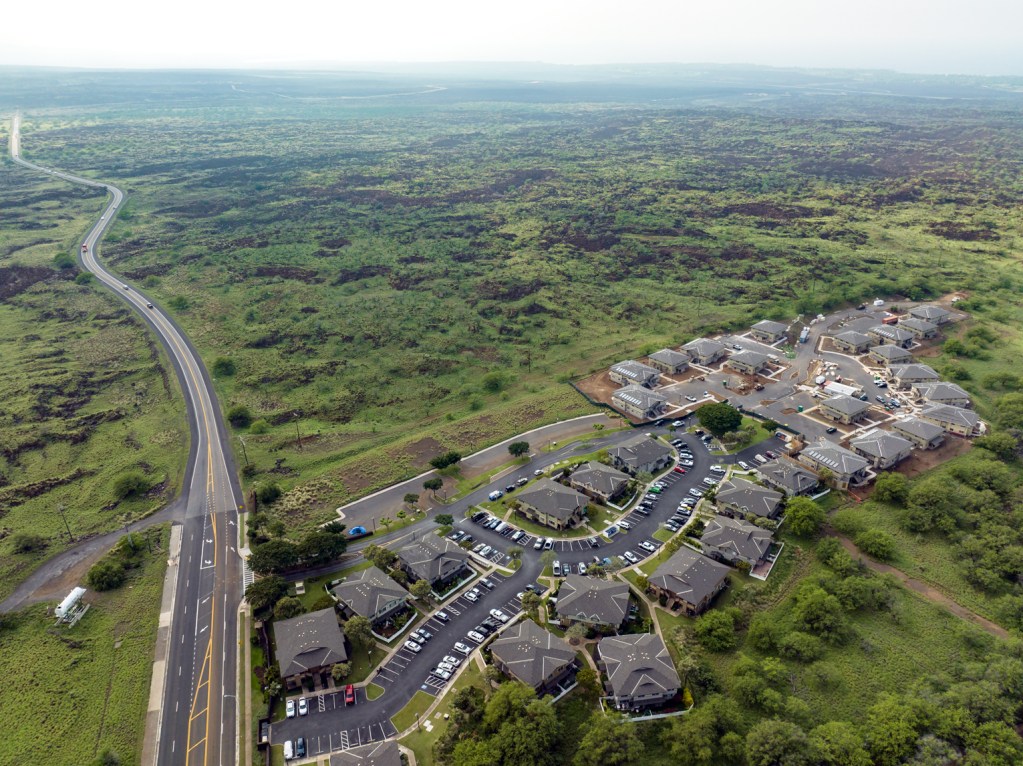
Waikōloa Village on Hawaiʻi Island sits in one of the windiest and driest regions of the state. In the Attorney General and Fire Safety Research Institute’s second Lahaina fire report, the community was identified as having “100 percent higher wildfire risk than any other place in the United States,” placing it among the most exposed communities in the country.
Despite these conditions, the village has only one fully functional arterial road, Waikōloa Road, and a single-lane emergency route, Hulu, which remains gated except during drills or declared emergencies.
The village has evacuated twice due to wildfire threat, in 2005 and again during the 40,000-acre Mānā Road fire in 2021. Hulu was open and used during the 2021 evacuation while residents widely reported waiting more than an hour to clear the residential center of the village. Because the emergency route functions as a single outbound lane during evacuations, responders must enter via the same primary road residents are using to exit.

Ideas showcases stories, opinion and analysis about Hawaiʻi, from the state’s sharpest thinkers, to stretch our collective thinking about a problem or an issue. Email news@civilbeat.org to submit an idea or an essay.
These access and evacuation challenges have been recognized for decades. As early as 2004, Hawaiʻi Police Department officials and county leadership identified the lack of a second road as a public-safety concern.
The county-adopted 2008 South Kohala Community Development Plan classified a second access road for Waikōloa Village as a “very high priority.” Yet the only formal action taken was a 2013 development agreement that treated the road as an optional private improvement with no firm timeline.
None of this has slowed growth. Waikōloa Village is now a major focus for both market-rate and affordable housing development, with thousands of additional residents expected in coming years, all relying on the same single arterial road.
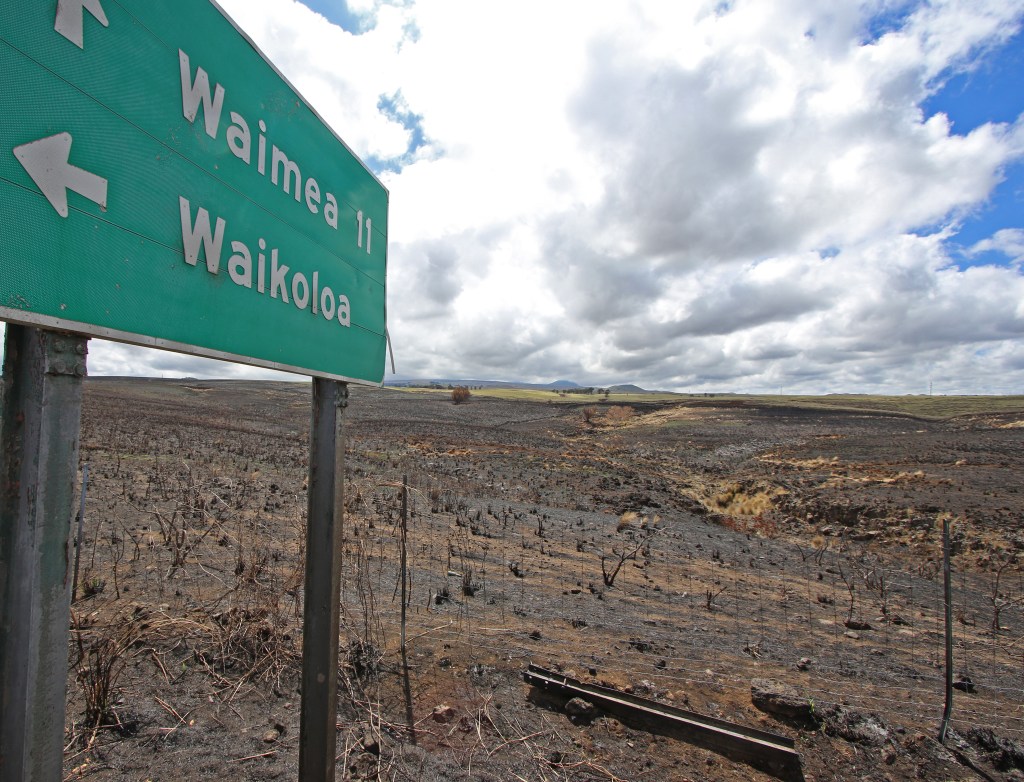
Today, progress has stalled not because the road is unnecessary, but because responsibility for building it is now being publicly disputed.
In 2025, the Hawaiʻi County Council voted 8-1 to allocate $2.5 million to the design and engineering work for the second access road specifically for Waikōloa Village, a rare point of consensus across districts in support of a project that will only benefit District 9. The proposed connection is relatively short, roughly 3.5 miles linking the north end of the village to Queen Kaʻahumanu Highway, but critical for redundancy and emergency access.
Yet those funds remain unspent, while state officials have said that highway connection work will move forward only when roadway construction itself advances. The result is a widening gap between legislative intent and administrative action at precisely the moment when state agencies are waiting for clear roadway progress.
In a Feb. 3 letter to the Wildfire Safety Advocates, Hawaiʻi County Mayor Kimo Alameda stated: “This is a private road” and “Our expectation and objective is for the State to construct the road… I have not committed County funds for construction.” He went further, dismissing the council’s allocation as “a planning document, a wish list, not a guaranteed funding schedule.”
This is in stark contrast with our communications with state representatives, who have consistently explained that they will pay for the intersection with the Queen Ka‘ahumanu highway and no more.
Indeed, on March 25, 2025, the Wildfire Safety Advocates received a letter from Hawaiʻi Department of Transportation Director Ed Sniffen saying “Given the status of the road construction… funding for construction of the intersection is not necessary this year.” He continued: “…moving forward with construction of the intersection… before the road does not make sense… [we will] revisit the status of roadway construction next year.”
These positions cannot both be true.
If the county does not intend to lead or fund the road, and the state is waiting for roadway progress before completing the highway connection, the result is predictable: nothing moves.
The attorney general’s independent analysis of the Lahaina fire repeatedly identifies evacuation infrastructure as a central life-safety issue. These reports cited limited access as restricting both evacuation and emergency responders. Congestion and blocked roads turned lethal when people couldn’t escape the flames. With responsibility for that infrastructure being unclear in Waikōloa, risk is escalating rapidly.
All of the problems cited in the report are present on the ground and visible to residents and officials in Waikōloa. We have insufficient access and egress, narrow roads with lots of cars parked on them and many tree-lined streets that could become impassable in a high wind event.
Despite that documented danger, every conversation about moving forward hits the same obstacle: “How much will this cost?” Unfortunately, there is not a precise answer because formal design work has not commenced. Preliminary estimates cited in conversations with officials vary widely — from $25 million to $40 million. The $2.5 million allocated by council for design and engineering work would answer the price question.
However, Mayor Alameda has not carried that allocation forward. He should. Without taking that first formal step, no other funding can be seriously pursued and every agency can continue to defer responsibility while wildfire risk and population both continue to grow.
After Lahaina, Hawaiʻi committed to learning from the tragedy.
After Lahaina, Hawaiʻi committed to learning from the tragedy. The reports Hawaiʻi Attorney General Anne Lopez and FSRI issued explicitly identify limited ingress/egress, unclear agency responsibility and delayed action as major wildfire risk factors. Those factors do not apply only to Maui, but to every dry and windswept community in the state.
In Waikōloa Village, the County Council has already acted. State officials have indicated they will move when roadway progress advances. Mayor Alameda should honor the council’s vote and carry forward the funding needed to produce a formal design and cost estimate.
The funding exists. The risk is documented. The only missing element is action
 Sign up for our FREE morning newsletter and face each day more informed.
Community Voices aims to encourage broad discussion on many topics of community interest. It’s kind of a cross between Letters to the Editor and op-eds. This is your space to talk about important issues or interesting people who are making a difference in our world. Column lengths should be no more than 800 words and we need a photo of the author and a bio. We welcome video commentary and other multimedia formats. Send to news@civilbeat.org. The opinions and information expressed in Community Voices are solely those of the authors and not Civil Beat.
Read this next:

Local reporting when you need it most
Support timely, accurate, independent journalism.
Honolulu Civil Beat is a nonprofit organization, and your donation helps us produce local reporting that serves all of Hawaii.
ContributeAbout the Author