Will Bailey: What A Homelessness Count Can — And Can't — See In East Hawaiʻi
Homelessness is a shifting set of responses to distance, scarcity, and history — shaped as much by geography as by policy.
February 9, 2026 · 7 min read

About the Author
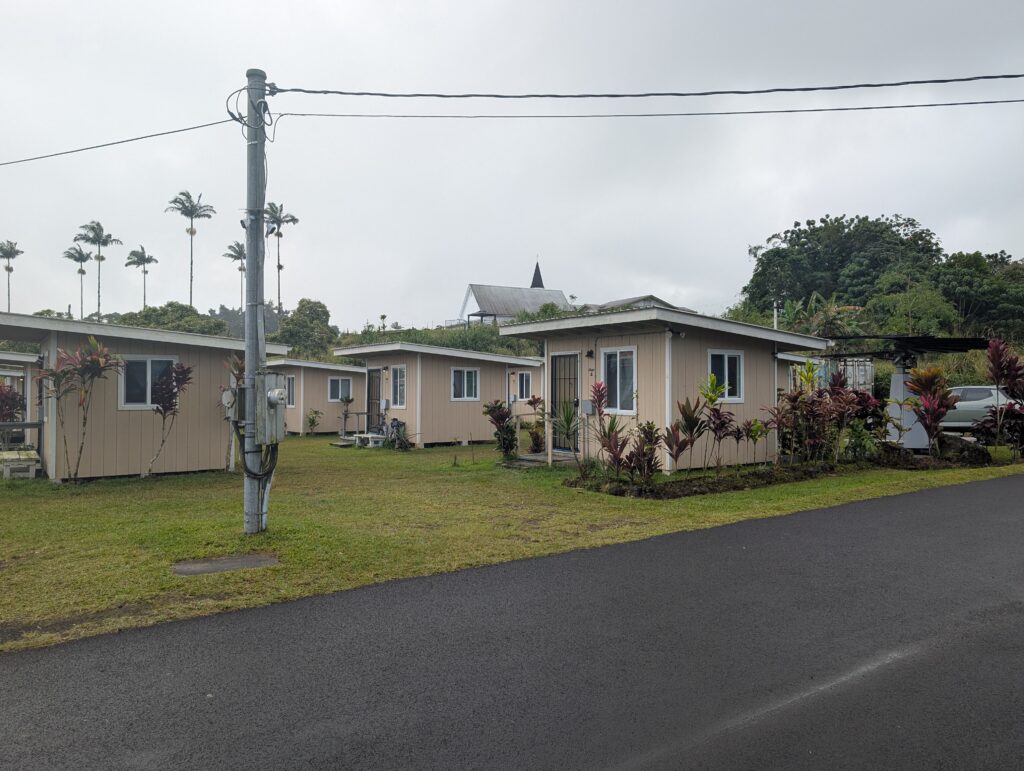
I joined the van on a gray morning in Puna, at the edge of the Sacred Heart Affordable Housing Project in Pāhoa — rows of small, newly built units developed by HOPE Services Hawaiʻi as permanent supportive housing for seniors, including veterans.
At the center sat a shared kitchen and gathering space — not an afterthought, but the point. A place to cook. To sit. To be together.
Housing, here, wasn’t just shelter. It was community, by design.
From there, we drove.
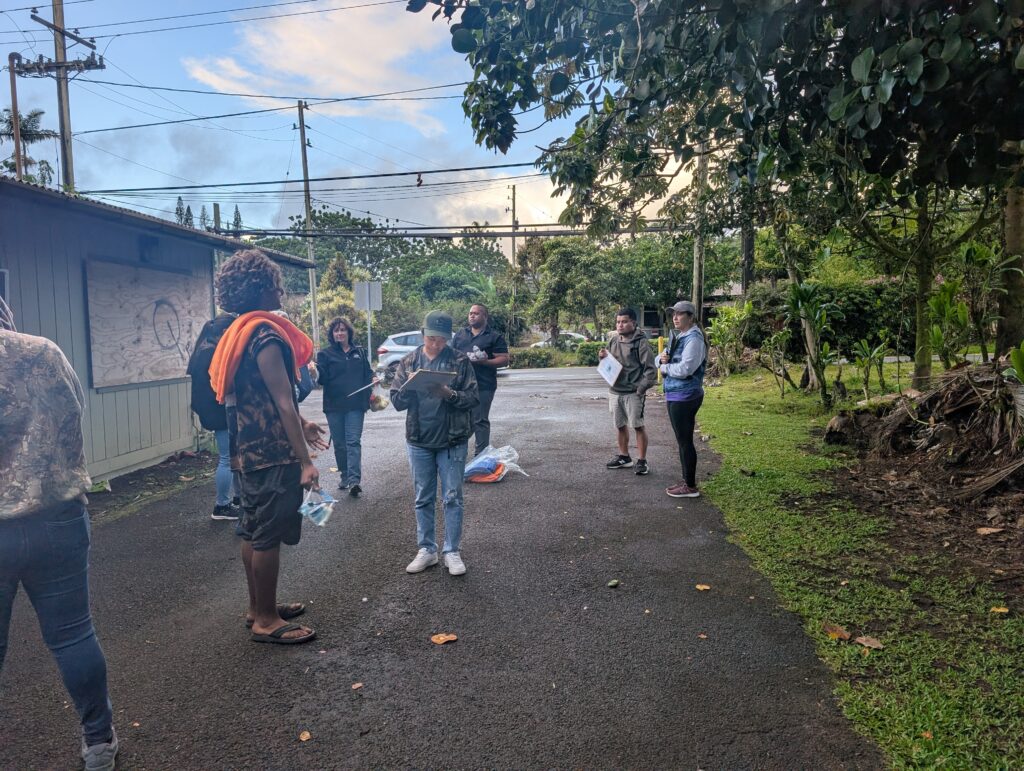
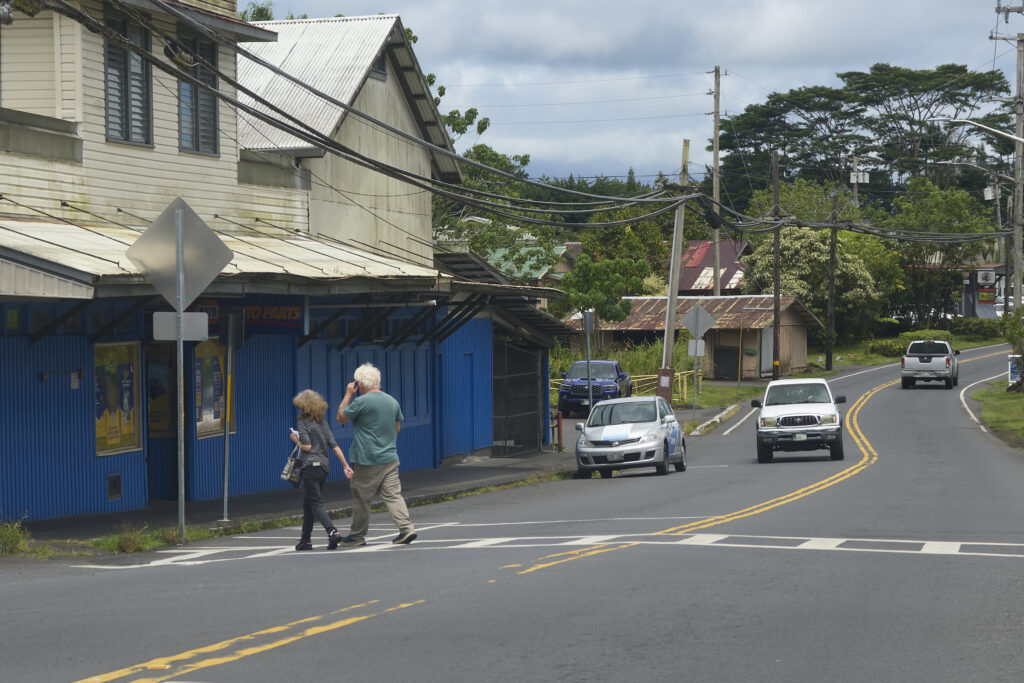
Our team — outreach workers from HOPE Services Hawaiʻi — moved through Pāhoa town on the Big Island, down side roads and behind businesses, past parked cars tucked just out of view.
We weren’t chasing anything. We were looking carefully. That’s what the Homeless Point-in-Time Count is meant to do: capture what’s visible during a limited count window and translate it into data that can guide funding, staffing, and services.
The sun was just coming up when we encountered our first surveys. Keliʻi pulled over, opened the back of the 4Runner, and began handing out backpacks, personal hygiene kits and bags of food to the outreach workers.
A small group — maybe five people — stood beside a building along the main street. Mixed ages. Mixed genders. One of them was young, about 18 or 19. I overheard him tell a team member that he had dropped out of school.
It was about the time parents would have been dropping their kids off up the road at Pāhoa High and Intermediate, where the elementary, intermediate and high school all sit together above town.
Pāhoa was waking up for the day.
It pulled me backward — to being a teenager here. To the schools. The 7-Eleven. The back road toward the dump where we used to run during sports practice. A million small memories, unremarkable on their own, suddenly loud.
As we continued the count — driving through ‘Opihikao and along the coastline toward the beach parks — I kept thinking about the people I’d grown up with. Friends. Classmates. Families who struggled with food and housing in ways I didn’t fully see at the time.
I found myself marveling at what I hadn’t known then — the quiet pressures, the trade-offs, the instability that only becomes legible later, when you know what to look for.
What The Count Can — And Can’t — See
The mechanics of the Point-in-Time Count are straightforward. Outreach teams fan out before dawn, looking for people where they’re sleeping — in vehicles, on beaches, in parks, behind businesses. If someone is willing, they’re asked a short survey: where they stayed the night before, whether they’ve had stable housing recently, whether they’re working, whether they have health needs. The answers are recorded. The numbers are tallied.
In practice, it’s more complicated — especially in East Hawaiʻi.
The survey categories are fixed. The lives they’re meant to describe are not.
I had a copy of the form in my hands. What stayed with me wasn’t any single question, but how often the boxes strained to hold what people were actually living. Arrangements that worked — for now. Places that were permitted — until they weren’t. Employment that didn’t come with a place to sleep. Shelter that existed, but only intermittently, or just out of reach.
This is where counting begins to blur.

East Hawaiʻi has many versions of homelessness, and they don’t hold still. There are people living in cars until the registration expires. People staying on land with permission that can disappear overnight. Communal farms and work-trade arrangements where people come and go with the seasons — or quietly fall out of place. People who are employed but unsheltered. People who stay off the grid because the grid has never worked well for them.
From a policy standpoint, these arrangements look unstable. From the ground, they often look like adaptation.
The Point-in-Time Count depends on consistency — consistent location, consistent status, consistent willingness to engage. In Puna, survival often depends on movement: moving before sunrise, moving when enforcement increases, moving when work ends, moving when arrangements fray.
The data reflects that strain.
In the most recent statewide count, nearly two-thirds of people experiencing homelessness were unsheltered. On Hawaiʻi island, the imbalance was sharper still. The reports acknowledge an undercount — especially among people who avoid contact or live in arrangements that don’t register as fixed or visible.
Those gaps aren’t incidental. They’re structural.
There’s also the question of care beyond counting.
Medical outreach partnerships exist, but they’re often in flux — shaped by funding cycles, staffing limits, and sheer distance. Outreach teams can make contact and identify needs, but sustained follow-up is harder across an area as large and dispersed as East Hawaiʻi.
That challenge is magnified in Puna, which has quietly become the most populous district on Hawaiʻi Island. While Hilo’s growth has remained relatively flat, Puna has expanded rapidly over the past two decades. Unlike an urban center, that population is spread across vast subdivisions — Hawaiian Paradise Park, ʻĀinaloa, lower Puna communities — many of them miles from centralized services.
Despite having more people, Puna still lacks much of the infrastructure the rest of the state takes for granted. Many residents rely on catchment water and off-grid power. Roads are long, narrow and uneven. Clinics are few and far between. Growth has come faster than systems can adapt.
So outreach makes contact. Needs are identified. Referrals are offered. And then the system stretches — sometimes thin enough that follow-through depends on patience, timing or another chance meeting.
None of this shows up cleanly within a limited count window.
The Limits Of Measurement
The Point-in-Time Count serves a purpose. It helps direct funding. It gives policymakers a rough map of need. It creates a sanctioned moment where people who are usually expected to remain invisible are acknowledged.
But in places like East Hawaiʻi, it also reveals the limits of measurement.
(David Croxford/Civil Beat/2025)
The land here moves. Lava redraws coastlines. Forests burn back and regrow. People adapt. They build arrangements that work until they don’t — then adjust again. Survival often depends on flexibility, on knowing when to move, when to stay quiet, when to disappear from view.
Homelessness, in this context, isn’t a single condition. It’s a shifting set of responses to distance, scarcity, and history — shaped as much by geography as by policy.
That morning, what stayed with me wasn’t a number. It was the sense that we were taking attendance in a place where survival often depends on not lining up — and doing so with care, humility, and the understanding that much of what matters will always remain just outside the frame.
 Sign up for our FREE morning newsletter and face each day more informed.
Read this next:

Local reporting when you need it most
Support timely, accurate, independent journalism.
Honolulu Civil Beat is a nonprofit organization, and your donation helps us produce local reporting that serves all of Hawaii.
ContributeAbout the Author