Fair Taxes Build A Stronger Hawai‘i For Local Families
For far too long the state has relied too much on tax revenue from common goods and services.
March 17, 2026 · 5 min read

About the Authors

Hawaiʻi’s economy should work for everyone, but right now, our tax system puts the heaviest burden on local families and small businesses while letting out-of-state investors and our wealthiest residents pay less than their fair share. Safe roads, clean water, quality schools, and resilient communities depend on stable public funding — and a fair tax system is the foundation.
Today, our state relies heavily on taxes people pay when they buy everyday goods and services. In Hawai‘i, that’s the general excise tax, which applies to almost all transactions and accounts for 40 to 50% of our state tax revenue. As a result, our state has the highest sales tax collections per capita in the nation.
The problem is that taxes on everyday purchases fall hardest on working families and small businesses. When groceries, utilities and services are taxed, lower-income people end up paying a larger share of what they earn than wealthier households. National studies estimate the lowest-income households in Hawaiʻi pay about 14% of their income in state and local taxes, while the top 1% pay closer to 8%.

Ideas showcases stories, opinion and analysis about Hawaiʻi, from the state’s sharpest thinkers, to stretch our collective thinking about a problem or an issue. Email news@civilbeat.org to submit an idea or an essay.
Meanwhile, corporate income taxes account for only about 3 to 4% of state revenue. In other words, Hawaiʻi collects far more from what people spend than from corporate profits or investment activity.
This matters because some of the state’s largest commercial properties and luxury resorts are owned by U.S. continent-based real estate investment trusts, which have a special tax loophole that exempts them from paying state corporate income tax.
In recent years, billions of dollars in Hawaiʻi real estate have changed hands through large investment deals, sending more of our state’s property profits to outside investors. This raises an important question: Are large investors contributing fairly to the public systems that support their investments?
For businesses already operating in one of the most expensive environments in the country — with high energy costs, shipping costs, insurance premiums, and commercial rents — these pressures add up quickly. When the tax system allows large institutional investors to contribute less proportionally than local businesses, it creates an uneven playing field pitched against the entrepreneurs and small companies that form the backbone of Hawaiʻi’s economy.

In addition, the conveyance tax, which is a one-time tax paid when real estate changes hands, is much lower here in Hawai‘i than in places like San Francisco and Seattle. The difference is especially large for multimillion dollar and investment properties, and the rates haven’t been raised in over a decade, even as house prices have soared.
Another gap in the tax code is Hawai‘i’s capital gains tax, which is the tax on profits from selling investments like stocks and other valuable assets. Our state is one of only nine that taxes these profits from wealth at a lower rate than income from regular work.
The consequences are real. When public revenues fall short, infrastructure projects are delayed, environmental protection efforts struggle for funding, housing shortages worsen, and social services become strained. Nonprofits working on the front lines see these impacts every day while struggling with state contracts that in many cases haven’t increased in over a decade.
That’s why a coalition of nonprofit service providers have asked the legislature to make their contracts reflect the true costs of their operations.
A healthy economy depends on strong public investment. Businesses rely on infrastructure, emergency services, and a stable workforce. Nonprofits depend on public systems to support housing, healthcare, food security, and environmental stewardship.
That is why a growing coalition of businesses and nonprofit organizations support the Hawaiʻi Tax Fairness Coalition and its Fund Our Future Campaign. Its legislative priority bills close some of the tax system gaps that we described and also raise needed revenue from the wealthiest households by pausing their future income tax breaks.
More information about these proposals is at hitaxfairness.org/wealth-taxes.
This is not about raising taxes on everyday residents. It is about fairness—ensuring the rules apply equally whether you are a family buying your first home or a multinational investment firm purchasing an entire block.
Restoring balance to Hawaiʻi’s tax system will not solve every challenge our state faces. But it is a practical step toward a stronger, more resilient economy — one where the costs of maintaining the systems we rely on are shared more fairly.
This is not about raising taxes on everyday residents.
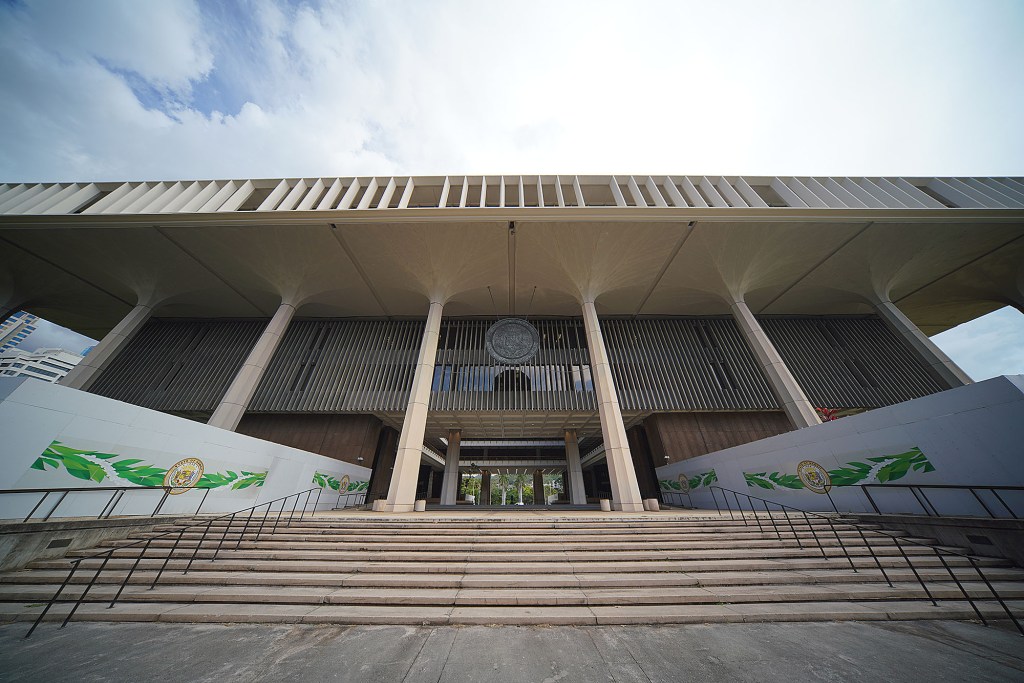
On behalf of the Hawai‘i Tax Fairness Coalition, we invite community members to attend the Fund Our Future Lobby Day & Rally at the Hawaiʻi State Capitol on Thursday, March 19, where we will meet with lawmakers and speak out in support of fair tax policies.
If we want thriving local businesses, stable communities, and a future where our keiki can afford to live here, we must ensure the foundations of our economy are strong and sustainable.
When the rules are fair, opportunity grows — and Hawai‘i grows stronger for everyone.
 Sign up for our FREE morning newsletter and face each day more informed.
Community Voices aims to encourage broad discussion on many topics of community interest. It’s kind of a cross between Letters to the Editor and op-eds. This is your space to talk about important issues or interesting people who are making a difference in our world. Column lengths should be no more than 800 words and we need a photo of the author and a bio. We welcome video commentary and other multimedia formats. Send to news@civilbeat.org. The opinions and information expressed in Community Voices are solely those of the authors and not Civil Beat.
Read this next:

Local reporting when you need it most
Support timely, accurate, independent journalism.
Honolulu Civil Beat is a nonprofit organization, and your donation helps us produce local reporting that serves all of Hawaii.
ContributeAbout the Authors