Lahaina’s Lessons For Kona Low Recovery
Addressing barriers to recovery after natural disasters such as building permits and zoning rules would be just a start.
April 14, 2026 · 5 min read

About the Author

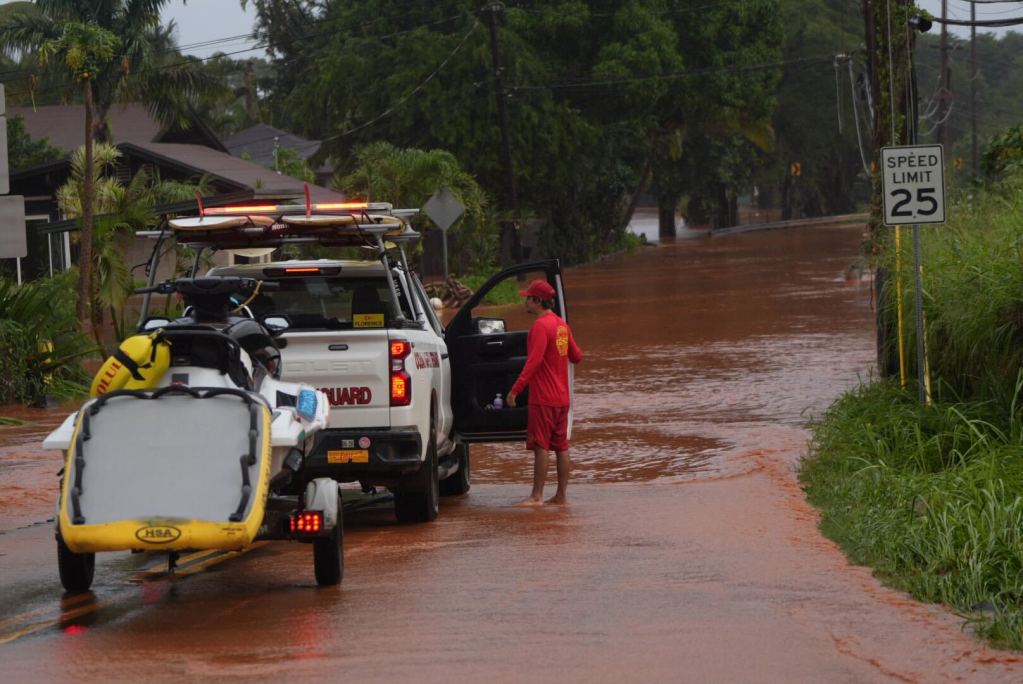
Recent Kona low storms caused as much as $2 billion in damage to thousands of homes, businesses and farms across the state.
But Maui County’s management — and mismanagement — of rebuilding after the horrific August 2023 Lahaina fires could be instructive as to what steps officials across the state could take to facilitate quick rebuilding and recovery.
The most important lesson is that the rebuilding process in the wake of the storms needs to be as clear and predictable as possible, because inflexible rules and approval delays tend to discourage folks from applying for the permits they need to rebuild.

Further, the recovery efforts in Lahaina have demonstrated that permit requirements, zoning restrictions, mandatory infrastructure improvements and coastal rules add insult to injury by forcing families and businesses to wait months or years for the approvals they need to rebuild.
For example, it took Maui County officials more than six months to implement an expedited permit process after the Lahaina wildfires, and to date the county has not issued a single rebuilding permit for any commercial structure.
In order to help people throughout the islands recover from the recent Kona low storms, county officials statewide should dedicate staff or hire temporary contractors to expedite building permit reviews.

Additionally, they should waive all permit fees related to rebuilding, which can add thousands of dollars to rebuilding costs. Maui County never waived such fees in the wake of the Lahaina wildfires, but families trying to restart their lives after a natural disaster should not have to face these extra expenses.
On a related note, county officials should set deadlines for permit approvals. For instance, reviewing simple repair permits within 10 days would provide applicants some much-needed predictability and help residents return to their homes faster.
Maui County initially set a 15-day deadline for reviewing building permits related to rebuilding in Lahaina, but complicated land-use rules have made that deadline ineffective for many projects.
County officials should also ensure that their zoning codes allow destroyed or damaged nonconforming structures and uses to be restored after a natural disaster. As in Lahaina, many older communities across the state have buildings that do not meet modern zoning codes for one reason or another but have been grandfathered in.
Typically, if a nonconforming building is destroyed or a nonconforming use ceases, the property owner cannot rebuild the building as it was or resume the use. But this poses problems for rebuilding after a disaster, because owners should not be forced to apply for time-consuming variances or special-use permits just to rebuild what they had before it was unexpectedly damaged.
To help the owners of such properties, Maui County adopted an ordinance early last year that lifted standard rules on restoring nonconforming structure and uses, which will be critical for allowing many of Lahaina’s buildings, including historic churches and temples, to rebuild.
Inexplicably, the Molokaʻi Planning Commission asked that the island be excluded from that bill, so the restoration of any nonconforming structures or uses on that island that were affected by the recent flooding might be delayed.
The other counties should also follow Maui’s lead regarding infrastructure improvement rules that sometimes force property owners to upgrade nearby roads, sidewalks and utilities as a condition of receiving building permits.
Just this past November, Maui County adopted legislation waiving these rules for certain areas of Lahaina, and Mayor Richard Bissen’s administration has provided additional guidance via emergency proclamation.
Finally, as the rebuilding challenges in Lahaina demonstrated, county officials statewide would do well to assess their building rules related to coastal properties in the state’s Special Management Area.
Many older communities across the state have buildings that do not meet modern zoning codes.
The state passed legislation in 2025 that allows exemptions from SMA permitting for rebuilding projects. But the Honolulu and Hawaiʻi County planning departments have yet to take action to conform to the new state law, and the Kaua‘i Planning Department is just now starting the process of updating its SMA rules.
Maui’s three planning commissions, meanwhile, automatically adopt certain parts of state SMA law, including the section governing exemptions.
If Hawaiʻi’s other counties do not act quickly, some property owners could get stuck in a multi-year limbo trying to obtain SMA permits to repair damage done by the Kona low storms.
In many ways, addressing these four barriers to recovery after natural disasters — building permits, zoning rules, infrastructure improvements and the SMA — would be just a start. There undoubtedly are many other hindrances that could be addressed, but these are issues that county officials should deal with as soon as possible.
 Sign up for our FREE morning newsletter and face each day more informed.
Community Voices aims to encourage broad discussion on many topics of community interest. It’s kind of a cross between Letters to the Editor and op-eds. This is your space to talk about important issues or interesting people who are making a difference in our world. Column lengths should be no more than 800 words and we need a photo of the author and a bio. We welcome video commentary and other multimedia formats. Send to news@civilbeat.org. The opinions and information expressed in Community Voices are solely those of the authors and not Civil Beat.
Read this next:
Local reporting when you need it most
Support timely, accurate, independent journalism.
Honolulu Civil Beat is a nonprofit organization, and your donation helps us produce local reporting that serves all of Hawaii.
ContributeAbout the Author