State Lawmakers Are Removing A Hurdle To Rebuild Lahaina. Will It Matter?
The Legislature is exempting properties destroyed in a disaster from certain permitting requirements to speed up recovery efforts, but not everyone can take advantage of it.
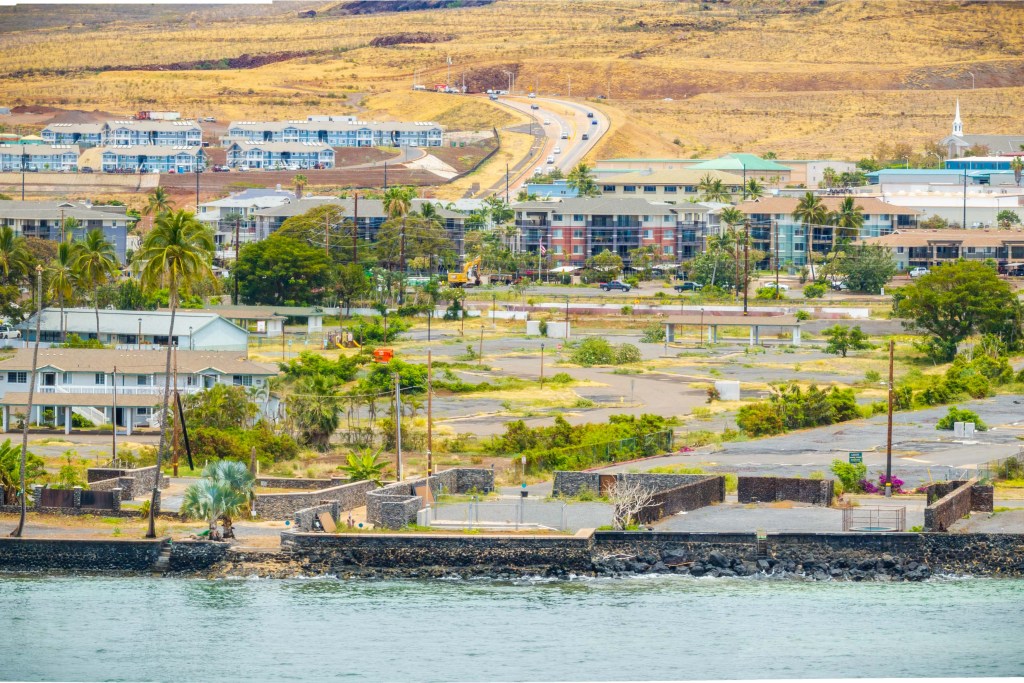
More than 20 months after wildfires razed most of Lahaina, nearly 1,400 residential lots have been cleared of debris but only nine homes have been rebuilt, according to data from 4Leaf, the California-based contractor the county hired last year to expedite its permitting process.
State lawmakers passed a bill last week to try to speed things up by exempting several hundred properties from the special management area permit required for construction in delicate coastal zones. The Maui fires prompted the legislation, but it would apply to any such area in Hawai‘i affected by a natural disaster through July 1, 2028.
While there was strong support for the measure, which removes an often lengthy and expensive regulatory hurdle for people devastated by these extreme situations, it’s unclear whether Senate Bill 1296 will significantly expedite Lahaina’s rebuild.
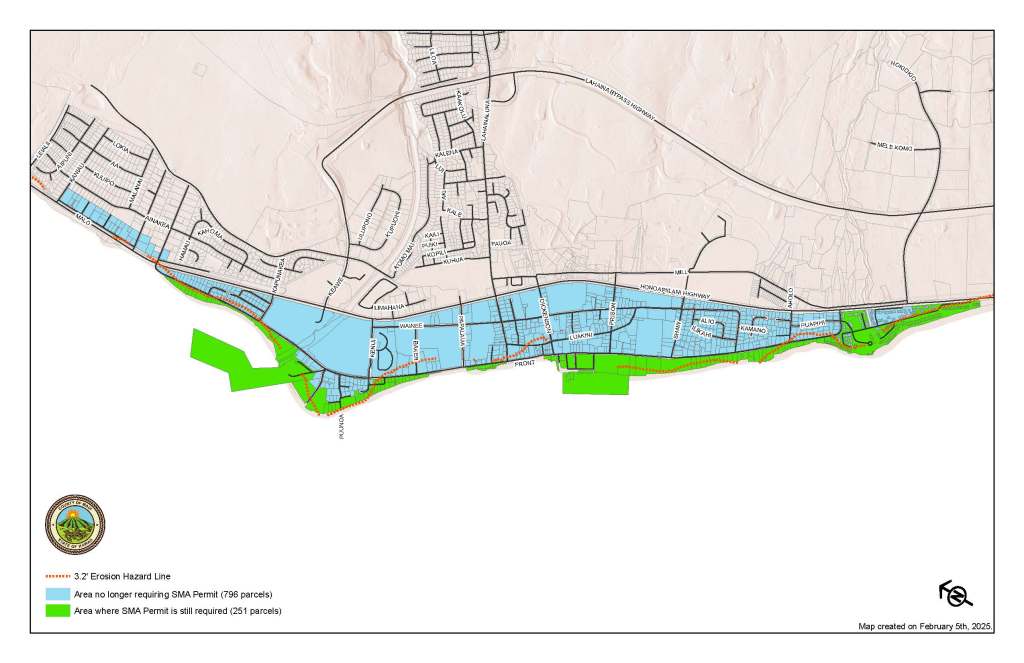
In February, Maui Mayor Richard Bissen exempted from an SMA permit nearly 800 properties mauka of Front Street — the main thoroughfare that runs along the coast — but not the 251 parcels on the makai or ocean side within the erosion hazard line, according to county data.
The bill the Legislature unanimously passed on Friday similarly excludes makai properties, though it’s not clear if the state law extends exemptions to any properties that were not previously granted through Bissen’s action. During final House and Senate negotiations in conference committee, lawmakers amended the bill so it does not apply to shoreline parcels or properties “impacted by waves, storm surges, high tide, or shoreline.”
State Sen. Karl Rhoads, who co-chaired the conference committee, said it was incredibly difficult for lawmakers when they ultimately decided to amend the bill to exclude properties on the shoreline. Before the fire, there were numerous oceanfront homes that likely would have lasted for at least a few more decades, he said.
“But now that they’re destroyed, does it really make sense to rebuild in an area where sea level rise is going to make it uninhabitable in the next 50 years? I think the answer is probably no,” he said. “This is our chance to retreat without actually knocking down habitable structures, but it’s a very hard decision, and I understand why people who live there would be unhappy.”
John Peterson, whose family had lived near the shore on Pualoke Place in Lahaina for the past 40 years, urged lawmakers in his testimony to give them the opportunity to rebuild what they lost.
“That’s all we have ever wanted to do,” he said. “Rebuild what was there pre-fire.”
Others have similarly started speaking out publicly, testifying in support of the Senate bill and, more recently, on a neighbor’s SMA permit request that’s pending before the county Planning Commission.
Stanley Deal, a former Boeing executive who lived part-time in a multimillion-dollar home on Front Street with his wife, applied for an SMA permit before the county updated its coastal zone management rules that make it harder to build along the shoreline due to rising seas and erosion hazards.
The commission has heard two long — and at times emotional — rounds of public testimony on his permit. A heated debate has erupted over whether property owners on the coast should be able to rebuild their homes as they were or if the disaster should be seen as an opportunity to prepare for the threats posed by climate change, protect Lahaina’s precious natural resources and preserve its historic charm.
Deal’s neighbors are hoping the commission approves his permit at one of its next meetings and that sets a precedent they can follow, but some have questioned whether they will be able to rebuild at all and did not find any saving grace in the recently passed state legislation.
‘The Next Disaster’
The Aug. 8, 2023, wildfires destroyed thousands of homes and businesses, killing at least 102 people and displacing more than 12,000 others. Many survivors are anxious to restart their lives in Lahaina and Upcountry Maui. Nearly 400 have received building permits through 4Leaf to do so, and another 300 permits are being processed.
Before the state legislation was amended to exclude oceanfront properties, Maui County officials, local business owners and prominent public figures testified in support of the bill, including representatives from the Department of Land and Natural Resources, Lahaina Strong, the Hawaiʻi Restaurant Association, the Lahaina Restoration Foundation and the Hawaiʻi Chamber of Commerce.
Bissen, in written testimony in March, said he supported the bill and that the current legally required process to obtain a permit is expensive, time-consuming and exhausting. If passed, the legislation would ensure actions are taken to mitigate the negative effects of climate change without “burdening owners with the same procedural requirements as new development proposals,” he said.
“It will benefit Lahaina residents, property owners and those who were and will be employed in the fire affected areas and if in place before the next disaster will be of significant relief to those faced with reconstruction, statewide,” he said.
John Pele, executive director of the Maui Hotel and Lodging Association, said in written testimony that it would create a “critical pathway for businesses and property owners to rebuild efficiently” and give them “hope that they will be able to return to the place they love so much.”
“It is an important step towards the economic recovery of beloved Lahaina town,” he said.
The bill, introduced by Sens. Lorraine Inouye and Angus McKelvey in January, requires reconstruction to begin within six years of the date that a disaster is declared and that the new structure be “similar to its original footprint.” New rules will go into effect as soon as the governor signs the legislation or, if he declines to sign it, on July 1.
Even though it is unclear whether the legislation extends exemptions to any properties that were not already granted them through the mayor’s action, Rhoads said it could still have some effect on the speed of Lahaina’s rebuilding efforts.
“There’s no legal cloud for when someone applies for mortgages or for building permits,” he said. “You don’t want any legal ambiguities, and this would remove those.”
Civil Beat’s coverage of Maui County is supported in part by a grant from the Nuestro Futuro Foundation.
Civil Beat’s coverage of environmental issues on Maui is supported by grants from the Center for Disaster Philanthropy and the Hawai‘i Wildfires Recovery Fund, the Knight Foundation and the Doris Duke Foundation.