Will Bailey: Hawaiʻi Could Feel The Consequences Of The Iran War Soon
Loose talk about bombing Iran’s civilian infrastructure skips over the real cost of escalation — and Hawaiʻi is about to feel those consequences.
April 8, 2026 · 7 min read

About the Author

For more than a day, an American airman was alone in the mountains of southwestern Iran.
His F-15E Strike Eagle had already been shot out of the sky. He and his pilot had ejected into hostile territory. One was recovered relatively quickly. The other — the weapons systems officer — kept moving for more than 36 hours, evading Iranian forces in rough terrain while a rescue operation assembled around him.
By the time the United States reached him, the effort had grown into something much larger than the word recovery suggests.
This was not a helicopter dipping over a ridgeline and lifting off clean.
It reportedly involved elite special operations forces, rescue helicopters, drones, fixed-wing aircraft, intelligence support and a temporary landing strip secured deep inside Iran just long enough to pull one man out of the dark.
American commandos moved through steep terrain and 7,000-foot ridgelines under pressure from Iranian pursuers. Aircraft stacked overhead. Helicopters moved in and out at night. A rescue mission became a small war all its own.
The airman was recovered.
Not cleanly.

Ideas showcases stories, opinion and analysis about Hawaiʻi, from the state’s sharpest thinkers, to stretch our collective thinking about a problem or an issue. Email news@civilbeat.org to submit an idea or an essay.
Two MC-130J Commando II aircraft reportedly became stuck on that remote strip and had to be destroyed by U.S. forces to keep them from falling into Iranian hands. Other aircraft were reportedly damaged or lost in the operation, including an A-10 Thunderbolt II and additional support assets. By some estimates, the materiel cost alone ran into the hundreds of millions of dollars.
That was not a ground invasion.
That was what it took to get one American out.
It is worth sitting with, because it tells us more about what conflict with Iran would actually look like than a hundred loud statements ever could.
From Far Away
It is easy, from far away, to talk about countries as if they are systems waiting to be switched off.
A bridge. A power plant. A runway. A port.
The language comes quickly. Strike this. Disable that. Cripple the system. Reopen the Strait of Hormuz. Restore order.
War has a way of humiliating clean plans.
Iran is not a target package.
And the Strait of Hormuz is not a simple problem awaiting force.
It is one of the most strategically sensitive waterways on earth — a narrow choke point through which a major share of global oil passes, bordered by a country that has spent decades preparing for pressure, disruption and asymmetrical conflict.
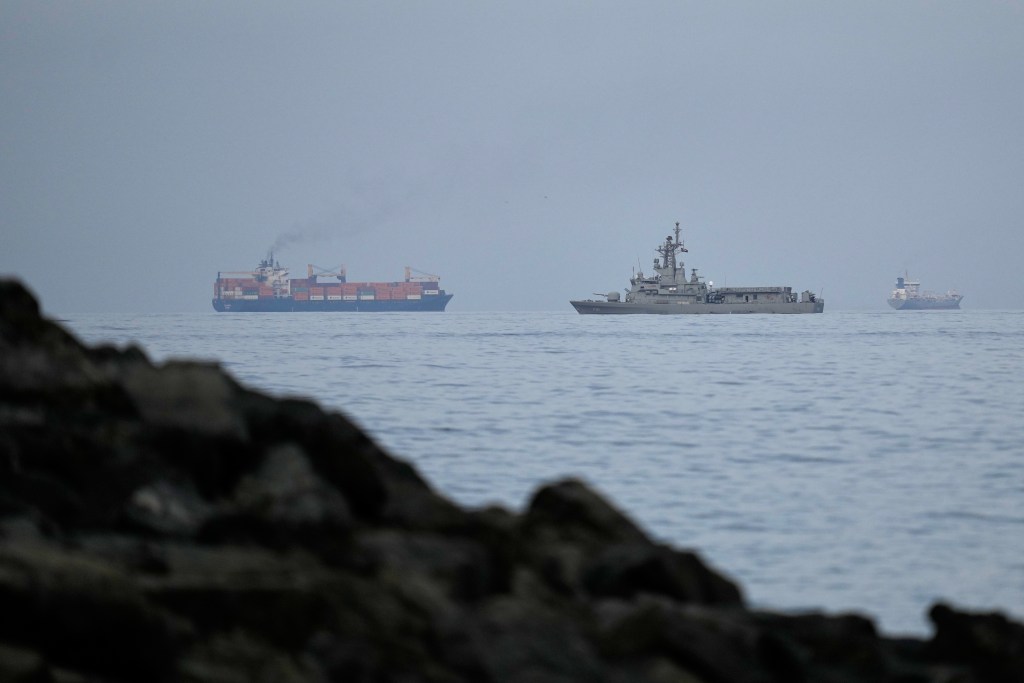
That matters, because a dangerous fantasy is taking shape: that enough bombing and enough naval presence can force the region back into compliance without drawing the United States deeper into something larger.
History does not support that confidence.
Neither does the terrain.
What The Air Can Do
The United States and its allies can damage Iranian infrastructure, destroy military assets and suppress threats from the air. That part is real.
But there is a difference between degradation and control.
Iran does not need to defeat the United States conventionally. It only needs to make sustained control too expensive, too unstable and too politically difficult to maintain.
That can be done with relatively simple tools: mines, drones, fast boats, mobile launchers and
terrain.
Air power can punish. It can degrade.
But it cannot occupy territory. It cannot secure a coastline indefinitely. And it cannot permanently control a narrow, contested waterway bordered by hostile land and hostile intent.
The rescue of that downed aircrew is a reminder of how quickly the map thickens once people are actually on the ground.
What The Sea Cannot Fix
There is a second illusion layered on top of the first — that if air power cannot settle the matter, naval power can keep the Strait of Hormuz open through presence alone.
But the strait favors disruption, not dominance.
A navy can escort. It can deter. It can clear.
What it cannot do, by itself, is turn an unresolved conflict into a stable system.
If the objective is not just to strike, but to secure the strait over time, then eventually you arrive at the part no one wants to say out loud:
That begins to imply people on the ground. Not all at once. Not with a declaration. But incrementally.
A rescue. A recovery. A secured site. A forward position.
A force protection problem. A response to the response.
That is how wars widen. Not in one cinematic leap, but by accumulation.
What Those Targets Are
This is what gets lost when people talk casually about bridges and power plants.
A power plant is not just a target. It is refrigeration, communications, water systems, emergency care, sanitation — the machinery that keeps civilian life from falling apart.
A bridge is not just concrete. It is movement, work, supply, evacuation, access.
Most people do not think about infrastructure until it stops. Then life shrinks fast.
You stop thinking in broad terms. You start thinking in batteries, fuel, refrigeration, distance,
signal, cash and time before dark.
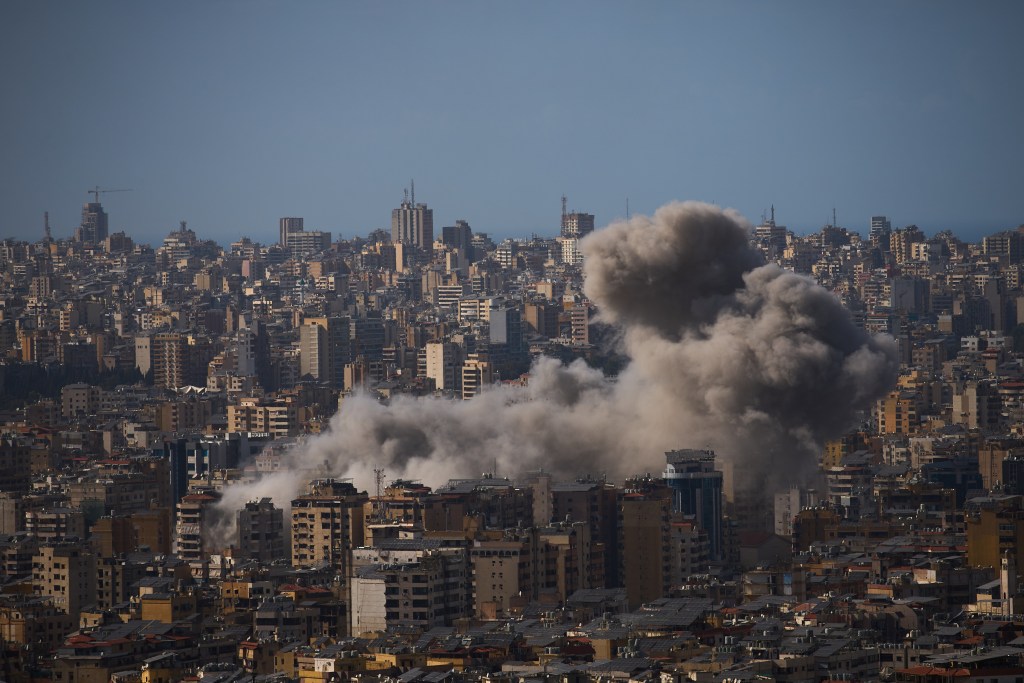
That is what people are really talking about when they speak casually about disabling infrastructure.
Once you start treating those things as leverage, you are no longer talking about a contained military solution. You are widening the field of suffering and hoping it produces political clarity.
There is little reason to believe it will.
Iran’s hardline leadership is not built to fold neatly under that kind of pressure. If anything, attacks on civilian infrastructure are more likely to harden internal control, deepen humanitarian crisis, and reinforce the regime’s narrative.
You can break a society’s systems. That does not mean you have solved the conflict.
At The Far End Of The Line
For Hawaiʻi, none of this is far away.
We tend to think of ourselves as isolated, but in practice we are tightly connected — just at the far end of a long, fragile chain.
We import fuel. We import most of what we consume. We depend on distance functioning properly.
The Strait of Hormuz matters because energy moves through it. But energy is only the beginning.
Fuel moves ships. Ships move everything else.
When a chokepoint tightens, the effects do not stay in oil markets or briefings. They move through shipping costs, freight schedules, insurance, construction, food, power — the quiet math of daily life.
Here, that does not stay theoretical for long.
It shows up in the cost of keeping a vehicle running. In groceries. In building materials. In generator fuel. In the ordinary expenses that are already too high and still climbing. Hawaiʻi feels that system more directly than most places in the country.
These islands are often among the first places where abstraction turns back into cost.
Picture The Ground
There is a tendency in American life to experience war first as rhetoric.
A line. A threat. A clip. A map.
A promise that it will remain limited and controlled.
Then, somewhere far from the cameras, a pilot is hiding in the dark while a rescue mission forms around him.
That is the part worth remembering.
Before we talk casually about bombing bridges and power plants, we should be honest about what comes after them.
If recovering one American from hostile terrain required that much machinery, that much risk, and that much destruction of our own aircraft, then the next rung up the ladder will not be neat.
It will not stay abstract.
And it will not stay there.
 Sign up for our FREE morning newsletter and face each day more informed.

Local reporting when you need it most
Support timely, accurate, independent journalism.
Honolulu Civil Beat is a nonprofit organization, and your donation helps us produce local reporting that serves all of Hawaii.
ContributeAbout the Author