Beyond The Bench: Mark Recktenwald Is Still Helping The Legal Profession
The recently retired Hawaiʻi Supreme Court chief justice is working with national legal advocacy groups, publishing articles and teaching a law class at UH Mānoa.
May 3, 2026 · 15 min read

About the Author

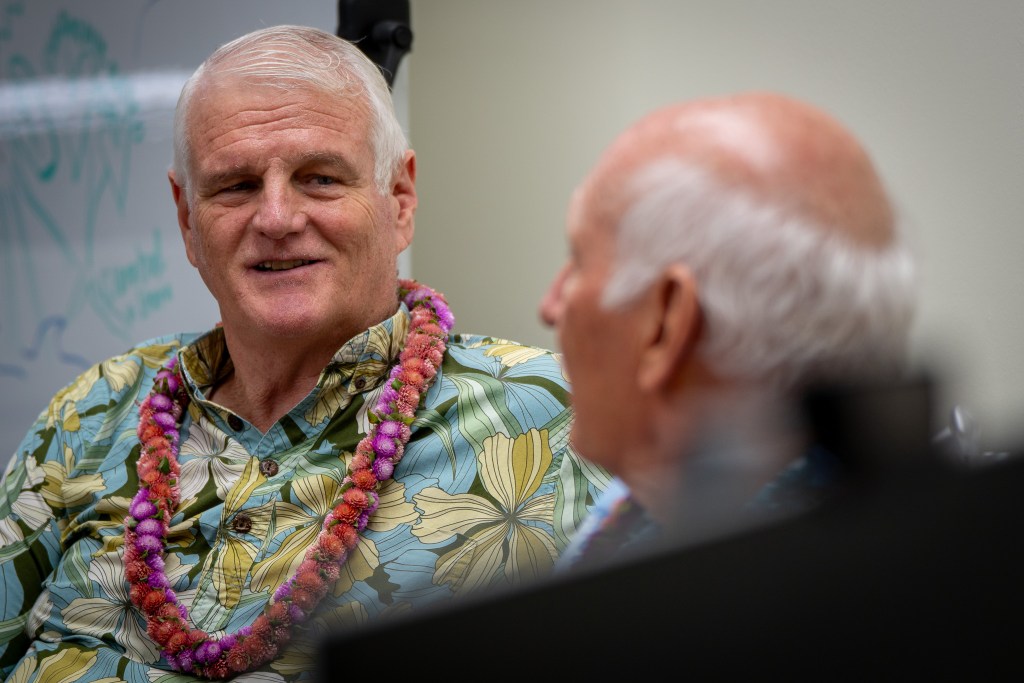
Mark Recktenwald retired as the chief justice of the Hawaiʻi Supreme Court in October after serving for 16 years. The mandatory retirement age for judges and justices in Hawaiʻi is 70 and he’d hit that milestone.
Recktenwald joined the Supreme Court as an associate justice in May 2009 and previously served as chief judge of the Intermediate Court of Appeals beginning in April 2007. He also served as director of the Department of Commerce and Consumer Affairs, as an assistant U.S. attorney for the District of Hawaiʻi and as an attorney in private practice.
During his tenure leading the Hawaiʻi State Judiciary, the chief justice steadily advocated for judges to be paid more. He argued that the retirement age and a lack of competitiveness with jobs in the private sector made it difficult for the courts to attract sufficient qualified applicants to serve.
By the time he retired, Recktenwald had achieved several notable accomplishments and had become more outspoken from the bench. He advocated for better pay for judges and the state Salary Commission approved judicial raises in 2025. The Judiciary also saw much of its legislative package approved in the 2025 session, Recktenwald’s last session as chief justice, including receiving more than $400 million for operating and capitol improvements costs. And in his last State of the Judiciary address to the Legislature in January 2025, he called for greater transparency in state government in order to help restore public confidence in public institutions.

Recktenwald began our interview by discussing the main initiative that he has been working on — the formation of the Alliance of Former Chief Justices, a national effort launched on Dec. 15, which also marked Bill Of Rights Day commemorating the 1791 ratification of the first 10 amendments to the Constitution.
The alliance is supported by the civic education group Keep Our Republic to “strengthen public understanding of the judiciary’s constitutional role and the importance of judicial independence,” according to its website.
Mark Recktenwald: The idea was to bring together, as the name suggests, folks who served as chief justice across the country, who now are no longer on the bench and can talk more freely about the rule of law, talk more freely about issues that have come up in terms of ensuring the independence of the legal profession and the bar. But that said, we’re a very, very, absolutely nonpartisan group. We have folks who are appointed or elected in states that identify mostly as Democrat and states that identify mostly as Republican. But the importance is to be a voice for and in our communities, explaining what the rule of law is and why it matters.
We are affiliated with an organization called Keep Our Republic, which was formed after the 2020 election. And it’s also very much a nonpartisan organization that’s focused primarily on election integrity. It’s done a lot of work trying to help get out into communities, particularly in battleground states, to explain how the vote process works and how that process has integrity and to work with folks who are involved in that process to basically try to build up trust in our electoral system.
What has Keep Our Republic done recently?
Within the last year it branched into supporting both my group and another group called the Article III Coalition, which is made up of former federal judges who are appointed under Article III of the Constitution. Both groups have more than 50 members. It’s two very important independent voices in support of the rule of law.

Tell me a little bit about the impetus or context for the alliance being formed.
My understanding is that Keep Our Republic formed in the wake of the 2020 election, again with the mission of trying to support our democracy and support our electoral process by increasing public understanding — by having forums, by working with elections officials in various states across the nation to basically try to ensure that we would have as resilient and strong an electoral process as possible, not with the goal of electing any particular candidates, but with the goal of having an electoral system that would be one that people could have faith in.
So back in 2020 there was a bipartisan group of civic, legal, national security leaders that were worried about the vulnerability of the process and lack of public understanding of the process. It really focused on public education, expert analysis, supporting institutions in that space to reduce the risk of those institutions being marginalized or undercut. They’ve been out there doing that work since 2020, and in 2025 they added these two additional groups of former judges.
President Trump continues to argue that there was fraud in the election, that he won and so forth. How much did the Jan. 6, 2021, events at the U.S. Capitol influence your organizations?
I wasn’t with Keep Our Republic back then. I think the answer would probably be the concerns already existed just based (on what happened) in the wake of that election. There were numerous challenges filed at various places across the country challenging the results of voting, and I think that was the main impetus. There was a lot of suggestion that the process had been tainted, that, you know, ballots weren’t counted, that ballots were lost.
And I think the goal was to make sure that the system did have integrity, which I firmly believe it does, and also to help explain to people how that is — the ordinary member of the public — “Should I trust the system? I’ve heard a lot about it — is it fair?” And, literally, in some places I think they’ve organized visits by ordinary citizens to engage with election officials, to be able to sort of walk through and understand what the process is all about. And I think, “Great,” because people, if they understand that, I think will be more inclined to trust it.
Of course, it’s 2026 and we have another election year, and all sorts of things are happening, including at the local level. There have been challenges to the local Elections Commission and Elections Office. I would assume that you would hope that this work would be useful in the present context.
Keep Our Republic is the organization that we work with, so I haven’t been directly involved in the electoral work. But I know that their efforts have really focused on key battleground states where there were a lot of issues raised about election integrity — places like Pennsylvania, Arizona, Wisconsin and North Carolina. I’m not aware of any on-the-ground work they’re doing here in Hawaiʻi, but in the states where they are working, I think they’ve been out in the community a lot.
Article III, obviously, is the section of the U.S. Constitution that establishes the judicial branch.
Yes, the federal judges. These are former Article III judges. It’s interesting — not a lot of people retire from being Article III judges, but they do, and I think there’s more than 50 of them. And then there are other groups of judges out there that we’ve sort of engaged with along the way. There’s a very active group that’s led by former appellate Judge Michael Luttig and Nancy Gertner, a former U.S. federal judge who actually was here in Hawaiʻi speaking at our Access to Justice Conference a couple years ago. The two of them have formed a group which has done a lot with regard to amicus briefs, and they typically weighed in on different issues. They have a network of attorneys who work with them and develop amicus briefs, and then members in our own organization. Members can choose to sign on to those briefs or not, as they as they see fit, but that’s kind of their lane.
They’ve been focused on brief writing and providing a very technical legal perspective. I think the Article III Coalition has focused more on community engagement through events as well as engaging with the business community. And our group has so far been focusing on this National Law Day of Action event, and trying to get people to lawyers and former judges to come out on Law Day.
One other initiative that I think is interesting from the Article III Coalition is an effort to have law firms agree to a set of principles related to standing up for the rule of law, a commitment to continue doing pro bono work of their choosing, and to ensure that — going forward — the ethic and the understanding of law firms will be that it’s important for lawyers to take on any client, whether popular or not, and to be proud of doing that.
It’s a very interesting initiative. It’s just getting going, but I think the idea is to have law firms, especially large law firms on a national level, adopt this set of principles. It ran in The New York Times back in January.

Why is Law Day — Friday, May 1 — significant? Why we should recognize it?
Historically, it’s been with us since the Eisenhower administration. And it’s always been something that the American Bar Association has supported. Courts and bar associations across the country typically recognize it with poster contests, visits from the community, or visits to the community, op-eds and the like.
What’s a little bit different about this year — and this happened for the first time a year ago, and now again this year — is to have attorneys reaffirm their oath to defend the Constitution so as part of the celebrations that are taking place at various locations across the country as a show of support for the rule of law. And the aspect that’s new this year is that our group, the Alliance of Former Chief Justices, is urging former judges to participate in those events as well. I think it’s a very important symbolic gesture in support of our democratic system.
What else you’ve been doing? Are you going fishing? Doing any hiking?
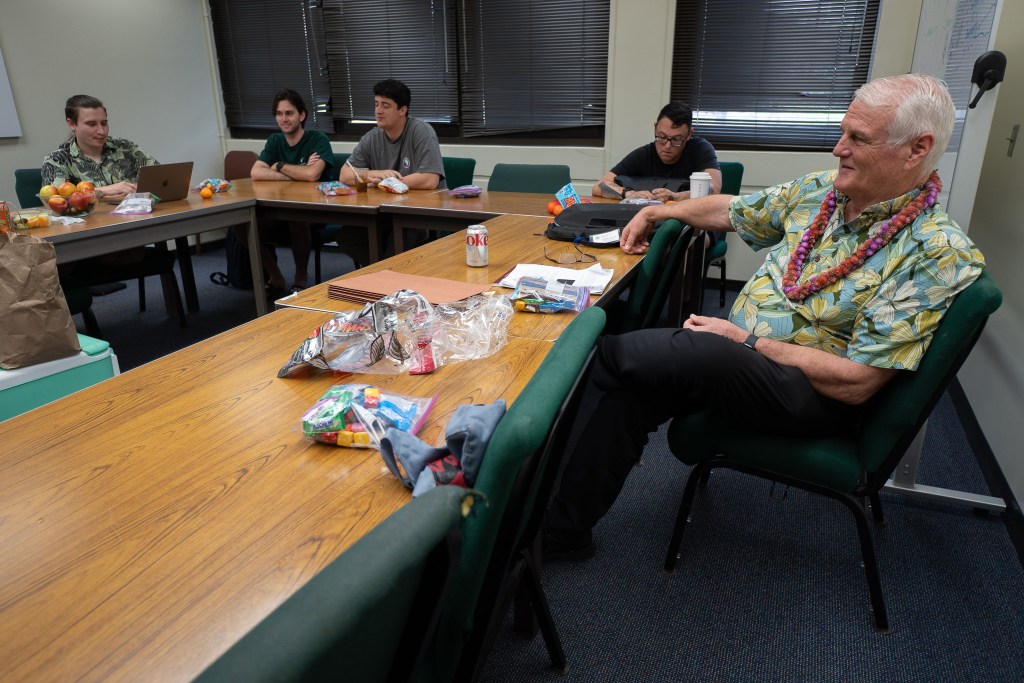
I wish. I’m teaching a class at the UH law school with (former) Dean Avi Soifer on separation of powers and federalism. We’ve been able to dive deep with our students into many of the issues that you know folks are reading about in their newspapers today or hearing about on their favorite podcast or wherever they are online — issues like birthright citizenship, issues related to protests against immigration policies and whether the individuals who are involved in those protests can be subject to deportation. There are a lot of issues where important individual rights and important structural issues related to the federal government and the power of state government are evolving rapidly. I think it’s been a really exciting class to be able to teach.
And I’ve written a little bit on a national level. I got articles in The Hill and in Bloomberg Law. They kind of focused on my unique perspective as both a former assistant U.S. attorney and as a former chief justice and my comment on some of what I’m seeing. I have a perspective that I think differs from that of a lot of folks who comment, because I worked in both the Department of Justice and at the state level, in a state court, and so I’ve tried to share that point of view.

I have also written an article for The Southwestern Law Review that talks about the ability of sitting judges to be able to speak about issues related to the rule of law. It comes out this summer. There’s codes of conduct that limit certainly partisan activities by sitting judges, that limit their ability to comment on existing cases. But there are also rules that encourage sitting judges to talk about issues related to the administration of justice that relate to a public understanding of the courts. There’s maybe a little bit of tension in those rules as to what judges can and can’t do, so I’m trying to help clarify and make some suggestions about how those rules might be set forth in a manner that’s a little more clear so judges understand what they can do.
And it’s fascinating, Chad. Very early on in the administration, Chief U.S. District Judge James Boasberg in D.C. had entered an order blocking the deportation of some individuals to El Salvador, and President Trump responded in a manner that was very critical and suggested that Judge Boasberg should be impeached. You may recall Chief Justice John Roberts issued a very brief statement which didn’t mention the president by name but I think very clearly was referring to those comments and said that, you know, a sitting federal judge should not be subject to impeachment based on the content of their ruling. If there’s a concern about the content of their ruling, the proper forum to raise that is via appeal. Someone as important as our own U.S. Supreme Court chief justice, I think, is navigating some of these issues. And I think that did set the tone for judges to think more carefully about what can they say and what is appropriate.
There was some guidance given by a federal advisory committee that does guidance opinions for federal judges, clarifying that there are circumstances in which sitting judges can come to the defense of colleagues who are under attack in terms of their independence or in terms of questioning their character — to be able to speak up and, in essence, defend the rule of law and explain why whatever is happening might be problematic.
So these are issues that are fascinating to me as a former judge, and something I’m trying to write about and hopefully bring a little more clarity to so judges will understand just how far they can go in speaking. And of course there’s a question of how far you can go from a ethical point of view, and then how far you want to go, and how far it’s productive to go. And those are all really interesting issues. That’s part of the reason why I think our group has formed.
As you know, Hawaiʻi Associate Justice Vladimir Devins was nominated to succeed you. I wonder if you might comment on that whole process. I know you strongly supported the associate justice and said you think he’ll make a fine chief justice. What can you say now that the hearings are over?
Based on my work with him over the years, observing him as a practicing lawyer, someone who appeared before the court, someone who’s very active in the Hawaiʻi State Bar Association, I had a very positive view of him when he came to the court. And once he was at the court I had the opportunity to observe him as a colleague, to see how he goes about doing this work. And I learned that he’s a person who probably, as I said at the hearing, prepares more diligently than anyone I think I’ve ever seen.
He’s ready when cases come before the court. His questions are very to the point. He understands the record completely, and he calls it like he sees it. And then he’s very, very good at getting his opinions written and writing opinions that are very understandable. So my view is, as a colleague, that he was a very valuable member of the court, and I think he’s somebody who has proven his worth and proven that he would be very successful and a good leader as chief justice.
There were some senators who suggested amending the Judicial Selection Commission application form, which of course you filled out yourself, to be a little bit more pointed about clarifying past political activities. Do you think that would be useful?
I really can’t comment on that, Chad, just because it’s been so long since I’ve looked at the form. So on that one I don’t think I can comment without spending more time going back and sort of looking and trying to understand it.
Open letter from the Alliance of Former Chief Justices, Dec. 14, 2025:
 Sign up for our FREE morning newsletter and face each day more informed.

Local reporting when you need it most
Support timely, accurate, independent journalism.
Honolulu Civil Beat is a nonprofit organization, and your donation helps us produce local reporting that serves all of Hawaii.
ContributeAbout the Author