Makana Eyre: State Seeks Traditional Canoe Builders For Koa Wood Logs
Applications require a plan not just for building a canoe but for deepening connections between the logs, trees and waʻa and their beneficiaries.
May 25, 2026 · 7 min read

About the Author

If you grew up in Hawaiʻi in the 1990s, you probably heard some version of this story.
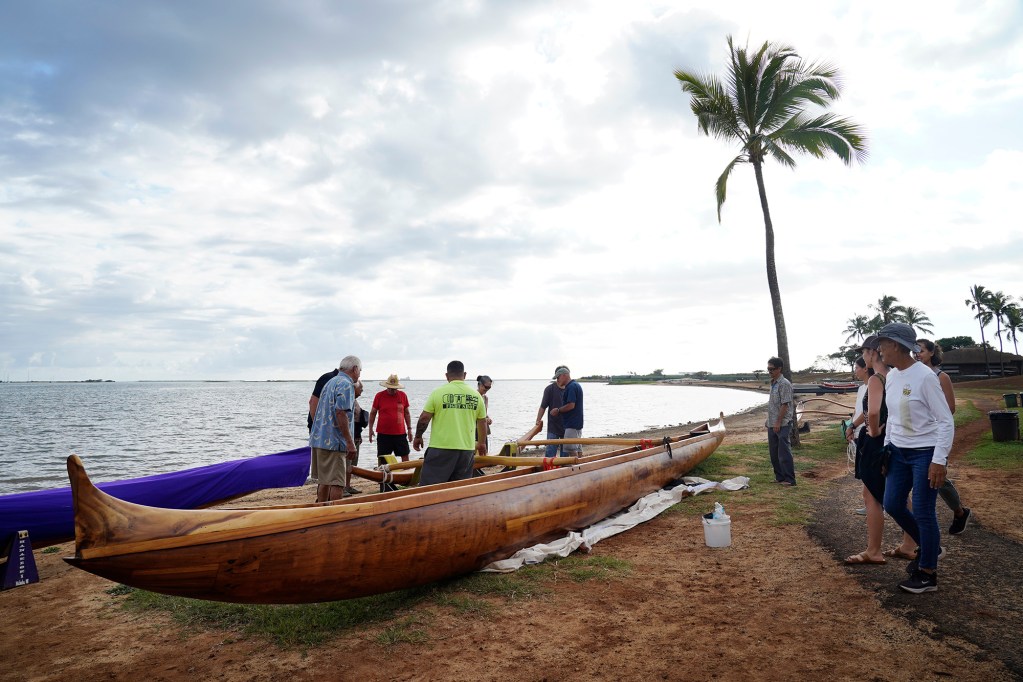
Once, there were towering koa trees aplenty in our forests. They grew tall and straight, and their trunks were broad enough that a skilled carver could build a canoe from a single tree.
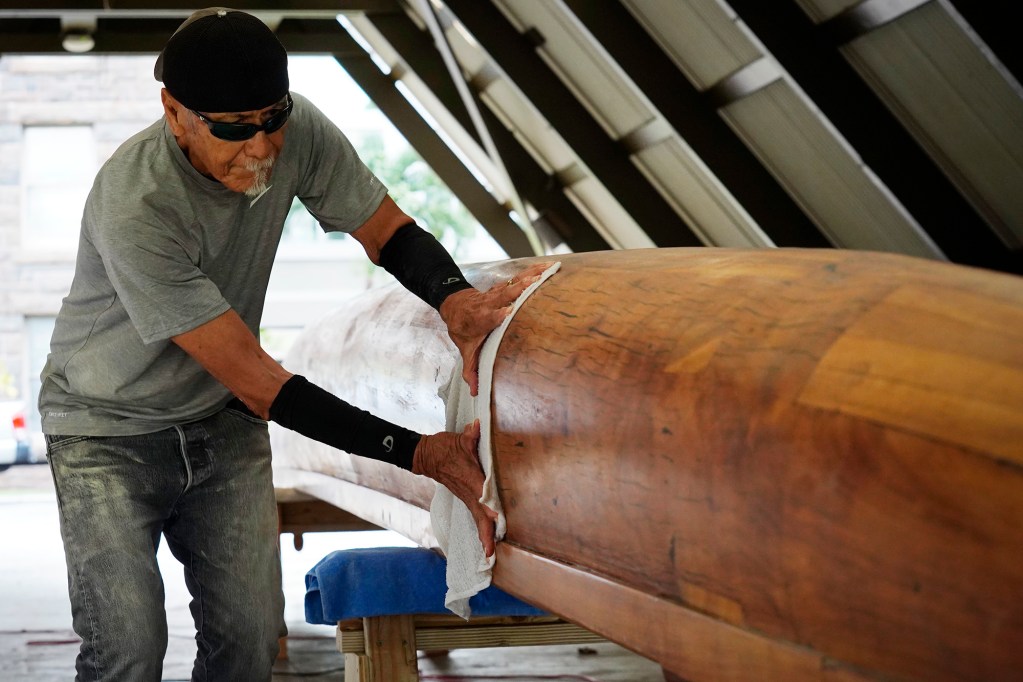
This tale has lived with me for years. When I raced koa canoes as a teenager, I admired their gleaming piecemeal hulls, polished almost to mirror sheen. They are already so beautiful, I’d think to myself. Imagine how they’d look if made from a single trunk.

Ideas showcases stories, opinion and analysis about Hawaiʻi, from the state’s sharpest thinkers, to stretch our collective thinking about a problem or an issue. Email news@civilbeat.org to submit an idea or an essay.
In early March, something in the normally sleepy world of Hawaiʻi forestry caught my eye. It was a DLNR press release announcing that applications for koa canoe logs from the Kapāpala Koa Canoe Management Area were open.
This press release made me pause. Did this really mean that Hawaiʻi once again had koa trees big enough to build waʻa?
Perhaps above all, I wondered why this hadn’t made the news. To me it felt consequential. Why, then, was no one talking about it?
I picked up the phone to figure it out. The first person I called was Jennifer Grimm, the DLNR’s statewide Forest Management Program Specialist.
I first wanted to ask about the story I grew up hearing. Was it true?
Grimm explained that it was in spirit, though it was perhaps a little too absolute. There still existed koa trees, some rather big. But it was extremely difficult to find ones suitable for canoes.
That was one question answered. But as I spoke to Grimm more, a deeper and more interesting story began to emerge.
In fact, the problem I’d grown up hearing about was in large part what prompted the DLNR to set aside 1,257 acres of land in Kaʻū more than two decades ago. The hope, Grimm explained, was to create a sustainable source of koa for canoes.
In some ways, we can trace the decision back to the late 1980s, when the Polynesian Voyaging Society wanted to build a voyaging canoe from traditional materials.
Curious to learn more, I called Bruce Blankenfeld, a master navigator and PVS leader who has voyaged tens of thousands of miles across the Pacific and the world as captain of Hōkūleʻa and Hikianalia.
Blankenfeld told me how, for more than a year, PVS had scoured the islands for koa, ultimately calling off the search. Our forests, they realized, were almost entirely depleted.
With that sad revelation, they turned to another option: Alaska. Why this place in particular? Because of shared cultural ties.
The idea came from PVS co-founder and visionary painter Herb Kāne who had once read an account about the British explorer, Captain George Vancouver.
In these papers was a story of a chief on Kauaʻi who, Vancouver’s crew surgeon and naturalist Archibald Menzies was surprised to discover, possessed a large single-piece canoe made from a pine tree not known in Hawaiʻi.
The implication, of course, was that the log had drifted to Hawaiʻi from North America.
Given this recovered history, PVS decided to speak with Indigenous leaders in Alaska in the hopes that they might have a solution.
In 1990, Sealaska, an Alaska-based corporation that aims to strengthen Indigenous people, culture and land stewardship, chose two 400-year-old Sitka spruce trees measuring 200 feet long, offering them as a gift.
The canoe PVS ended up building was Hawaiʻiloa. In 1995, Blankenfeld joined a crew that took the canoe up to Alaska to thank Sealaska for the gift.
Clearly, much progress has been made in the 35 years that have passed. When I asked Blankenfeld for his thoughts on the DLNR announcement, he told me, “It’s a wonderful thing that we’re at a point where we can do this. It feels significant that so many trees are mature.”
One big challenge the DLNR faced was how to allocate the logs — a coveted and valuable material. Its solution was to create a working group of carvers, forestry experts and cultural practitioners.
“The working group really thought hard and for many years about how to develop an allocation process that would be fair, predictable, sustainable,” Grimm told me.
This work is reflected in the 11-page, 29-question application form, which asks respondents to provide a considerable amount of information, including tax status for organizations and the type of canoe they plan to build.
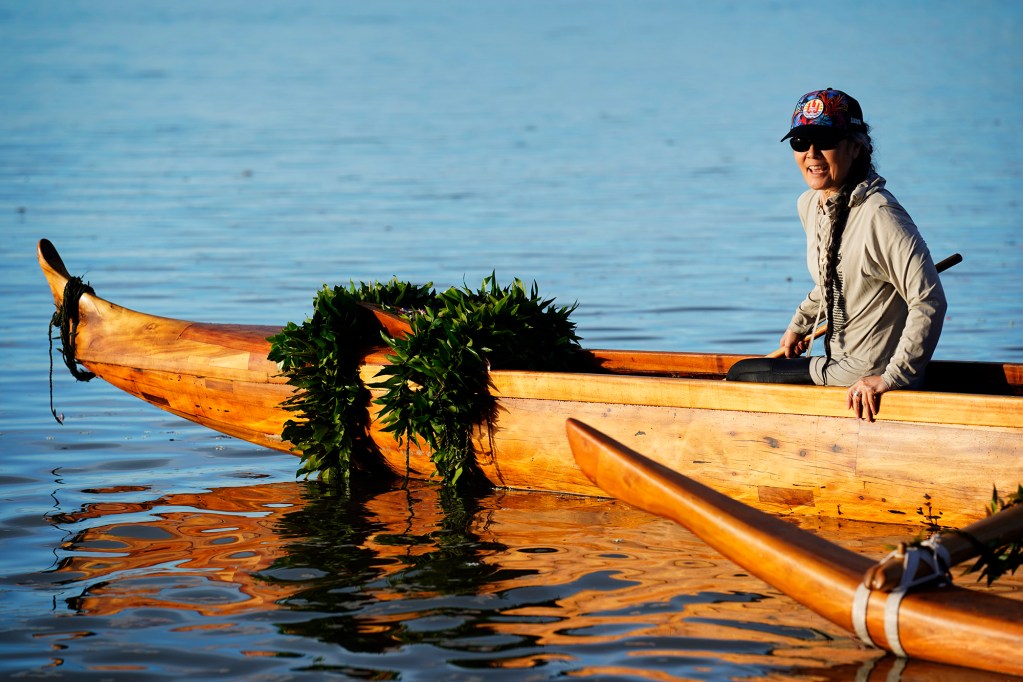
Most important, it seems to me, is the section on stewardship. The DLNR asks applicants to submit a plan that explains how, if given a log, they will use it to foster the Hawaiian cultural practice of reciprocity and deepen the connections between koa logs, trees, and waʻa and their beneficiaries.
Applications are due at the end of the month. Successful applicants will be notified in August.
It’s easy to be cynical about local government. It can be slow, meandering. Faceless, heartless bureaucrats make our lives unduly complicated — at least that’s the stock idea.
After speaking with several people involved in the Kapāpala log process, I don’t think that’s what’s happening here.
We should of course wait to see how DLNR manages the allocation process over the medium and long term.
There are, without a doubt, some hurdles ahead, above all financial ones. For instance, while the logs are free, recipients must pay to transport them. By the DLNR’s own estimate, that could run between $10,000 and $25,000 per log.
The other consideration is the cost of building a canoe itself. All things considered, Blankenfeld told me it could rise as high as $200,000, much of it due to man hours.
These circumstances tilt the process toward major, well-funded canoe clubs that, I think it’s safe to say, need another koa waʻa the least.
Still, I can’t help but carry a sense of optimism. In so many ways, koa is central to our islands. It is at the core of our seafaring culture. Besides being a material for canoes, it has long been used for paddles and surfboards — alongside weapons and ceremonial objects.
Today, artists and artisans use it to create vessels, sculptures, fine furniture and musical instruments.
If I’m honest, the issues of cost — while meaningful — feel like an obstacle to be solved but not a fundamental flaw. I hope to be proved right.
What’s most exciting is this: If all goes well, some very lucky paddlers will soon step into new koa canoes.
If in a year or two that ends up being you, count your blessings. I for one will be jealous.
 Sign up for our FREE morning newsletter and face each day more informed.
Read this next:
Local reporting when you need it most
Support timely, accurate, independent journalism.
Honolulu Civil Beat is a nonprofit organization, and your donation helps us produce local reporting that serves all of Hawaii.
ContributeAbout the Author