Cats, Birds And The Path Forward: A Response And An Invitation
The shared ground between wildlife and cat welfare advocates is broader than recent debates suggest.
May 25, 2026 · 5 min read


About the Authors


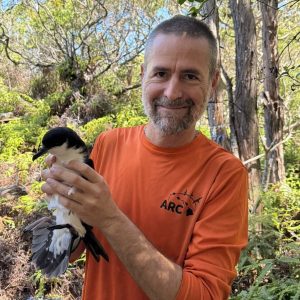

We read the recent Community Voices piece by Kathy Carroll, Stephanie Kendrick, Mary Ann Massenburg and Elaine Partlow with genuine appreciation. We share their grief over the deaths of ʻuaʻu kani, or wedge-tailed shearwaters, by cats at Shipwreck Beach/Keoneloa Bay and their goal of reducing free-roaming cats and their devastating impact on native wildlife.
The authors of this response welcome dialogue on solving the issue of outdoor cats killing our native wildlife.
What Is At Stake
Native species in Hawaiʻi evolved without predatory mammals. Cats are known to directly kill individuals of most of our native species: palila high on Mauna Kea, ʻōpeʻapeʻa, or Hawaiian hoary bat, in our forests, manu o Kū, or white tern, in Honolulu’s trees, ʻalae ʻula, or Hawaiian moorhen, in our marshes, and mōlī, or Laysan albatross, on our bluffs and beaches.
Beyond predation, cats spread Toxoplasma gondii, a parasite transmitted through their poop, that can sicken people, kill nēnē and — through rainwater runoff — kill spinner dolphins and Hawaiian monk seals.
Stating facts does not demonize cats. Many of us share our homes with cats we love, indoors, where they thrive and native wildlife is protected.

Ideas showcases stories, opinion and analysis about Hawaiʻi, from the state’s sharpest thinkers, to stretch our collective thinking about a problem or an issue. Email news@civilbeat.org to submit an idea or an essay.
This crisis is also deeply cultural. Native birds are not simply wildlife species to kānaka maoli — they are kūpuna, ʻaumākua, kino lau, and part of the living foundation of Hawaiʻi’s identity.
Before cats and other predators arrived, seabirds numbered in the millions, transporting marine nutrients inland and sustaining the native forests, watersheds, fisheries and communities that define these islands.
The voices of those and our other birds were woven into place names, oli, and the rhythms of daily life. Every extinction permanently severs those threads.
What The Science Shows
Some Hawaiʻi-based animal care organizations support trap-neuter-return (TNR). We support sterilizing cats — it helps reduce the number of cats born outside. But returning sterilized cats to the landscape is unacceptable.
Scientific studies show repeatedly that TNR is ineffective due to pet abandonment and the constant influx of cats already on the landscape. A released cat, whether sterilized or not, and whether fed or not, will continue to kill birds and spread toxoplasmosis for the rest of its outdoor life.
People for the Ethical Treatment of Animals (PETA) says “If you support TNR you support killing wildlife. We agree.
The Shipwreck Beach situation is instructive. Predator control programs do exist on Kauaʻi — in remote mountain colonies protecting ʻaʻo, or Newell’s shearwater, and ‘ua’u, or Hawaiian Petrel, at upland nesting sites — and they have been highly effective at reducing predation and increasing seabird reproduction.
These results are replicated around the world. Simply put: when non-native predators are removed, seabird populations recover. However, there was no such program at Keoneloa Bay (Shipwrecks). The colony was entirely unprotected.
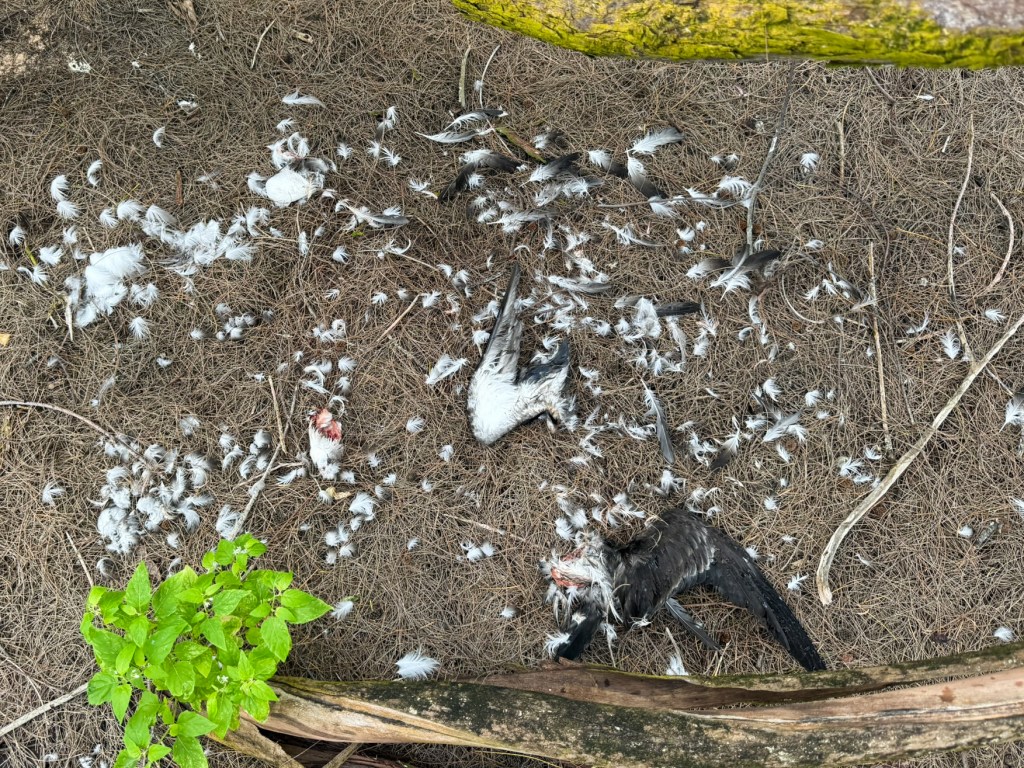
Tellingly, an ear-tipped TNR cat was photographed in the colony after the deaths were reported. TNR had not removed this animal’s predatory behavior or its access to the colony.
The original authors suggest that feeding bans discourage responsible cat management. We respectfully disagree with the premise. Organized feeding of free-roaming cats in wildlife habitat is not responsible management; it subsidizes an introduced predator into an ecosystem that cannot afford one. It also encourages pet abandonment because owners believe their unwanted cat will be fed by others and they are correct, resulting in more outdoor cats.
Where We Stand Together
The shared ground between wildlife and cat welfare advocates is broader than recent debates suggest.
We support affordable, accessible spay/neuter services on every island; mandatory spay/neuter for cats entering the state and for any cat over six months with reasonable exceptions for owners who wish to maintain intact animals; mandatory microchipping; stronger pet abandonment penalties; and public education campaigns about keeping cats indoors.
Trap, neuter, and house — in a sanctuary or a permanent indoor home — is an outcome we can advocate for together.
We do draw one clear line: funding that supports trap-neuter-and-house programs and accessible sterilization services should not be used to sustain free-roaming colonies on the landscape.
We also must acknowledge a difficult reality: not every cat can be placed. Sanctuary space is limited, and adoptions cannot keep pace with the number of free-roaming cats.
For cats that can’t be adopted and for whom no enclosed option exists, humane dispatch must remain a legally protected option. Without it we and our wildlife suffer growing cat populations.
A Specific Invitation
We were also disappointed when the 2026 legislative session ended without progress. In the next session, we seek a framework built on these shared commitments, with humane dispatch retained as a professional option when placement is not possible.
The wildlife in and on our oceans, beaches, wetlands, forests and mountains are not abstractions. They are what Hawaiʻi is. The cats born outside this year without a loving home deserve better too. Both things are true, and both demand more from all of us.
Grant Sizemore, director of Invasive Species Programs for American Bird Conservancy; Thomas Daubert, Executive Director for Friends of Kauaʻi Wildlife Refuges; Patrick Chee, Conservation Affairs Chair of The Wildlife Society Hawaiʻi; Jonee Peters, Executive Director of Conservation Council for Hawaiʻi; Michael Mitchell, a retired Deputy Project Leader, U.S. Fish and Wildlife Service; Sabra Kauka, a Hawaiian Studies Kumu and Conservationist; Jay Penniman, Chair of Toxoplasmosis & At Large Cat Technical Working Group; Rich Downs, Coordinator of Hui Manu o Kū; and Birds Hawaiʻi Past Present contributed to this community voice.
 Sign up for our FREE morning newsletter and face each day more informed.
Community Voices aims to encourage broad discussion on many topics of community interest. It’s kind of a cross between Letters to the Editor and op-eds. This is your space to talk about important issues or interesting people who are making a difference in our world. Column lengths should be no more than 800 words and we need a photo of the author and a bio. We welcome video commentary and other multimedia formats. Send to news@civilbeat.org. The opinions and information expressed in Community Voices are solely those of the authors and not Civil Beat.
Read this next:

Local reporting when you need it most
Support timely, accurate, independent journalism.
Honolulu Civil Beat is a nonprofit organization, and your donation helps us produce local reporting that serves all of Hawaii.
ContributeAbout the Authors