New Approach To Free-Roaming Cat Management Urgently Needed
We can only work together if we stop demonizing animals and stop taking each other’s tools off the table.
May 11, 2026 · 4 min read

About the Authors

The recent deaths of wedge-tailed shearwaters near Shipwreck Beach on Kauaʻi were heart-wrenching. As animal advocates, we mourn this loss deeply.
We are not writing to debate whether cats were responsible. But we do understand the skepticism of many cat advocates who have been bruised by the relentless demonization of cats — hostile rhetoric that has led to animals being tortured and killed by vigilantes, and that does nothing to protect our wildlife.
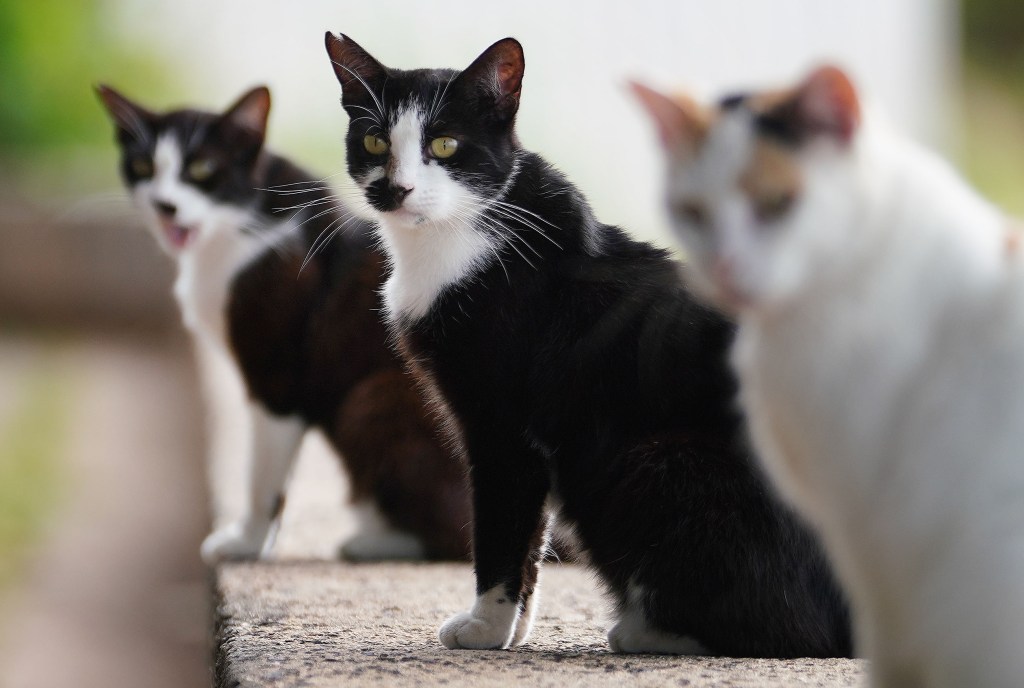
This tragedy makes clear that a new approach to free-roaming cat management is urgently needed: one that acknowledges Hawaiʻi’s unique environment, addresses why cats end up living outdoors, and embraces all humane and effective tools to reduce this population.

The recent Civil Beat article repeated a phrase common among conservationists: that spay/neuter programs for free-roaming cats “aren’t effective.” It’s worth asking what “effective” means.
If the goal is to prevent more cats from being born outside — and ours is — then spay/neuter is effective. Not doing it means more cats, period.
If the goal is to reduce the number of cats living outdoors — and ours is — then a robust public education campaign about why cats should be indoor pets in Hawaiʻi is essential, along with vigorous promotion of alternatives to abandonment.

If the goal is to prevent the unnecessary death of all animals — and ours is — then we need accessible, funded spay/neuter services on every island.
Now let’s look at what has not been effective. Kauaʻi has an active lethal control contract for cats, focused on sensitive wildlife habitat. That program clearly did not prevent the deaths of these endangered birds.
Kauaʻi also bans feeding on county property — a policy that has been floated statewide — yet feeding bans only discourage responsible cat management and make it harder for rescuers to get cats spayed, neutered, and adopted.
The single greatest threat to success — under any strategy — is abandonment. It is why neither trap-neuter-return nor lethal control has eliminated free-roaming cat populations anywhere in the world with a significant human presence. Management of cats already on the landscape will only lead to population reduction if we also address the sources of free-roaming cats.
Hawaiʻi can be an example to the world of humane, effective free-roaming cat management. But only if we work together — and we can only work together if we stop demonizing animals and stop taking each other’s tools off the table.
In the 2026 legislative session, several promising bills had the support of both animal welfare and conservation interests. They would have taken meaningful steps toward establishing spay/neuter as a cultural norm and making services more accessible.
Those efforts ultimately failed amid a dispute over how funds could be used to manage free-roaming cats. Nothing passed. No progress was made.
We have to do better.
In the next session, we will return with a measure that:
- makes spay/neuter the default expectation for cats and dogs entering the state;
- requires spay/neuter for any cat over six months of age who is allowed outdoors; and
- creates a statewide fund to support nonprofits offering low- or no-cost spay/neuter services across all islands.
There will be a reasonable option for owners who wish to maintain intact animals, but these changes will establish a cultural norm around spay/neuter that protects pet health, reduces suffering caused by overpopulation, and slows the growth of free-roaming cat populations.
This is not the whole solution. Trap-neuter-return, adoption programs, predator-proof fencing in sensitive areas, and cat sanctuaries all must be supported by both policies and funding. We must also strengthen laws that punish pet abandonment.
Fighting along the same fault lines only preserves a status quo that is failing our endangered birds, our cats, and our community. We need a comprehensive strategy and the willingness to pursue it together.
We hope all of Hawaiʻi will come together around these common-sense first steps toward the goal we all share: healthy lives for our pets and our wildlife.
 Sign up for our FREE morning newsletter and face each day more informed.
Community Voices aims to encourage broad discussion on many topics of community interest. It’s kind of a cross between Letters to the Editor and op-eds. This is your space to talk about important issues or interesting people who are making a difference in our world. Column lengths should be no more than 800 words and we need a photo of the author and a bio. We welcome video commentary and other multimedia formats. Send to news@civilbeat.org. The opinions and information expressed in Community Voices are solely those of the authors and not Civil Beat.

Local reporting when you need it most
Support timely, accurate, independent journalism.
Honolulu Civil Beat is a nonprofit organization, and your donation helps us produce local reporting that serves all of Hawaii.
ContributeAbout the Authors