‘Absolute Carnage’: Feral Cats Kill 168 Native Seabirds On Kaua‘i
The island’s latest massacre of endemic shearwaters brings the state’s feline problem to the forefront.
André Raine arrived at the grisly scene about 8:30 a.m. Wednesday: Scores of dead wedge-tailed shearwaters, or ʻuaʻu kani, were scattered across 1,000 yards of sand around the bend from Shipwreck Beach on Kaua‘i’s South Shore.
Someone had tipped off his wildlife management group, Archipelago Research and Conservation, that they’d seen a couple of dead seabirds near there. By the time Raine and two staff members finished documenting the whole area, they’d counted 168 shearwater carcasses.
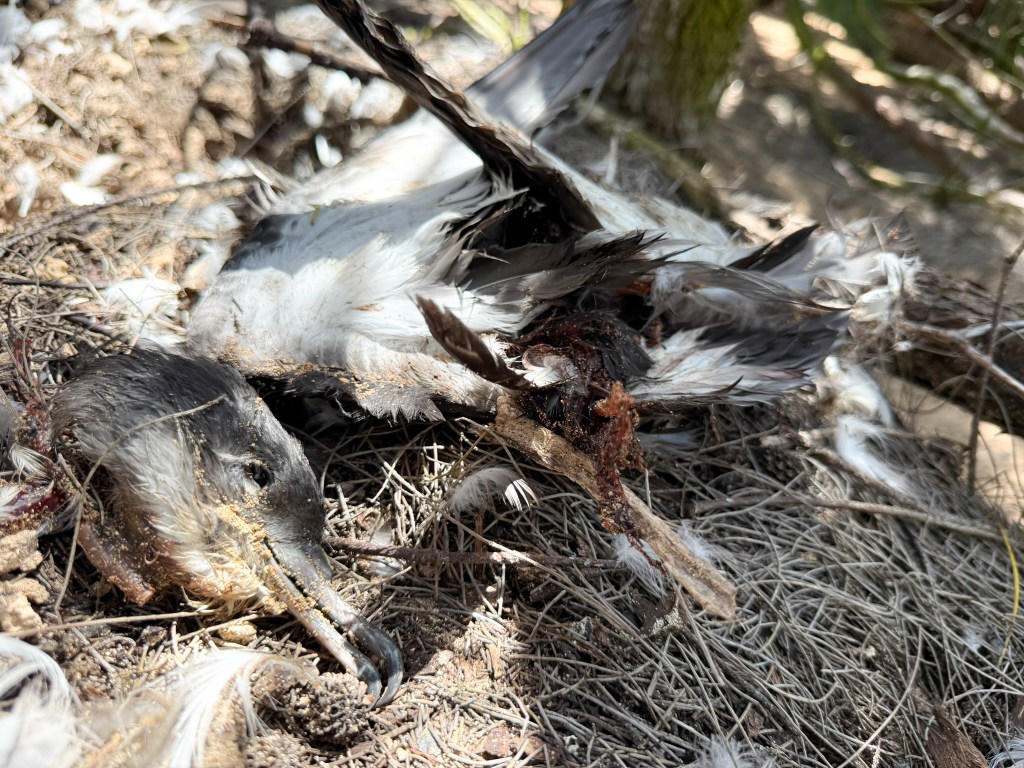
Some of the native birds had been dead several weeks; others had fresh blood. Many had been dragged from their burrows. Snow drifts of feathers and wings, as Raine described it, alongside heads and body parts. The messy way they’d been killed, he added, clearly pointed to cats as the predators.
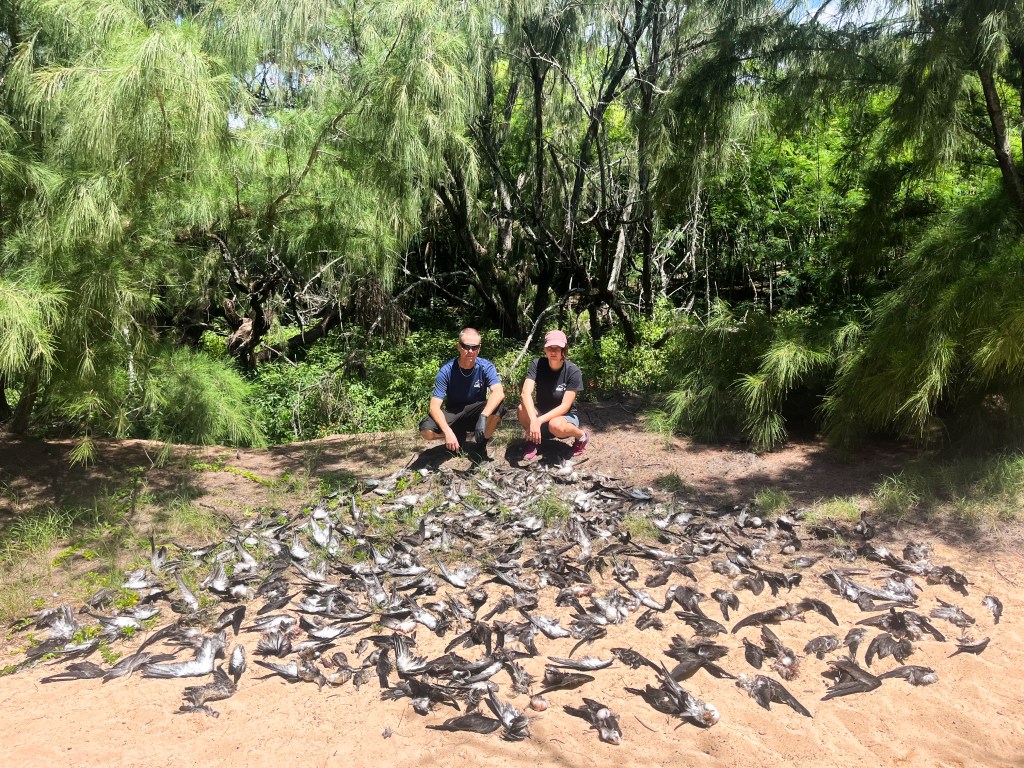
“There was absolute carnage,” Raine said Thursday. “This is not a one-off in that area.”
Local scientists and staff have encountered several mass slaughters at that same area in the past 15 years, he said, where dozens of ʻuaʻu kani were killed by free-roaming cats.
Wednesday’s discovery has spurred renewed calls by local conservation groups and their allies for state leaders to better guard Hawaiʻi’s native seabirds, endangered monk seals, dolphins and other wildlife from the impacts of as many as 1 million feral cats estimated to populate the islands.
“It’s a huge issue,” said Keith Swindle, executive director of the Hawaiʻi Audubon Society. He said cats are probably the second greatest threat to Hawai‘i’s native birds after mosquito-borne diseases, such as avian malaria. The cats are “literally from the beaches to the mountaintops on every island now.”
This year, Hawaiʻi lawmakers considered – but opted not to pass – a proposal that conservationists and animal welfare groups agreed could have been a good first step.
House Bill 1736 would have funded programs to expand the spaying and neutering of feral cats. It also would have required pet cats older than 5 months be sterilized, with some exceptions for breeders.
Owners who ship their pet cats to the islands would have to show they’re sterilized or pay a $100 fee. Originally, the bill specified that none of the funds could go toward programs that re-release the feral cats into the wild after they’re trapped and neutered.
That detail was key. Local conservation groups and state land managers are at odds with animal welfare groups such as the Hawaiian Humane Society over whether programs that trap, neuter and release the cats should be used in Hawaiʻi. Studies show those programs aren’t effective,
For both camps to come together, trap-neuter-release programs were excluded from the funding. But the bill didn’t prohibit such programs from continuing in Hawaiʻi, either.
That delicate compromise was disrupted, however, during a March 26 Senate Energy and Intergovernmental Affairs Committee hearing. Chair Glenn Wakai changed the bill to allow it to cover trap-neuter-release programs, he said, after conferring with his colleague, Agriculture and Environment Chair Mike Gabbard.
Two other senators, Lynn DeCoite and Tim Richards, promptly said they wouldn’t support the bill with that change to allow the release programs.
Uniquely Vulnerable
The core problem, conservationists say, is that Hawaiʻi’s unique seabird populations never evolved to contend with cats and other mammal predators introduced to the islands in the past 200 years or so.
“The whole reason that seabirds nest in the tropical Pacific is because these islands lacked mammals,” Swindle said. “They just can’t deal with mammals.”
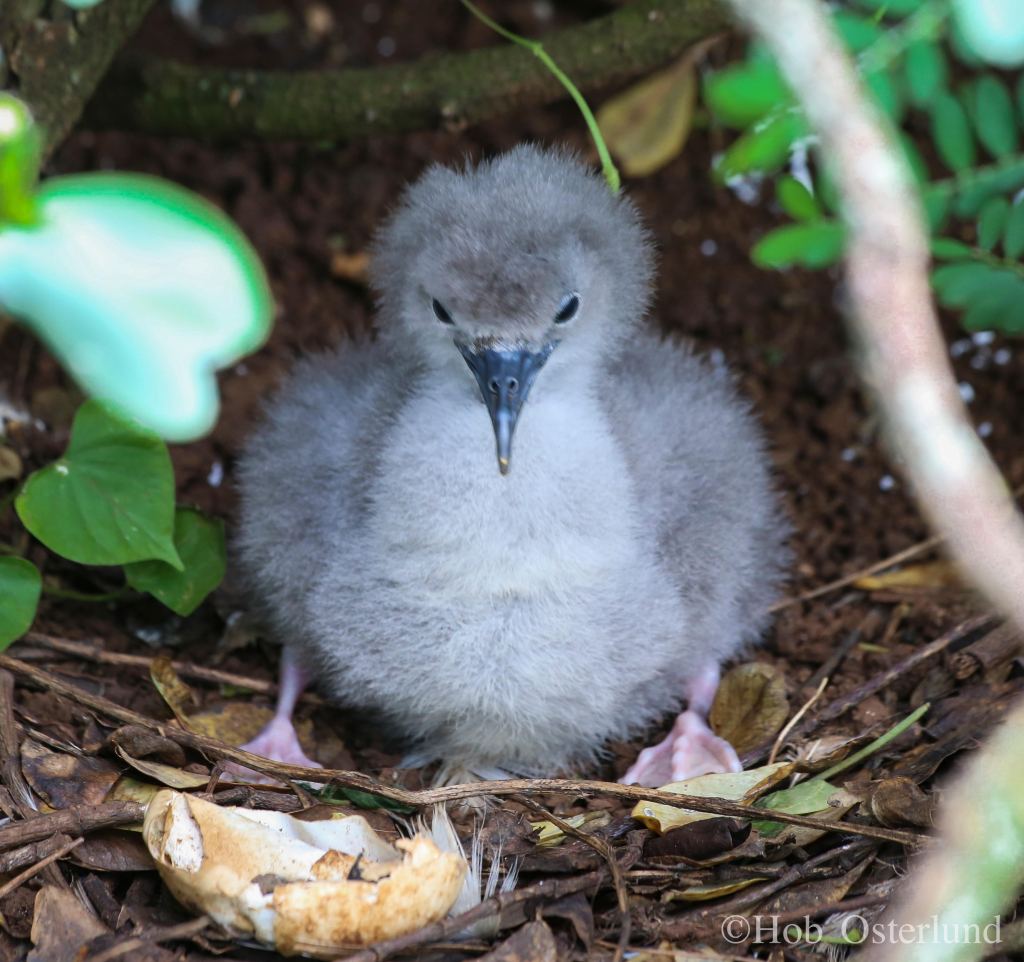
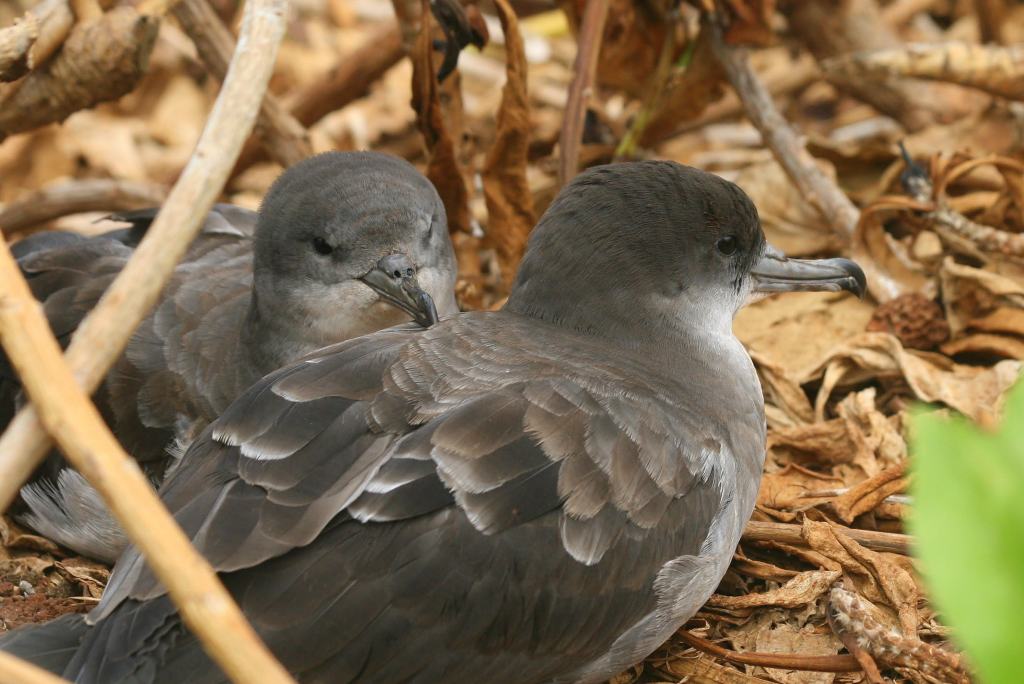
The ʻuaʻu kani mate for life, Raine said. “They’ll just keep coming back to the same burrow, and they lay their single egg every year,” he said. “That’s what they do. So they’re not going to move from that spot.”
The 168 dead ʻuaʻu kani near Shipwreck Beach came from a South Shore colony of around 1,500 birds, said Bret Mossman, forest bird recovery coordinator for the state Forestry and Wildlife Division. They had recently returned from the ocean to start their annual breeding season.
More than 100 additional birds from that colony, Mossman added, were killed by cats this past fall.
The shearwater species is not listed as endangered, Mossman said, because it has robust numbers in the Papahānaumokuākea Marine National Monument. However, in the Main Hawaiian Islands, the species is steadily declining.
“Our birds just cannot deal with these kinds of apex predators,” Mossman said, referring to the cats, “and so re-releasing these animals is just not an option if we want to keep these birds on the landscape.”
There were potentially tens of millions of ʻuaʻu kani before cats, mongoose and rats were introduced to the Hawaiian Islands, Mossman said. Now, there’s an estimated 60,000 individuals in the main islands and some 230,000 in Papahānaumokuākea. Kaua‘i hosts more native seabirds because there are no mongoose.
Even if the Northwestern Hawaiian Islands currently serve as a refuge for those and other seabirds from non-native predators, Mossman said, climate change threatens to erode those low-lying habitats through sea level rise and heavy storms.
Efforts to monitor the cats and other predators, plus install predator-proof fencing, can make a huge difference, he added. At Kaʻena Point, on Oʻahu, ʻuaʻu kani nesting pairs surged to 15,000 from 300, Mossman said, after such a fence was built there.
A more than 2-mile-long predator fence protects native, endangered seabirds at Kīlauea Point National Wildlife Refuge on Kauaʻi’s North Shore. Such fencing projects remain expensive and state land managers, Mossman said, already contend with insufficient budgets and limited resources.
Raine, who’s the science director for Archipelago Research and Conservation, said his group monitors yearround against cats and other predators in the mountains to protect the endangered seabirds that previously had been decimated there.
“We’ve got cameras all over the place to see when the predators are arriving, (and) birds are doing well,” Raine said, “whereas on the coast, these colonies are not managed.” Any trappings of cats and predators is sporadic, he said, “and so then you get these mass-kill events.”
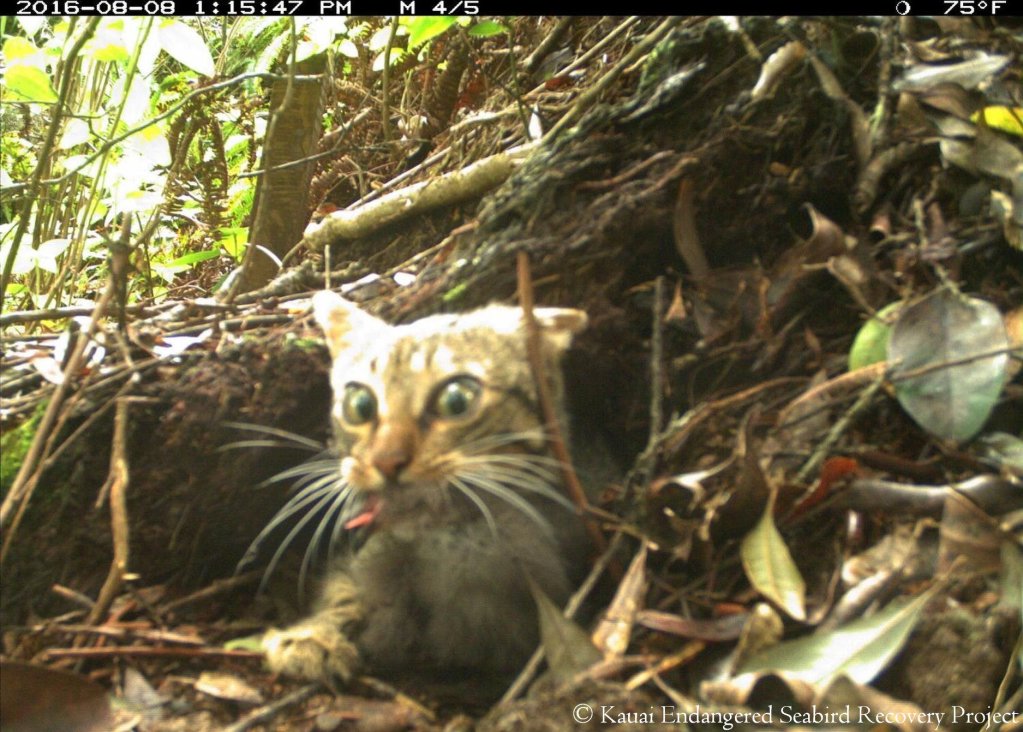
The language in HB 1736 was taken from a cat-sterilization policy passed into law in Rhode Island, said Grant Sizemore, director of the invasive species program for the American Bird Conservancy. Other states on the mainland, he added, are similarly weighing legislation to get a better handle on their feral cat populations’ impacts on wildlife.
“What’s different in Hawai‘i, as opposed to many of these other states, is that Hawai‘i is already the bird extinction capital of the world — it is overrun with stray and feral cats on the landscape,” Sizemore said. “They are, as we have seen recently with the wedge-tailed shearwaters, massacring Hawai‘i’s native wildlife.”
Before Raine left the beach Wednesday morning, he noticed that one of the burrows still had a pair of live birds in it. “They were just sitting there, super wide-eyed, surrounded by body parts,” Raine said. But there weren’t any predator controls and the cats had been returning to the site for weeks. “I was just thinking, they’re probably going to get killed tonight.”
Civil Beat’s coverage of climate change and the environment is supported by The Healy Foundation, the Marisla Fund of the Hawai‘i Community Foundation and the Frost Family Foundation.
Civil Beat’s reporting on Kauaʻi is supported in part by a grant from the G. N. Wilcox Trust.