The Roots Of Hawaiʻi's Public Arts Scene
How one artist’s kuleana colored the walls in Hawaiʻi.
May 31, 2026 · 7 min read

About the Author
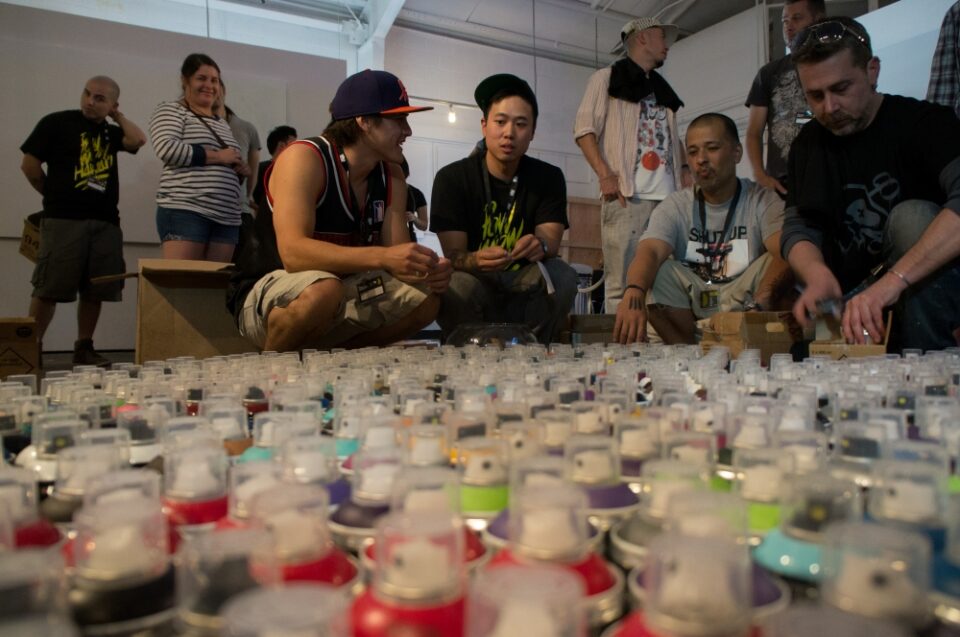
Before murals occupied walls in Hawai‘i, art was limited for kids growing up on O‘ahu. In the 1980s, Jasper Wong was considered an outcast: a creative child drawn to cartoons and comic books, coming of age at a time when art programs for young artists were scarce. If any existed, his single mother, who ran a grocery store in Kalihi, didn’t know where to find them.
But she encouraged him to pursue his passion anyway. That support led him to the Academy of Arts in San Francisco for college, where he found acceptance in a creative community for the first time.
For many budding creatives like him, opportunities were rare on the islands. So, when Jasper eventually became a professional artist, he set out to change that.
Today, he is helping shape the public art scene of Hawai‘i.

Kuleana For The Arts
After college, Jasper moved to Hong Kong, but doors were closed for a second-generation Chinese American.
Galleries called him the “wrong” type of Chinese. “They didn’t want to show me,” he recalls. “The hot commodity was mainland Chinese artists.”
Undeterred, Jasper opened his own gallery in Sai Ying Pun, converting an abandoned restaurant into an exhibition space. This led to the founding of POW! WOW!, an international mural festival named for his love of comics and the Native American term powwow (a gathering to celebrate art, music and culture).
He wanted to gather artists to create without financial pressures, allowing them to work pro bono with all expenses covered, focusing on art purely for art’s sake.
The festival has since painted murals in over 30 cities worldwide.
Bringing It Home
After Hong Kong, Jasper returned to Hawai‘i to share the festival with the art scene in his hometown. Starting out, he went door to door, begging businesses to let him paint their walls for free, while financing supplies and flights for artists entirely on his own credit cards.
The project gained traction when he partnered with Kamehameha Schools and collaborated with established artists like Kamea Hadar, Jeffrey Gress and the late Christa Wittmier to help advance Our Kaka‘ako through public art. In the 2010s, Kaka‘ako was still industrial and crime-ridden, but its large blank walls were perfect canvases.
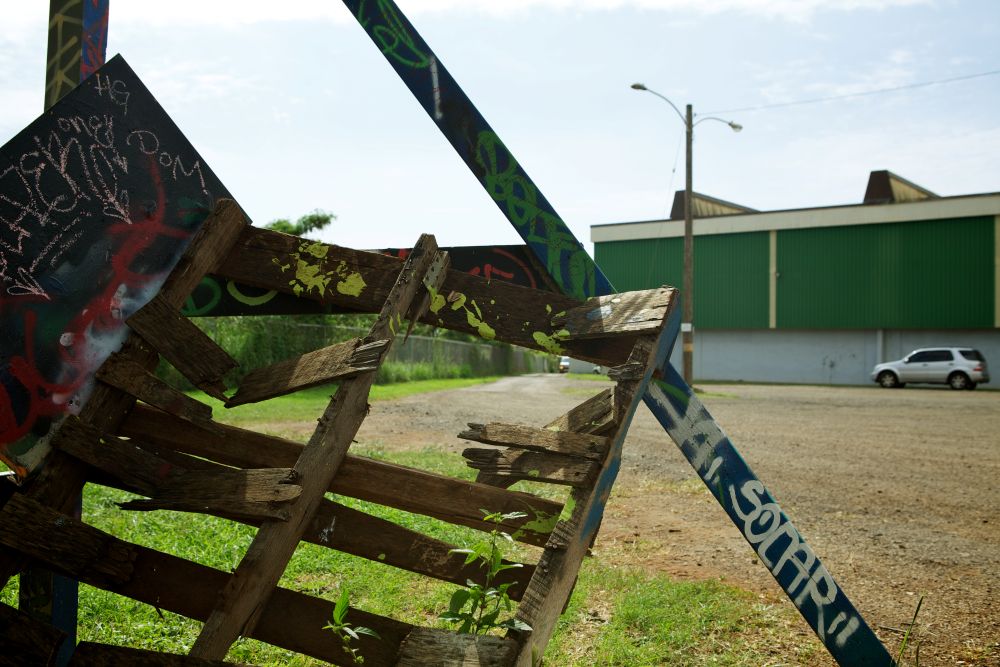
It started with one mural, then 12. They would eventually grow to paint over 100 murals in a week.
Jasper believes art should live in public, not just museums. While some embraced the changes, others opposed it, forming an “anti-Jasper” kupuna group that accused him of destroying the neighborhood.
Despite public opposition, Jasper continued his work anyway. “But what if?” Jasper asked. “What if I’m actually making the community safer?”
Over time, visitors came for the art and discovered local businesses, helping transform Kaka‘ako into the hub it is today. In 2012, Jasper opened Lana Lane Studios in the neighborhood with Gress to provide affordable studio rentals to local artists. But the space was forced to close for new condo development after 11 years of operation.
Jasper and his wife Amy Luu Wong then shifted focus to civil service, bringing art to public housing and schools.
Mālama Through Public Art
Since 2023, POW! WOW! was renamed World Wide Walls following criticism over Native American cultural appropriation. The nonprofit organization now centers its work on underserved communities across the globe, with a strong presence in Kalihi, a historically working-class neighborhood.
From Kalihi Kai Elementary to Palama Settlement, World Wide Walls has installed over a hundred murals across Kalihi’s public schools and community centers, repairing damaged walls along the way to make them suitable for painting.
Faithful to its roots, artists volunteer their time while organizers cover production costs, including lifts and training, bringing art directly to people who need it most.
But, just like in Kakaʻako, not all change is celebrated.
In recent years, as murals spread across Kalihi, community members have raised concerns about gentrification. At the same time, World Wide Walls has received widespread praise for enriching the community.
The controversy raises a hard question: how can art uplift a community without displacing the people who call it home?
Beyond The Walls
There are no easy answers.
Public art may be tied to displacement, but keeping it out of communities that could benefit is counterproductive.
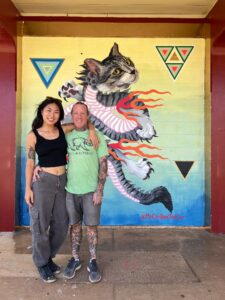
Lauren Hana Chai, an artist who has painted in Kalihi, argues that art nourishes the soul and can spark positive change. “Sure, it might start gentrification, but how does it actually get there? Follow the trail. Who drives the prices up?”
Raised on Oʻahu, she faced similar resource limitations as Jasper. Like him, she left the island to pursue art, returning home to a new scene built in part by World Wide Walls.
“I was really impressed when I got back by how much they had grown,” she says. “There wasn’t much art around when I was growing up. I felt very proud to be from Hawai‘i”
On Kalihi’s school walls, bright colors now thrive against aging concrete and chain-link fences. She sees that as progress and empowerment for the next generation: “If I’d been exposed to artists, local and non-local, doing really cool murals on walls, I would’ve been so stoked. Like, ‘Wow, that’s something I could do.’”
For Lauren, art pushes back against undesired change. “Everything’s been getting uglier. All the buildings, all the architecture, everything’s just becoming ugly cement blocks. And here we live on this beautiful island.”
Murals, in that sense, counteract the commercialization of paradise, where rising costs price entire communities out.
Growing Arts With Pono
Jasper continues his work alongside Amy to bring public art to underserved spaces. In 2026, the annual Hawai‘i Walls mural festival will be held at the Bishop Museum in the fall.
He emphasizes the need for more art across the islands: “We’ve done this project in so many cities, and our state government doesn’t support it nearly as much as others. But art is an important part of the fabric of the community.”
He shares a story that reveals why his commitment runs so deep:
In Kalihi, the impact of these murals are unexpected but powerful. While painting at an elementary school, the graffiti artist Katch forgot his speakers. An at-risk student with a history of theft returned it. The principal was shocked: the student could have kept it, but didn’t.
It turned out the student was an avid artist and skater whose own skateboard had recently been stolen. In response, Katch and Jasper worked with the school to recognize his honesty, taking him shopping for a new skateboard and clothes, something he had never experienced.
Art doesn’t just beautify spaces: it creates moments like these, where exposure can inspire youth and fuel the pono that unites us.
This is Hawaiʻi’s growing public art movement — and how we move forward is everyone’s kuleana.
 Sign up for our FREE morning newsletter and face each day more informed.
Local reporting when you need it most
Support timely, accurate, independent journalism.
Honolulu Civil Beat is a nonprofit organization, and your donation helps us produce local reporting that serves all of Hawaii.
ContributeAbout the Author