Beyond Bounty Hunters: The Bigger Conversation About Pretrial Justice
The real question is not whether discretion exists, but who exercises it, under what standards and with what consequences.
July 15, 2026 · 5 min read


About the Author

The recent Civil Beat article on bounty hunters raises an important public policy question: Should Hawaiʻi establish clearer standards for fugitive recovery agents?
I believe the answer is yes.
At the same time, that discussion should not be confused with the broader debate over commercial bail. While the two are related, they are not the same. Conflating them obscures the distinct roles of judges, licensed bail agents, and fugitive recovery agents, making it more difficult to have an informed discussion about public safety, accountability, and the administration of justice.

Ideas showcases stories, opinion and analysis about Hawaiʻi, from the state’s sharpest thinkers, to stretch our collective thinking about a problem or an issue. Email news@civilbeat.org to submit an idea or an essay.
At its heart, this is not a debate about bounty hunters or even commercial bail. It is a debate about how Hawaiʻi should make pretrial release decisions and how we should evaluate competing systems.
Every approach — commercial bail, government pretrial services, preventive detention, or unsecured release — depends on human judgment, carries costs, and involves tradeoffs. The important questions are not whether one system is perfect, but which combination of policies best promotes public safety, respects individual liberty, ensures court appearances, allocates financial risk fairly, and uses public resources wisely.
Every criminal justice system must answer the same fundamental question:
- What should happen to a person between arrest and trial?
- Should that person be released, detained, supervised, or required to post financial security?
Those decisions are made thousands of times each year in Hawaiʻi. No pretrial system eliminates the need for judgment.
The real question is not whether discretion exists, but who exercises it, under what standards, and with what consequences.
Judicial Discretion Framework
Commercial bail is one of several tools available to judges. It is neither the entire pretrial system nor the only means of securing a defendant’s appearance in court. Judges also release people on their own recognizance, impose supervised release, order treatment, establish conditions of release, or, in appropriate cases, order detention. Commercial bail exists within that larger framework of judicial discretion.
Fugitive recovery is an even narrower part of that system. It exists because a small percentage of defendants fail to appear or violate the conditions of their release. Most licensed bail agents never personally conduct fugitive recoveries, and most bail transactions never require one. Treating fugitive recovery as representative of the commercial bail system risks confusing the exception with the rule.
That does not mean the subject should be ignored. If Hawaiʻi permits fugitive recovery, it is entirely appropriate to ask whether minimum training, licensing, identification standards, reporting requirements, and clear prohibitions against impersonating law enforcement should be adopted. Those are legitimate questions deserving thoughtful public discussion.
But they are separate from the larger question of whether commercial bail has a role in Hawaiʻi’s criminal justice system.
One question deserves far more attention than it typically receives: Who bears the financial risk when a defendant fails to appear in court?
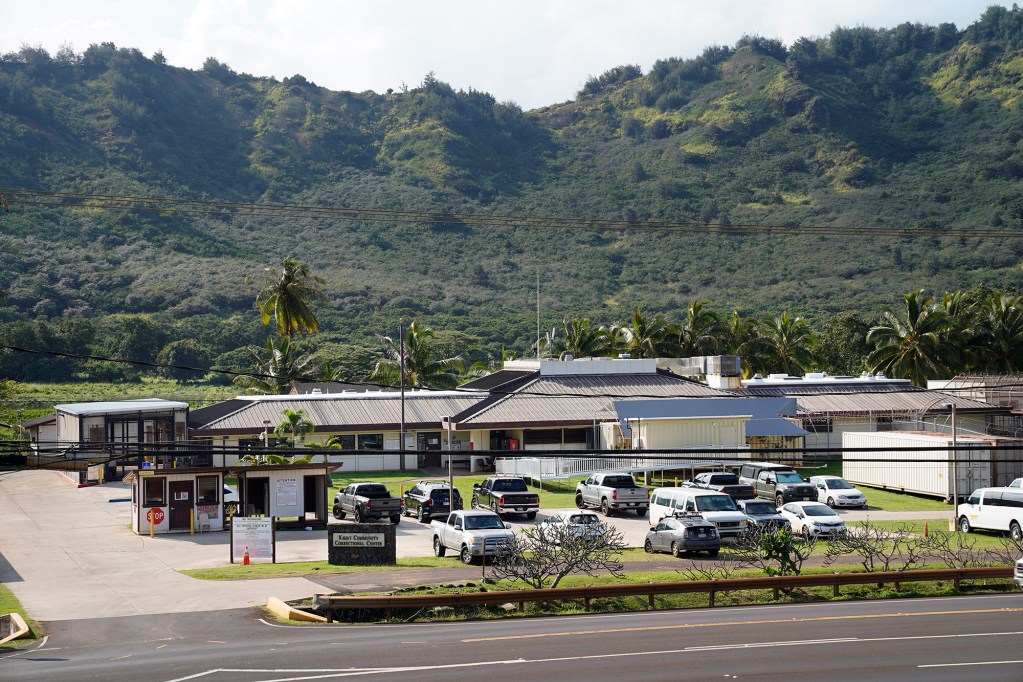
Under a commercial surety system, licensed sureties and bail agents assume significant financial responsibility. They face the possibility of bond forfeiture if defendants fail to comply with court orders and therefore have strong incentives to maintain contact with defendants and assist in returning them to court when appropriate.
Under government-operated pretrial systems, the costs of supervision, failures to appear, warrant service, detention hearings, and enforcement are generally funded by taxpayers. That does not automatically make one system better than another, but it does mean the financial risks, incentives, and responsibilities are allocated differently.
Those differences deserve careful consideration whenever policymakers compare alternatives.
Too often, discussions about bail focus only on the shortcomings of one approach without applying the same scrutiny to the alternatives. Every pretrial system produces successes, failures, costs, and unintended consequences. The public deserves objective comparisons based on measurable outcomes, including court appearance rates, public safety, detention rates, taxpayer costs, and respect for constitutional rights.
After more than four decades observing Hawaiʻi’s arraignment courts, I have learned that no two defendants are alike and no single pretrial release model fits every case. I have watched thousands of first appearances, and one lesson has remained constant: every case arrives with a different set of facts, risks, and human circumstances.
Justice is rarely achieved through rigid formulas. It is achieved by allowing judges to exercise informed discretion — to consider the individual before them, the law, the interests of public safety, the likelihood of appearing in court, and the rights of the accused.
Reasonable people can disagree about the proper role of commercial bail. They can also disagree about the best way to regulate fugitive recovery. Those are healthy discussions in a democratic society.
Good public policy begins not with ideology but with evidence.
What should unite us is a commitment to evaluating complete systems rather than isolated headlines. Whether Hawaiʻi relies on commercial bail, government pretrial services, preventive detention, or some combination of those approaches, release decisions will still be made, discretion will still be exercised, and someone will bear the costs and risks when those decisions prove wrong.
Good public policy begins not with ideology but with evidence. Hawaiʻi should continue to examine its pretrial justice system with open minds, careful analysis, and a willingness to honestly compare competing approaches. That conversation is larger than bounty hunters. It is larger than commercial bail. It is about building a pretrial justice system worthy of the people of Hawaiʻi’s confidence.
y
 Sign up for our FREE morning newsletter and face each day more informed.
Community Voices aims to encourage broad discussion on many topics of community interest. It’s kind of a cross between Letters to the Editor and op-eds. This is your space to talk about important issues or interesting people who are making a difference in our world. Column lengths should be no more than 800 words and we need a photo of the author and a bio. We welcome video commentary and other multimedia formats. Send to news@civilbeat.org. The opinions and information expressed in Community Voices are solely those of the authors and not Civil Beat.
Read this next:

Local reporting when you need it most
Support timely, accurate, independent journalism.
Honolulu Civil Beat is a nonprofit organization, and your donation helps us produce local reporting that serves all of Hawaii.
ContributeAbout the Author