Hawaiʻi’s Teacher Shortage Is At An Inflection Point
It’s not just a staffing problem but a signal that the state needs a more deliberate, forward-looking approach to workforce planning.
July 21, 2026 · 5 min read


About the Author
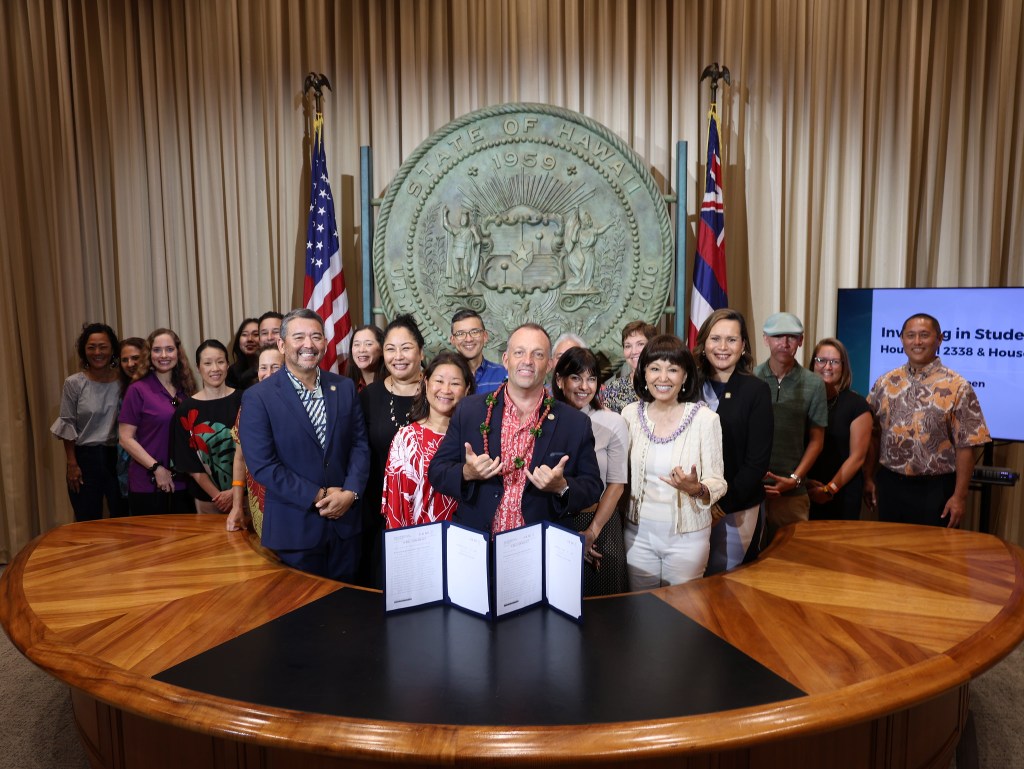
Gov. Josh Green’s recent signing of two education bills aimed at strengthening Hawaiʻi’s teacher workforce deserves praise. One provides stronger protections for educators facing harassment. The other authorizes annual salary step increases through future collective bargaining agreements, subject to legislative funding.
Both measures address real challenges that affect teacher recruitment and retention. But their greatest significance may be something larger: they highlight an opportunity for Hawaiʻi to rethink how it develops, supports and retains its workforce.
For years, discussions about teacher shortages have focused on immediate solutions. Increase compensation. Improve recruitment. Offer incentives. Strengthen workplace protections. Reduce vacancies.
These efforts are important and should continue.

Ideas showcases stories, opinion and analysis about Hawaiʻi, from the state’s sharpest thinkers, to stretch our collective thinking about a problem or an issue. Email news@civilbeat.org to submit an idea or an essay.
Yet they are largely downstream solutions to workforce problems that have already emerged. By the time schools are struggling to fill positions, teachers are leaving the profession, or vacancies are making headlines, the underlying causes have often been building for years.
The challenge now is to complement these necessary downstream responses with the upstream work of finding a new strategic path forward — understanding future talent needs, strengthening educator pipelines and improving long-term retention.
Rather than asking only how to fill today’s vacancies, we should also be asking what educator workforce will be needed five, 10 and 15 years from now.
How many teachers are being produced by local preparation programs? What factors most influence retention? Why do some educators leave after only a few years while others remain for an entire career? How can Hawaii create stronger pathways for local residents to enter the profession.
In the business world, this broader approach is often called human capital management. While the term may sound like corporate jargon, the concept is straightforward. Traditional human resource management focuses largely on administering and managing the workforce. Human capital management begins with a different premise: people are not simply resources to be managed. They are assets to be invested in, developed, supported and retained because they create long-term value and return on that investment of capital.
Viewed through this lens, Hawaiʻi’s teacher shortage is not just a staffing problem. It is a signal that the state needs a more deliberate and forward-looking approach to workforce planning.
Race To The Top
For me, this conversation is personal. During my time as assistant superintendent for human resources at the Hawaii Department of Education, I was part of the leadership team during Hawaiʻi’s Race to the Top initiative. One of its central aspirations was the creation of great teachers, great leaders and great schools.
That aspiration remains as relevant today as it was then and continues to remind me that an important part of that work remains unfinished.
The Department of Education is now modernizing its human resources systems and processes. Such efforts are essential and necessary as better technology can improve efficiency, provide better information and support better decision-making.
But technology alone is not a workforce strategy.
The real opportunity lies in using modernization as a catalyst for broader transformation. Successful organizations use these moments to improve workforce forecasting, talent development, retention strategies, succession planning and workforce analytics.
But a true human capital management strategy extends beyond recruiting and retention. It influences how organizations approach training and professional development, compensation and rewards, career advancement, leadership development and even labor-management relationships, not as separate activities, but as interconnected elements of a comprehensive workforce strategy.
The newly enacted teacher workforce measures are important steps forward. Educators deserve safe workplaces, professional support and fair compensation. These reforms address immediate needs and should be celebrated.
Technology alone is not a workforce strategy.
But they should also remind us that while downstream interventions address today’s workforce challenges, the upstream work of human capital management determines whether those challenges emerge in the first place.
The teacher shortage has become an inflection point for Hawaii. It presents an opportunity to move from managing vacancies to developing talent, from reacting to workforce shortages to preventing them, and from viewing employees primarily as resources to be managed to viewing them as assets worthy of long-term investment.
In many ways, this represents the unfinished work of Race to the Top. Embracing human capital management would mean aligning workforce planning, recruitment, training, compensation, leadership development, retention and labor relations around a common objective: building the educator workforce Hawaiʻi needs for the future.
That is the promise of human capital management. The teacher shortage has given Hawaiʻi an opportunity to shift from reacting to workforce challenges to anticipating them, from filling positions to developing talent, and from managing employees to investing in people. If embraced, that shift could strengthen not only our schools, but the state’s long-term economic and social future.
 Sign up for our FREE morning newsletter and face each day more informed.
Community Voices aims to encourage broad discussion on many topics of community interest. It’s kind of a cross between Letters to the Editor and op-eds. This is your space to talk about important issues or interesting people who are making a difference in our world. Column lengths should be no more than 800 words and we need a photo of the author and a bio. We welcome video commentary and other multimedia formats. Send to news@civilbeat.org. The opinions and information expressed in Community Voices are solely those of the authors and not Civil Beat.

Local reporting when you need it most
Support timely, accurate, independent journalism.
Honolulu Civil Beat is a nonprofit organization, and your donation helps us produce local reporting that serves all of Hawaii.
ContributeAbout the Author