Holding Lahaina: A Community Land Trust Shows What’s Possible for Hawaiʻi
Land can be protected from speculation, benefiting communities in perpetuity.
July 29, 2026 · 5 min read

About the Authors


Hawaiʻi’s land has always been at stake.
For generations, the forces shaping land ownership in these islands have pushed us all toward displacement. Then on Aug. 8, 2023, more than 12,000 people lost homes overnight. By the next morning, another fear took hold that outside money would creep in, purchasing what remained of Lahaina. Parcel by parcel.
In those early days, the question hanging over our community was simple yet terrifying. Who will be coming for Lahaina’s land?

Ideas showcases stories, opinion and analysis about Hawaiʻi, from the state’s sharpest thinkers, to stretch our collective thinking about a problem or an issue. Email news@civilbeat.org to submit an idea or an essay.
The Lahaina Community Land Trust began as a Hail Mary.
A small group of us could see a vision of what might be possible. We had dreams of a protected Lahaina, where land is held for the long-term benefit of the people who live here. But we had no guarantee anyone else would see it. Would people believe in it enough to invest in it?
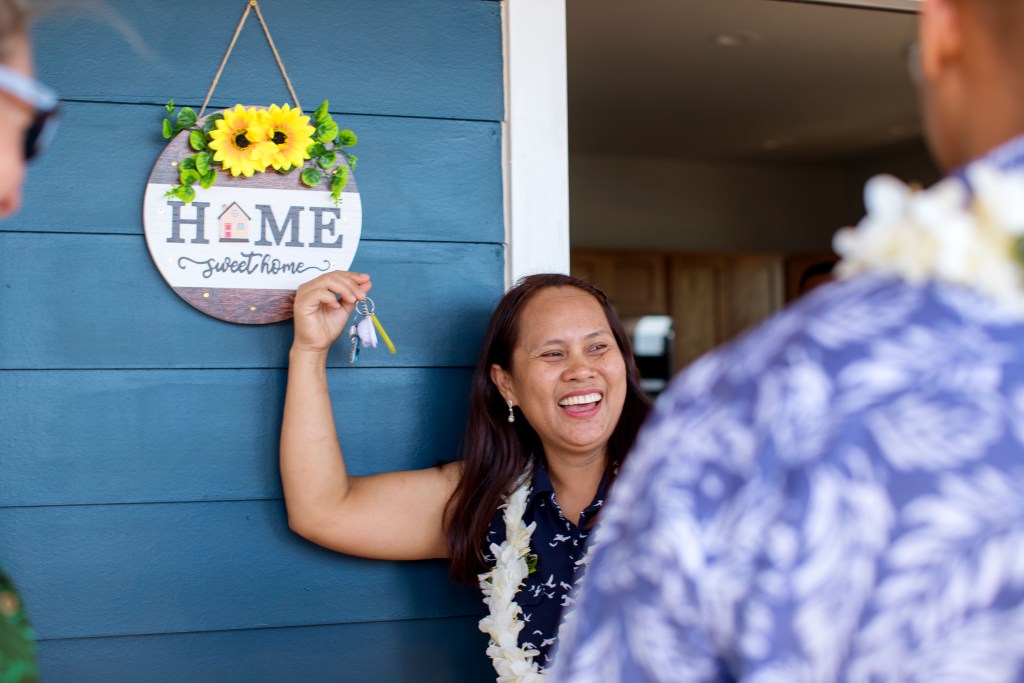
In the very beginning, we told ourselves even if we could save even one property, that would be enough. One Lahaina family who could stay rooted on the ‘āina that raised them.
What happened next surprised even us.
The community rallied behind the vision, and most importantly, behind each other. Local families who had lost so much still embraced this dream with trust. Donors from across Hawaiʻi and beyond stepped forward.

When we stepped into Maui County Council Chambers to ask for help, the County of Maui made an early and decisive commitment, investing $15 million in the first fiscal year to help us begin protecting properties.
That vote of confidence mattered. It signaled that this was not just an idea born out of crisis, it was a real community-led strategy for recovery and resilience. And better yet, a permanent one.
Unlike most of the affordable housing that’s built throughout Hawai‘i, which may flip onto the open market within less than a generation, every dollar that protects housing through the community land trust model does so permanently.
By the time the fire swallowed Lahaina in 2023, the County of Maui had funneled $200 million alone into its affordable housing fund to support development, even though affordable for-sale homes built by tax dollars must only stay affordable for 10 years tops. Based on our estimates, that same dollar could protect 20% of Lahaina’s properties for our people — permanently.
New Way Of Thinking
This new way of thinking about our homes and who would live in them generations from now opened doors. Because of this outpouring of support, nearly three years after the fire, the Lahaina Community Land Trust is in escrow on its 26th property. All of that ‘āina is zoned to one day accommodate up to 61 housing units.
We are also actively helping 10 families rebuild, preventing the sale of their land in the first place. Among all their household members, they hold a combined 1,685 years of lived experience and knowledge of Lahaina.
Over time, “can we save one property?” turned into something bigger. What would it look like if we really protected 20% of Lahaina’s land? That is now our goal.
Twenty percent may sound ambitious, but it is also a practical threshold. At that scale, community stewardship begins to fundamentally shift the dynamics of a place. Housing can remain permanently affordable. Families can rebuild without the fear of speculation driving prices beyond reach. Locally-owned businesses can thrive in community-owned buildings. This new world is one where return-on-investment is calculated by the community’s wealth, not just the landlords’.

Through the community land trust model, land is held by a nonprofit on behalf of the community, while homes and buildings can be owned and passed down by families for generations. The land itself is protected from speculation, ensuring it benefits the community in perpetuity.
In other words, the land is removed from the pressures of the market that have made it increasingly difficult for local families to stay here.
Imagine what that would feel like?
Imagine knowing that a fifth of your town’s land is permanently protected for kama‘āina. Imagine the sense of stability that comes with knowing your community cannot be bought out by the highest bidder.
For Lahaina, that kind of security would represent a profound shift from vulnerability to stewardship. But what if Lahaina isn’t the only place where this could happen?
Across Hawaiʻi, communities are grappling with the same pressures of rising housing costs and wages that don’t keep up. The land trust model offers a community-based solution outside of the real estate market that we have been told holds all the answers — if we only work hard enough.
But what if the answers are actually us?
What if communities across Hawaiʻi began reclaiming land not as a commodity, but as a shared inheritance be stewarded for the next seven generations?
In Lahaina, we are beginning to see what that looks like.
How far can we take this together?
 Sign up for our FREE morning newsletter and face each day more informed.
Community Voices aims to encourage broad discussion on many topics of community interest. It’s kind of a cross between Letters to the Editor and op-eds. This is your space to talk about important issues or interesting people who are making a difference in our world. Column lengths should be no more than 800 words and we need a photo of the author and a bio. We welcome video commentary and other multimedia formats. Send to news@civilbeat.org. The opinions and information expressed in Community Voices are solely those of the authors and not Civil Beat.
Read this next:
Local reporting when you need it most
Support timely, accurate, independent journalism.
Honolulu Civil Beat is a nonprofit organization, and your donation helps us produce local reporting that serves all of Hawaii.
ContributeAbout the Authors