Olin Lagon: The First Word The World’s Phones Say Is Aloha
When you start asking questions, you might be surprised how many answers trace back to Hawaiʻi.
July 30, 2026 · 7 min read

About the Author
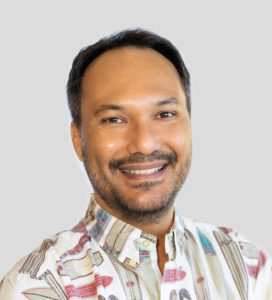
If you grew up here, you know the drill. Rinse the rice, level it with your hand, dip a finger in, and add water until it reaches the first knuckle. Press the button, walk away, and 20 minutes later the rice is perfect. It came out perfect back when I was 7 too, with tiny fingers.
That bugged me. One day I held my finger up next to my mom’s, saw how different they were, and asked her why the trick still worked no matter whose finger you used. She shrugged. Years later I remembered that conversation and did the thing I often end up doing. My curiosity made me figure out why.
The answer blew my mind. The humble rice cooker is one of the best pieces of real world physics I have ever run into, and it runs on two principles. Boiling water cannot get hotter than 212 degrees no matter how much heat you dump into it. And a magnet loses its pull once it gets hot enough.

Ideas showcases stories, opinion and analysis about Hawaiʻi, from the state’s sharpest thinkers, to stretch our collective thinking about a problem or an issue. Email news@civilbeat.org to submit an idea or an essay.
So when you press cook, you are sticking a magnet to a piece of metal, and that magnet is what completes the circuit to the heating element. The water starts to boil. As long as there is water in the pot, the temperature stays pinned at boiling, well below the point where the magnet quits. But the moment the last of the water boils off, there is nothing left to hold the temperature down. It shoots up, hits that point, and pop, the magnet lets go and breaks the circuit. The cooker never cared about water levels. It only cared about the moment the water was gone. Absolutely brilliant.
I take advantage of these principles to cook kalo. Fill the cooker to the brim with water, drop in the kalo, hit the button. About three hours later the water is gone, the cooker clicks itself off, and the kalo is ready to pound into poi.
Now take that same finger out of the pot, still wet, and hold it up to the air. It stops being a measuring stick and turns into one of the oldest instruments we have. The wet skin catches the breeze and tells you which way the wind is blowing, which is a widely accepted symbol to ask, “Where does this come from?”
For as long as I can remember I have held a wet finger to the wind like that, asking it about everything. And more often than I ever expected, some answers have traced back to these islands.
Take the Wi-Fi you are using right now. Every phone, laptop, and smart device in the house is sharing the same sliver of invisible air, and somehow they do not all shout over each other. The rule that lets them share was worked out at the University of Hawaiʻi.
In June 1971, a team led by Norman Abramson switched on ALOHAnet, the first wireless packet data network in history. Radio had been carrying data since the 1890s. Morse code is data. What nobody had solved was the crowd. Every system before ALOHAnet handed the channel to one sender at a time and kept order with a schedule, a slot or a roll call. Abramson’s team had cheap UHF radios, terminals scattered across the islands, one computer on a hill in Mānoa and no budget for any of that. So they had to answer a question nobody had answered: How do you let a crowd of machines share one channel with no traffic cop?
Their answer was to stop looking for one. Let each machine talk the second it has something to say. If two of them speak at the same instant and garble each other, neither gets an acknowledgment back, so both go quiet, wait a random beat and try again. Talk, collide, yield, retry. That is the whole idea, and the whole idea only works because every machine agrees to take turns. A single device that refused to back off could starve every other device on the channel.
In 1970 Robert Metcalfe read Abramson’s paper, could not put it down, and spent a month on Oʻahu learning it in person. He went home and built Ethernet on top of it. Ethernet wired the offices of the world. Wi-Fi carried the same rule back into the air. And when your phone wakes and reaches for a tower, the first thing it sends is a short burst on a channel the engineering standards still call slotted ALOHA. Not a metaphor. Aloha as a greeting is written into the specification.
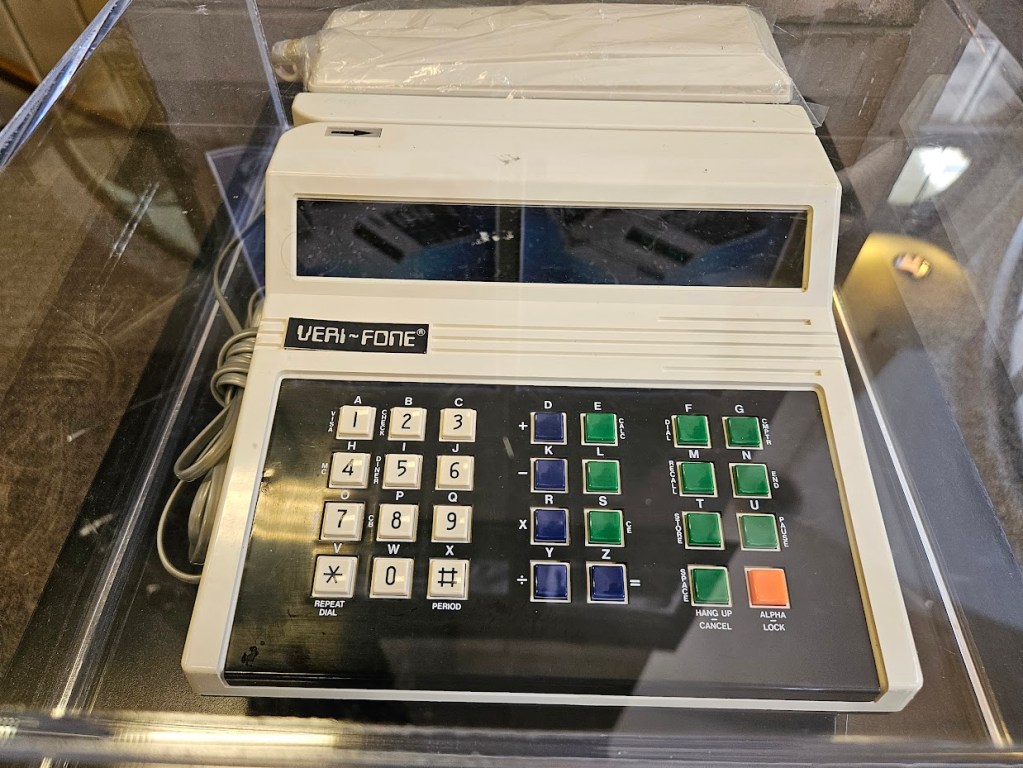
Think about the last time you tapped a credit card at a register. That little terminal, the one sitting on every counter from here to the continent to the far side of the world, traces back to Honolulu. In the late 1970s a Honolulu businessman named Edward Berger saw a problem. Tourists kept showing up with checks and cards that a shopkeeper had no way to trust. So Berger teamed up with a UH engineering graduate named Jimmy Thompson to build a device that could verify a customer over the phone. They named it after exactly what it did, a verification telephone. Verifone.
Verifone was later sold to another Honolulu businessman, Bill Melton, who redesigned the terminals to be cheap enough to go anywhere. Within a few years those little boxes from Honolulu ran most of the American market, then most of the world’s. The original prototype sat in Berger’s widow’s living room for years. Today it sits in the Inspiration Hawaiʻi Museum in downtown Honolulu. I took this picture of it last year. That quiet beep when your card goes through started right here.
Even the food truck down the block has roots here. The plate lunch gets called the original fusion cuisine, and it was born in the plantation camps of the 1880s, when workers from Japan, China, Portugal, Korea, the Philippines, Puerto Rico and beyond got thrown together in the fields. The bosses kept them in separate camps and tried to keep them apart. But at lunch they cracked open their kau kau tins and shared. Rice from one, kim chee from another, adobo from the next. Nobody planned it. Hunger and closeness and a little generosity mixed cuisines that had never met, and out of that came the mixed plate, the fusion lunch wagons and eventually the whole idea that food from everywhere can sit on one plate and belong.
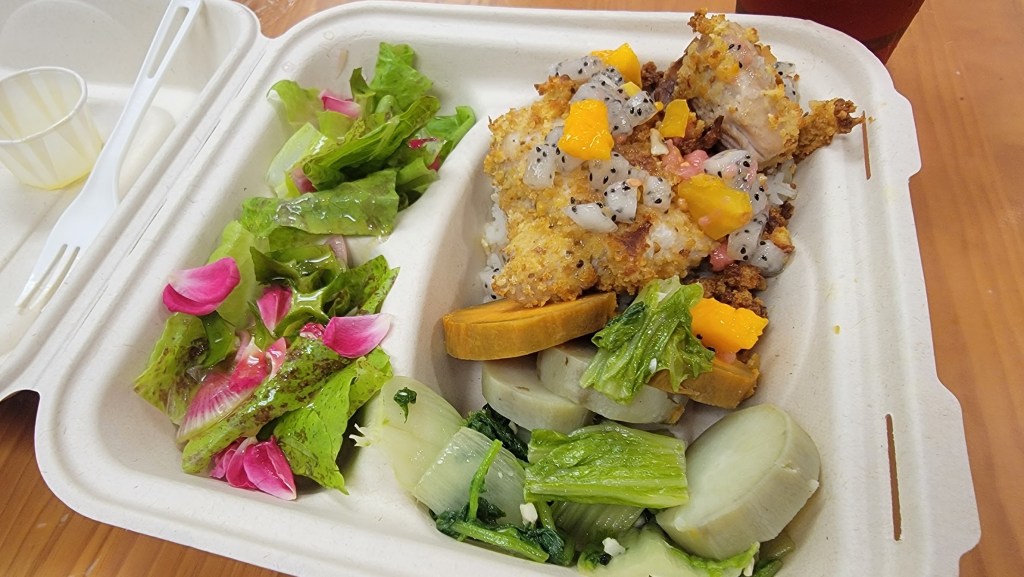
We are the most isolated inhabited islands on the planet, a handful of dots in the middle of the biggest ocean there is. By every rule of size and distance, nothing that starts here should matter much out there. And yet the world learned how to share a crowded signal from us. It learned how to trust a stranger’s card from us. It learned how to put the whole world on one plate from us.
But if you dig a little deeper, these three are really the same thing. Take your turn so everyone gets heard. Trust the person across the counter enough to do business. Share your food with your neighbors. That is not engineering. That is aloha, worked out the hard way by people who had to learn how to live close together on islands.
None of those three things got built by people just being clever. They got built by people being close, and generous, and willing to take turns. That is aloha, and it is not soft at all. The next thing worth building needs the same root. The world could really use more innovators who can spread more aloha.
 Sign up for our FREE morning newsletter and face each day more informed.
Local reporting when you need it most
Support timely, accurate, independent journalism.
Honolulu Civil Beat is a nonprofit organization, and your donation helps us produce local reporting that serves all of Hawaii.
ContributeAbout the Author