Will Washington DC Settle The Question Of Hawaiian Sovereignty?
Trump and the federal courts are making consequential decisions about Native Hawaiians.
July 10, 2026 · 7 min read

About the Author
In 2000, at the first congressional hearing on what became the Akaka bill, a Native Hawaiian woman interrupted Hawaiʻi’s congressional delegation.
“This bill tells me that I am going to be an Indian,” she said.
The bill would have let Hawaiians form a governing entity and seek federal recognition, the kind extended to more than 500 Native American tribes. She was not against sovereignty, only that version of it. That fracture has run through the movement for decades, and helps explain why the most consequential decisions about Native Hawaiians today are made in Washington, not here.

Ideas showcases stories, opinion and analysis about Hawaiʻi, from the state’s sharpest thinkers, to stretch our collective thinking about a problem or an issue. Email news@civilbeat.org to submit an idea or an essay.
The pressures of this year alone make the point, and they come from the political right. President Trump has proposed, for the second straight year, to eliminate the roughly $22 million Washington sends annually to the Department of Hawaiian Home Lands. Congress restored the money last year and may again, but the rationale is what unsettles Hawaiian leaders, the claim that Native Hawaiians are “not a tribal nation but a racial group.”
The national group that helped end affirmative action at the Supreme Court is now seeking to overturn Kamehameha Schools’ preference for Hawaiian students. And a mainland legal foundation has sued to strike down the homestead program’s blood-quantum rule, reviving the argument that won at the Supreme Court a generation ago, that favoring Native Hawaiians is unconstitutional race discrimination.
That suit names the United States itself as a defendant, since a 1959 federal law bars the state from changing the rule alone. What Hawaiians are owed, and on what basis, is being decided for them from the outside, and not in their favor.
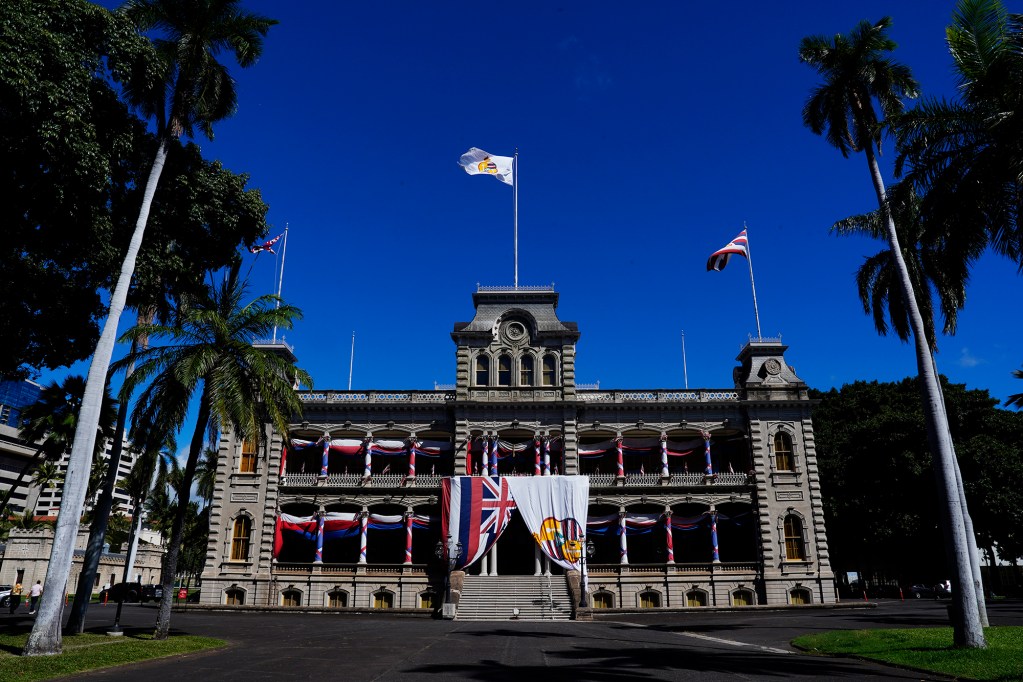
It was not always this way, and not for lack of trying. In February 2016, more than 100 delegates spent four weeks in Maunawili writing a constitution for a Native Hawaiian government, in a convention funded through the Office of Hawaiian Affairs, and adopted it 88 to 30. It was the closest the movement has come to one voice, and a measure of how hard that is. Protesters who wanted in were turned away and several arrested.
A rival convention met on Oʻahu the same week. The convention’s chairman later said there were not two sides to the debate but as many sides as there were people in the room.
The constitution was never ratified, which complicates the easy account in which Washington alone stands in the way. That same year, the Obama administration finalized a rule offering a pathway to a formal government-to-government relationship. It would not write the constitution or run the election; it asked one thing, that Hawaiians form a single unified government and come knock.
A decade later, no one has, and not out of mere indecision. The Kingdom was taken by armed force in 1893 and never ceded by treaty, a wrong Congress itself has acknowledged, and for many Hawaiians, accepting a government chartered by Washington would mean treating the United States as the rightful source of a sovereignty it never lawfully acquired.
Irreconcilable Positions
Recognition’s advocates answer that it is the only path offering enforceable protection. The independence claim, for all its moral force, has secured far less in land and money, even as it refuses to concede the larger principle.
That claim is the real fault line, and it is neither pettiness nor accident. The overthrow of 1893, the banning of the Hawaiian language, and the seizure of more than a million acres did not just dispossess a people, they dismantled the structures that might have carried a unified claim forward.
What survives is split between two poles. At one stands federal recognition, a Native Hawaiian government in a nation-within-a-nation relationship with Washington, on the model of more than 500 Indian tribes. At the other stands full independence, grounded in the conviction that the Kingdom of Hawaii, recognized by treaty in the 1840s, was illegally overthrown and never lawfully ceased to exist, so tribal status would mean trading a sovereign claim for a lesser one.
Others reject both for decolonization under United Nations terms. The positions are irreconcilable, and you can see two collide in one courtroom now. As Kamehameha Schools defends itself on the narrow ground that its policy remedies historical disadvantage, a group calling itself the interim government of the Hawaiian Kingdom has moved to intervene, arguing the case is illegitimate because the Kingdom still exists.
The fragmentation runs through the institutions too. The largest material victories, hundreds of millions in trust settlements, came when Hawaiians sued the state as beneficiaries of a broken trust, not as a sovereign nation.
Yet those wins flow into bodies like the Office of Hawaiian Affairs, which spent much of this past year consumed by infighting, its chief executive suing the trustees and a budget fight that staff warned could cripple the agency’s mission. That distrust of the institutions is part of why the call for full independence persists.
None of this is the whole story, though. For all the disagreement over the destination, the common ground is plain.
Nearly everyone agrees a wrong was done, a debt is owed, the dignity of a people is at stake. Congress said as much in 1993, apologizing for the overthrow and acknowledging that Hawaiians never relinquished their sovereignty, though courts later held the apology created no enforceable rights.
Faced with the lawsuits and the funding threats, even leaders who differ sharply on sovereignty have begun converging on the same response, raising money, building a legal defense, fighting in court. The fracture is over remedy, not over whether justice is due.
Nearly everyone agrees a wrong was done, a debt is owed.
Other peoples have faced versions of this. Native American nations, for all their internal conflict, were eventually forced into a legal framework of treaties and recognized governments the federal government had to deal with. Hawaiians kept a stronger claim and never got that framework.
And the claim itself, that Hawaiʻi is an occupied nation and not a domestic minority, is a double-edged sword, the source of the movement’s moral authority and the reason it cannot accept any lesser arrangement, even one that might protect it from what is coming.
And yet the most significant assertion of Hawaiian authority in a generation came not from any unified government but from Mauna Kea, where the 2019 protests against the Thirty Meter Telescope led to a new governing authority dominated by Native Hawaiians. It may have worked precisely because it never asked the harder question.
A spokesman for the protesters has said that although he strongly supports sovereignty, he avoids the subject when speaking about Mauna Kea, because the mountain unites Hawaiians where the question of nationhood divides them.
Perhaps that is the lesson hiding in the fragmentation. Sovereignty here is not declared by a nation. It is exercised, one fight at a time.
So the old question, what would a Hawaiian nation look like, may be the wrong one. Hawaiians are already sovereign in a dispersed, unconsolidated way, on the mountain, in the schools, in the language, in the courts. The harder question is not whether they deserve sovereignty, or even whether they will ever agree on a single form of it. It is whether that scattered, hard-won authority can be made to hold, and to answer to the people who built it, before others finish deciding the matter for them.
 Sign up for our FREE morning newsletter and face each day more informed.
Community Voices aims to encourage broad discussion on many topics of community interest. It’s kind of a cross between Letters to the Editor and op-eds. This is your space to talk about important issues or interesting people who are making a difference in our world. Column lengths should be no more than 800 words and we need a photo of the author and a bio. We welcome video commentary and other multimedia formats. Send to news@civilbeat.org. The opinions and information expressed in Community Voices are solely those of the authors and not Civil Beat.
Read this next:

Local reporting when you need it most
Support timely, accurate, independent journalism.
Honolulu Civil Beat is a nonprofit organization, and your donation helps us produce local reporting that serves all of Hawaii.
ContributeAbout the Author